
A lonely song about fading dreams became Phil Everly’s quiet bridge to one of music’s most remarkable reunions
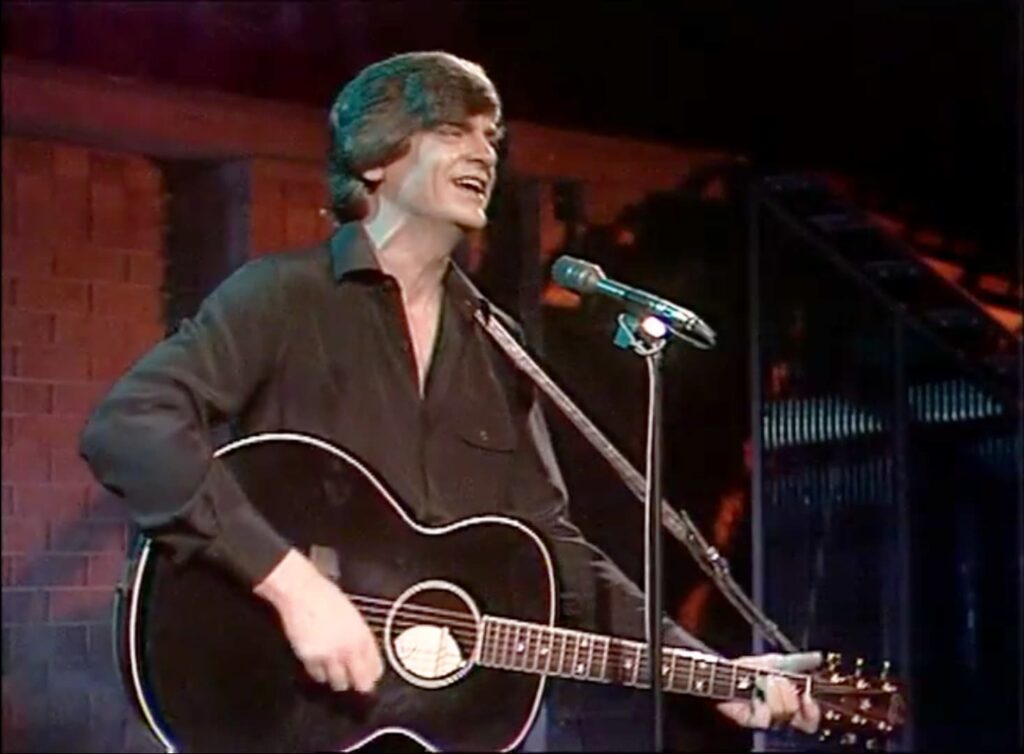
Phil Everly performed “Louise” on December 18, 1982, at a moment when his life stood suspended between loss and renewal. Few watching that evening could have known that only months later, he and his brother Don Everly would end nearly a decade of separation and stage the historic Everly Brothers reunion at London’s Royal Albert Hall in 1983. Looking back today, this performance feels less like a routine concert appearance and more like a poignant snapshot of a man standing at the edge of a new chapter.
For many listeners, that is what makes this rendition of “Louise” so compelling. When Phil sang about loneliness, broken expectations, and the passage of time, he was not revisiting the youthful triumphs that had made the Everly Brothers international stars. He was singing during a period when the legendary duo remained apart, their future uncertain. The audience of 1982 saw a respected veteran performer. The audience of today sees something different: a brother who did not yet know that reconciliation was just around the corner.
The song itself adds another layer to the story. Written by acclaimed songwriter Paul Siebel, “Louise” was never a major commercial hit. Instead, it earned a reputation as one of those rare compositions cherished deeply by musicians, songwriters, and devoted folk and country listeners. Its beauty lies not in flashy melodies or chart success but in its vivid storytelling and emotional honesty. By choosing this song, Phil was revealing a side of himself that many casual fans rarely had the opportunity to see.
Most people remember Phil Everly through timeless classics such as “Bye Bye Love,” “Wake Up Little Susie,” and “All I Have to Do Is Dream.” Those recordings showcased the magical vocal blend that he shared with Don, a harmony partnership that helped define American popular music. Yet “Louise” belongs to an entirely different world. Here, there is no famous brother standing beside him. There is no soaring two-part harmony. There is only Phil, alone with a story and a microphone.
That solitude gives the performance unusual emotional weight. By 1982, Phil had already experienced the dizzying heights of fame, the inevitable decline that follows changing musical trends, and the painful estrangement from the brother with whom he built his career. The themes inside “Louise” seem to echo aspects of that journey. The song speaks of dreams that did not unfold as planned, of beauty touched by time, and of lives shaped by disappointment as much as hope. Whether intentional or not, the connection between the song and Phil’s own story feels impossible to ignore.
The performance also raises an intriguing question. Was Phil Everly underrated as a storyteller? History often celebrates the Everly Brothers for their harmonies, but moments like this reveal an artist capable of communicating profound emotion through interpretation alone. Rather than relying on familiar hits, Phil chose a songwriter’s song, a piece admired more by fellow musicians than by the broader public. It was the choice of an artist following his instincts rather than a star chasing applause.
Viewed from the perspective of 2026, the performance carries yet another layer of meaning. Both brothers are now gone. Phil Everly passed away in 2014, and Don Everly followed in 2021. As a result, every surviving solo appearance has become an important historical document. These recordings allow listeners to hear each half of one of America’s most influential vocal partnerships standing on his own.
That is why this 1982 performance continues to resonate. Phil Everly sang “Louise” as a meditation on missed chances and fading dreams. Yet history would soon deliver him something unexpected: the opportunity to reunite with his brother and reclaim a treasured part of his life. Knowing what came next transforms every line of the song into something even more moving. It becomes the sound of a man looking backward, unaware that one of his most meaningful new beginnings was only months away.