
A ballad of outlaws, loss, and the quiet truths we only understand with time.
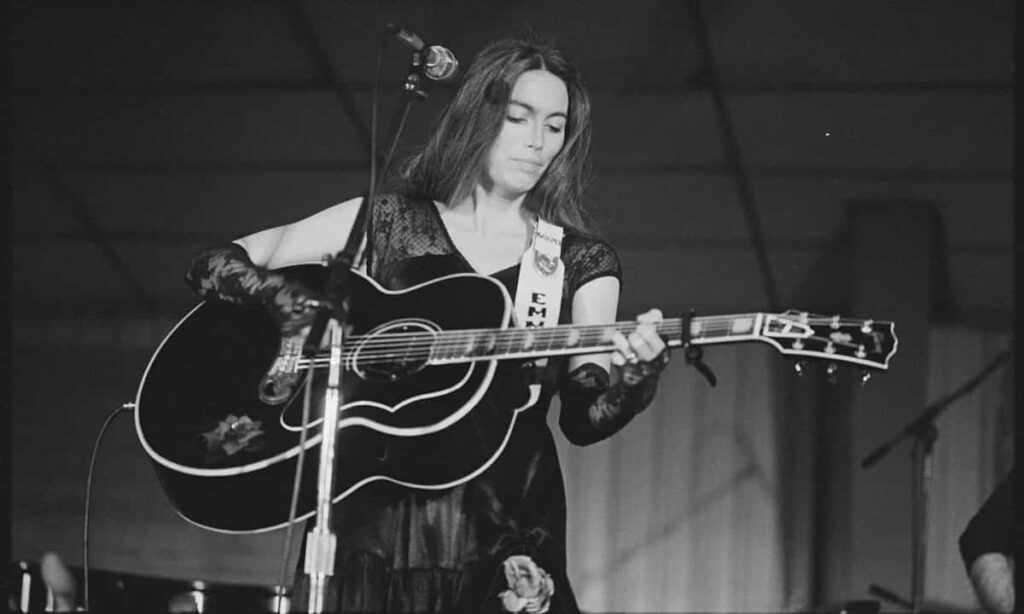
From the moment Emmylou Harris folded “Pancho & Lefty” into her 1977 album Luxury Liner, the song gained a new emotional shape one so natural, so inward, that Harris later confessed she felt it had somehow become her song. Although her rendition was not released as a single and therefore never appeared on the major charts, it quietly grew into one of the most beloved interpretations of Townes Van Zandt’s haunting masterpiece. For many listeners, especially those who have lived long enough to see friendships shift and seasons change, her version is often the one that lingers the longest.
Before Harris recorded it, Townes Van Zandt had already written “Pancho & Lefty” in 1972 a tale wrapped in dust and sorrow, shaped by the folklore of the American Southwest. The song never chased commercial glory. Instead, it entered the world the way real stories of heartbreak do: gently, almost shyly, through the backdoor. It wasn’t until later after Harris’s cover, and then the famous 1983 duet by Willie Nelson and Merle Haggard that the song would find broader recognition. But long before it reached number one under Nelson and Haggard, Harris had already heard something deeper in it, something that made her stake a quiet, emotional claim.
Harris approached the song with a tenderness that felt lived-in. She didn’t dramatize its desert setting or its outlaw mythology. Instead, she treated it like a memory faded at the edges, softened by regret, but still sharp enough to hurt. Her phrasing, always precise yet warm, allowed the story of Pancho and Lefty to unfold not as a legend, but as a human truth: that sometimes we lose the people we care about not through betrayal, but through life’s long and winding distances. Listening to her, you don’t picture outlaws on dusty roads as much as you recall old friends, long-ago promises, or the quiet ache of drifting apart.
What gives Harris’s version its lasting power is not just her voice, but her empathy. She sings the song as if she knows both men, understands their flaws, and forgives them anyway. Pancho becomes less a rebel and more a wounded spirit; Lefty, less a traitor and more a soul who made a choice he must live with. There is no judgment in her interpretation only understanding, the kind that comes with age and reflection.
The Luxury Liner album itself was already a pivotal moment in Harris’s career, showcasing her ability to blend country, folk, and rock with an elegance few artists could match. Yet “Pancho & Lefty” stands out because it feels like a personal confession delivered through another writer’s words. It is one of those rare recordings that proves how a great interpreter can transform a song without altering a syllable.
And for older listeners, the song now carries an even heavier resonance. We hear in it the dusty roads we once walked, the friendships that slipped through our fingers, and the bittersweet knowledge that life rarely sorts itself into heroes and villains. Instead, we are all a little like Pancho, brave in our own way, and a little like Lefty, carrying regrets we don’t always speak aloud.
Through Emmylou Harris’ voice, “Pancho & Lefty” becomes not just a ballad of two outlaws, but a reflection on loyalty, memory, and the quiet, complicated love we hold for the people who shaped our lives even those who didn’t stay.