
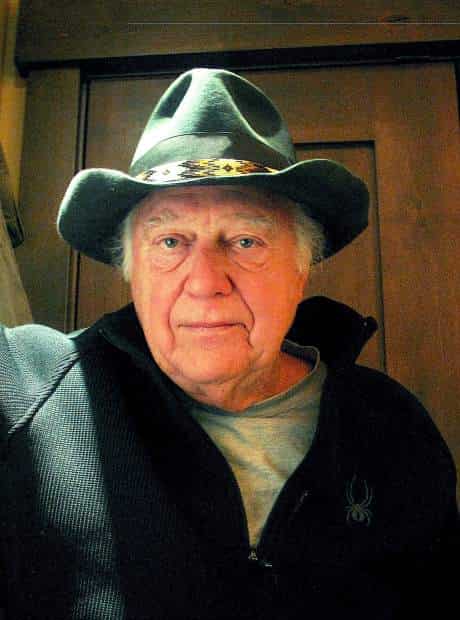
A Final Testament to a Life Lived in Song — Why Music Remains the Last Honest Refuge
When Jerry Jeff Walker released “That’s Why I Play” on March 24, 2018, it did not arrive with the noise of radio rotation or the urgency of chart competition. There was no sprint toward the Billboard Hot 100, no calculated push for commercial placement. In fact, “That’s Why I Play” did not enter the major singles charts at all. And that absence is precisely the point. This song was never meant to compete. It was meant to confess.
Positioned as the opening track of It’s About Time, Walker’s final studio album, the song sets the emotional and philosophical tone from its very first lines. The album itself holds deep significance: it was his first collection of new original material in years, recorded after his battle with throat cancer, and ultimately became a quiet farewell released two years before his death in 2020. The title It’s About Time reads not as impatience, but as reckoning with age, memory, loss, and gratitude.
“That’s Why I Play” functions as a personal manifesto. In a career that spanned more than five decades, Walker had long abandoned the idea that music existed for polish or prestige. This was the same artist who gave the world “Mr. Bojangles,” a song that traveled far beyond him, carried by countless other voices. By 2018, Walker no longer needed to explain his place in American music. Instead, he chose to explain why he stayed.
The story behind the song is inseparable from Walker’s physical condition at the time of recording. After throat cancer, his voice had changed rougher, more weathered, stripped of any remaining smoothness. Rather than hide that reality, he leaned into it. The vocal delivery on “That’s Why I Play” is conversational, intimate, and unguarded. It sounds less like a performance and more like a late-night truth spoken across a kitchen table. Each line carries the weight of someone who knows the road behind him is far longer than the road ahead.
Lyrically, the song rejects romantic illusions about the music business. Walker does not play for fame, fortune, or applause. He plays because music remains the only language that never betrayed him. The song acknowledges failure, exhaustion, and disappointment, yet it never collapses into bitterness. Instead, it arrives at acceptance that playing music is not a means to an end, but an end in itself.
Musically, the arrangement is understated and deliberately restrained. Acoustic textures dominate, leaving space for reflection rather than spectacle. There is no urgency to impress, no attempt to chase trends. The production allows silence to breathe between phrases, reinforcing the sense that this is a man taking his time, fully aware that time is finite.
Within the broader context of Walker’s legacy, “That’s Why I Play” stands as a summation rather than a reinvention. From his early days drifting between folk, country, and outlaw scenes, Walker always embodied independence not just stylistically, but spiritually. This song distills that independence into its purest form. It affirms that music was never a career choice for him; it was survival.
The meaning of “That’s Why I Play” ultimately extends beyond Walker himself. It speaks to anyone who has held onto a craft, a passion, or a calling long after the external rewards faded. It reminds us that the truest reasons for doing anything meaningful often reveal themselves only at the end, when there is nothing left to prove.
As the opening statement of It’s About Time, the song feels less like an introduction and more like a final bow delivered without ceremony. There is no dramatic goodbye, no grand conclusion. Just a man, a song, and an honest answer to a question he had been living with his entire life.
That is why Jerry Jeff Walker played. And that is why this song endures not on charts, but in memory.