
A Song About Time, Friendship, and the Quiet Passing of a Vanishing America
When Jerry Jeff Walker recorded Desperados Waiting for the Train for his 1973 live album Viva Terlingua, the song arrived without commercial fanfare, yet it carried something far more enduring than a chart position. Written by Guy Clark, this was not a radio single designed to climb the Billboard charts, and indeed it did not register as a hit upon release. But from the moment it was heard, it began a slower, deeper journey into the collective memory of American roots music. Over time, it would be recognized as one of the most poignant narrative songs ever written, a quiet cornerstone of the Texas singer songwriter tradition.
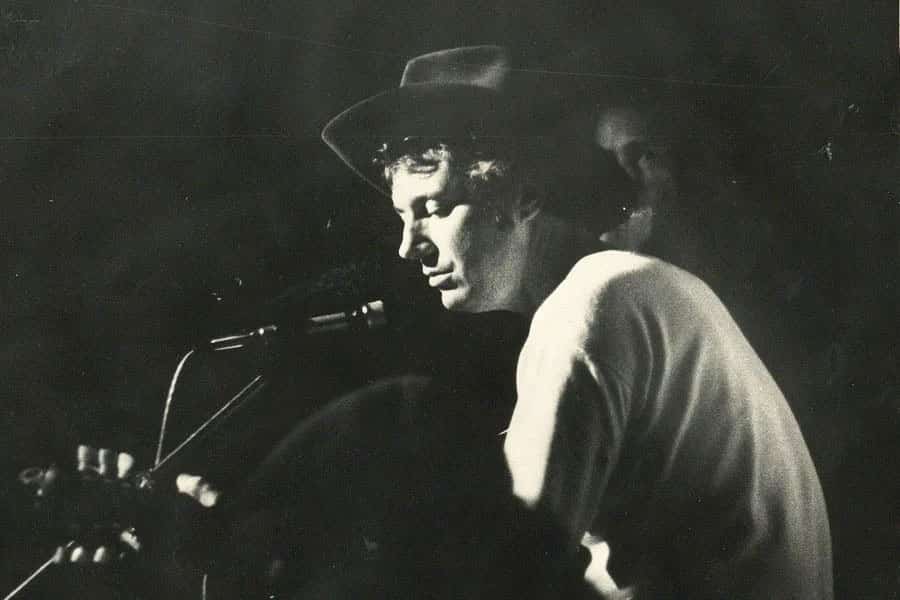
The song first appeared on Viva Terlingua, a live album recorded at the Cheatham Street Warehouse in San Marcos, Texas. That setting mattered. The album captured an unvarnished moment in the early 1970s outlaw and progressive country movement, when artists like Jerry Jeff Walker, Willie Nelson, and others were stepping away from Nashville polish and returning to songs that sounded lived in. Walker’s reading of Desperados Waiting for the Train was intimate and conversational, shaped by his own gravel edged warmth and his deep understanding of the world Guy Clark was describing.
At its heart, Desperados Waiting for the Train is a song about an aging friendship and the slow erosion of a way of life. Guy Clark wrote it about an older family friend named Jack, a retired oil worker who represented a generation raised on resilience, routine, and unspoken loyalty. The narrator recalls afternoons spent listening to old war stories, watching westerns, and absorbing lessons not delivered as sermons but as shared time. The phrase “desperados waiting for the train” becomes a metaphor for aging men sitting quietly with the knowledge that the end of the line is inevitable, yet still meeting each day with dignity.
The song’s meaning unfolds gently. There is no dramatic climax, no lyrical grandstanding. Instead, Clark offers a meditation on mortality, memory, and the quiet heroism of ordinary lives. When the narrator realizes that his old friend is gone, the loss feels personal and universal at once. It is the moment when youth finally understands that time only moves in one direction. Walker’s performance honors that realization without sentimentality, letting the story speak for itself.
While Jerry Jeff Walker was the first to record the song, Guy Clark later included it on his 1975 debut album Old No. 1, where it reached an even wider audience and became one of his signature compositions. Over the years, the song has been recorded by artists across genres, including Johnny Cash, The Highwaymen, and Nanci Griffith, each drawn to its timeless truth. In 2004, it was inducted into the Grammy Hall of Fame, confirming its lasting cultural and artistic significance.
Musically, the song is understated, built on simple chord progressions that leave room for the narrative to breathe. There is a conversational rhythm to the lyrics, as if the singer is speaking directly across a kitchen table or from a worn barstool. That simplicity is deliberate. It mirrors the lives the song portrays, lives defined not by spectacle but by consistency, responsibility, and quiet endurance.
Today, Desperados Waiting for the Train endures because it refuses to chase relevance. Instead, it waits patiently, like its characters, for listeners willing to slow down and listen. In Jerry Jeff Walker’s hands, the song feels less like a performance and more like a remembrance. It reminds us that the people who shape us often do so without realizing it, and that one day we all become the ones watching the afternoon light fade, waiting for a train we know will eventually arrive.