
A Song That Spoke Softly Yet Carried the Weight of an Era, Calling on Hearts to Listen Before History Moved On
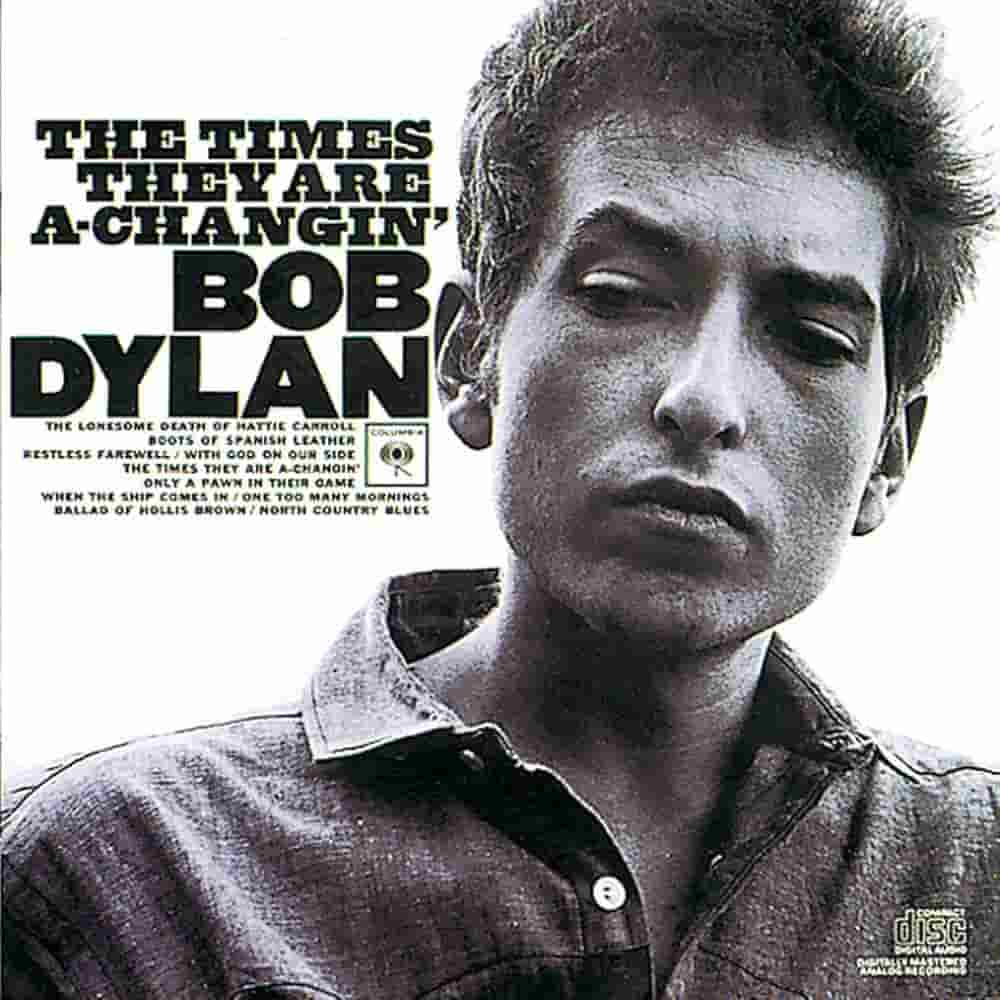
When Bob Dylan released “The Times They Are a-Changin’” in January 1964, it arrived not as a pop sensation, but as a statement of purpose. Issued as both a single and the title track of the album The Times They Are a-Changin’, the song quickly established itself as one of the defining musical documents of the 1960s. On the charts, it made a modest showing in the United States, peaking at No. 59 on the Billboard Hot 100, while finding a more receptive audience abroad, reaching the Top 10 in the United Kingdom. Yet its cultural impact far exceeded any numerical ranking. This was not a song built for fleeting radio success. It was written to last, to linger, and to be returned to when the noise of the moment had faded.
By the time Dylan recorded the song in October 1963, he was only twenty two years old, yet already carrying the uneasy role of a generational voice. The album that followed marked a turning point in his career. Where earlier records leaned heavily on traditional folk forms and covers, The Times They Are a-Changin’ presented an artist stepping fully into authorship, addressing social upheaval with clarity and restraint. The title song was inspired by a mixture of influences, including traditional Scottish and Irish ballads and the charged atmosphere of the civil rights movement, labor struggles, and political unrest that defined early 1960s America.
Musically, the song is almost austere. Built around a simple, march like chord progression, it leaves little room for ornamentation. This sparseness is deliberate. Dylan understood that the message required no embellishment. His voice, still rough and unpolished, delivers the lyrics with a calm urgency, as if speaking directly across a kitchen table rather than from a stage. There is no accusation in the tone, only an invitation to pay attention before it is too late.
Lyrically, “The Times They Are a-Changin’” unfolds as a series of addresses. It speaks to ordinary people, to writers and critics, to politicians, and finally to parents who may struggle to understand a world shifting beyond their control. The famous opening line, “Come gather ’round people wherever you roam,” sets the tone. This is not protest shouted through clenched fists, but reflection offered with steady conviction. The song acknowledges that change is inevitable and suggests that resisting it blindly carries its own quiet tragedy.
What gives the song its enduring power is not the specificity of its references, but its moral patience. Dylan does not name laws, leaders, or events. Instead, he captures the emotional truth of living through transition, that unsettling feeling when familiar landmarks begin to move. In doing so, the song becomes timeless. Decades later, it continues to surface during moments of social reckoning, not because it offers solutions, but because it recognizes the human cost of standing still while the world turns.
The album The Times They Are a-Changin’ as a whole reinforced this seriousness. It was darker and more contemplative than Dylan’s previous work, reflecting an artist absorbing the weight of expectation. Songs like “With God on Our Side” and “Only a Pawn in Their Game” expanded on similar themes, but it was the title track that distilled the message into its most memorable form.
In retrospect, Bob Dylan would later distance himself from the idea of being a spokesman for any movement. Yet this song remains as evidence of a moment when words mattered deeply, when a three minute folk song could feel like a public letter written in pencil and passed carefully from hand to hand. “The Times They Are a-Changin’” endures not because it predicts the future, but because it understands the past and listens closely to the present. It reminds the listener that history rarely announces itself loudly. More often, it hums quietly in the background, waiting to be noticed.
 Oldies Songs