
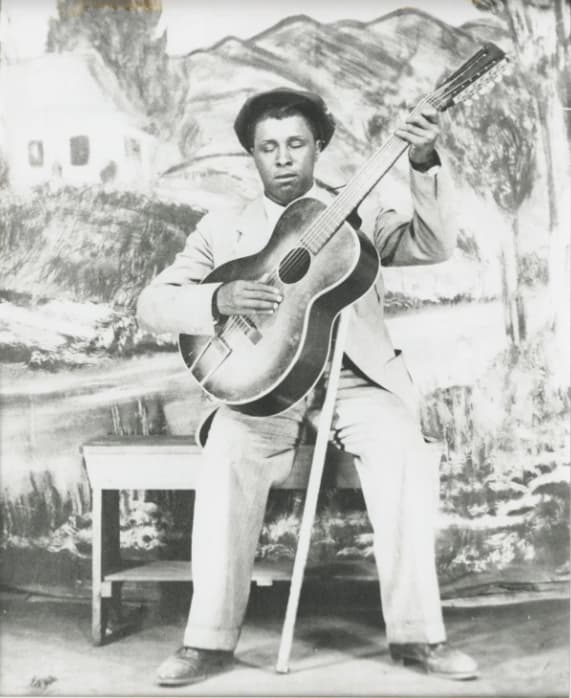
I Got to Cross the River Jordan — a sacred blues meditation on faith, passage, and the long road home
There is a profound stillness at the heart of “I Got to Cross the River Jordan”, a song that feels less like a performance and more like a prayer whispered into history. When sung and recorded by Blind Willie McTell, it becomes something even rarer: a meeting place between the blues and the spiritual, between earthly suffering and the promise of deliverance. This recording did not appear on any popular chart at the time of its release — it emerged in an era before modern rankings mattered — yet its importance lies far beyond numbers. Its power has endured quietly, carried forward by memory, faith, and the unmistakable voice of a man who understood both hardship and hope.
Blind Willie McTell, born William Samuel McTell, was already a seasoned master by the early 1930s, known for his extraordinary twelve-string guitar technique and his ability to move freely between blues, ragtime, folk, and gospel. In 1933, during a recording session in New York, he captured “I Got to Cross the River Jordan”, a traditional African-American spiritual that had circulated orally for generations. The song was not newly written; it was inherited — shaped by collective experience, sung in churches, fields, and quiet rooms where faith was often the last possession left.
The River Jordan, in biblical tradition, represents the final crossing — the boundary between earthly struggle and eternal rest. In African-American spirituals, that river carried additional meaning: escape, liberation, and the hope of a life beyond suffering. When McTell sings of needing to cross it, he does so without drama or flourish. His voice is calm, steady, and resolute, as if he has already accepted what lies ahead. There is no fear here, only preparation.
What makes McTell’s rendition so deeply moving is its restraint. His twelve-string guitar does not dominate; it supports, gently rippling beneath the vocal like water itself. Each note feels deliberate, almost reverent. Unlike the raw sorrow found in many Delta blues recordings, this song carries a quiet assurance. Pain is acknowledged, but it no longer defines the journey. Faith does.
This recording arrived during the Great Depression, a time when hardship was not theoretical but daily and unforgiving. For many listeners then — and now — the song spoke to endurance. It reminded them that suffering had meaning, that the road, however long, led somewhere sacred. McTell, blind from birth and navigating a world that offered little mercy, sang not from abstraction but from lived truth. His understanding of darkness gave weight to his belief in light.
Unlike commercial blues releases, “I Got to Cross the River Jordan” was never intended to entertain in the usual sense. It offered comfort. It offered perspective. And in doing so, it revealed another side of Blind Willie McTell — not just the storyteller of earthly woes, but the witness of spiritual resolve.
Decades later, the song continues to resonate, especially for those who have reached the reflective seasons of life. Its message feels closer then. The river no longer seems distant. McTell’s voice, preserved in time, speaks gently across the years, reminding us that crossings are part of the human story — and that faith, in whatever form one holds it, can make the passage less frightening.
In the vast legacy of Blind Willie McTell, this song stands as a quiet cornerstone. It does not shout its significance. It waits patiently, like the river itself, for those ready to listen. And when they do, they often find something deeply familiar: a sense of peace, a memory of endurance, and the soft assurance that every long journey carries the promise of rest on the other side.