
“Calling My Children Home” as a Spiritual Homecoming and a Reckoning with Time
When Emmylou Harris released At the Ryman in 1992, the album arrived not merely as a live recording but as a statement of identity, faith, and musical lineage. Recorded over several nights in May 1991 at the historic Ryman Auditorium in Nashville, the former home of the Grand Ole Opry, the album debuted to immediate critical acclaim and reached No. 29 on the Billboard 200 and an impressive No. 3 on the Billboard Top Country Albums chart. For an artist already revered for artistic integrity rather than chart dominance, those positions confirmed something deeper: audiences were ready to listen quietly, attentively, and with memory fully engaged.
Near the emotional center of the record sits “Calling My Children Home”, a traditional gospel song whose roots stretch back through Appalachian hymnody and rural Southern worship. The song itself was never designed for radio success and was never released as a commercial single. Its power lies elsewhere. In stillness, restraint, and accumulated meaning. By placing it within At the Ryman, Emmylou Harris elevated the song from church hymn to cultural meditation, turning a simple call to salvation into a reflection on mortality, belonging, and spiritual return.
The arrangement on At the Ryman is sparse and reverent. There is no attempt to modernize or dramatize the song. Instead, Emmylou Harris allows her voice to carry the weight of years. Her phrasing is unhurried, almost conversational, shaped by breath and silence as much as melody. The harmonies from The Nash Ramblers, particularly the high lonesome responses, recall a time when music was passed down orally, learned by listening rather than studying. In this performance, the Ryman itself feels like an instrument, its wood and air absorbing every syllable.
The song’s message is straightforward on the surface. A divine voice calls the faithful home, one by one, reminding them that earthly struggles are temporary. Yet in Emmylou Harris’s interpretation, the meaning widens. Home is no longer only heaven. It becomes memory, ancestry, and the moral center that often fades with time. The repeated refrain takes on the tone of a reckoning, asking what has been carried forward and what has been left behind.
By the early 1990s, Emmylou Harris was already a veteran artist. She had weathered personal loss, industry change, and shifting musical fashions. At the Ryman marked a return to acoustic roots after years of polished studio work, and “Calling My Children Home” felt like a personal anchor within that return. It echoed the influence of her mentor Gram Parsons, her deep immersion in gospel harmony, and her lifelong respect for traditional American song forms.
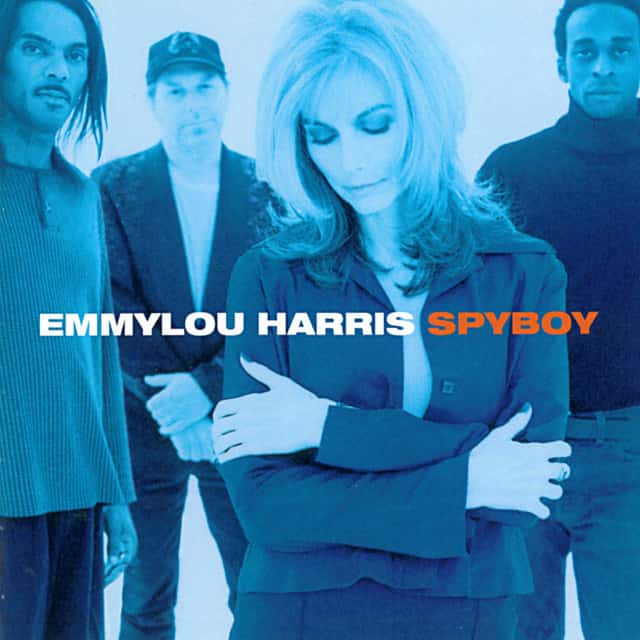
Several years later, this same song would take on renewed life in live performances with Spyboy, the fiercely inventive band that accompanied Emmylou Harris during the late 1990s. A notable performance occurred at the Exit Inn in Nashville in May 1998, where Spyboy brought a darker, more restless undercurrent to her catalog. Even then, “Calling My Children Home” remained largely unchanged, resisting reinterpretation. Its stillness became its statement, standing in quiet contrast to the experimental textures around it.
The enduring significance of “Calling My Children Home” lies in its refusal to chase relevance. It does not explain itself, nor does it ask for attention. Instead, it waits. For listeners willing to meet it with lived experience, the song becomes less about belief and more about arrival. Arrival at understanding. Arrival at acceptance. Arrival at the recognition that time, once passed, cannot be reclaimed, only honored.
Within the broader legacy of Emmylou Harris, this song exemplifies her rare ability to act as a bridge between eras. She does not treat traditional material as museum relics but as living texts, capable of speaking anew without being rewritten. At the Ryman remains one of her most important works precisely because of moments like this, where humility and artistry meet.
In the end, “Calling My Children Home” endures because it sounds like truth spoken softly. Not imposed, not dramatized, but offered. And in that offering, it reminds listeners that music, at its most honest, does not demand belief. It invites remembrance.