
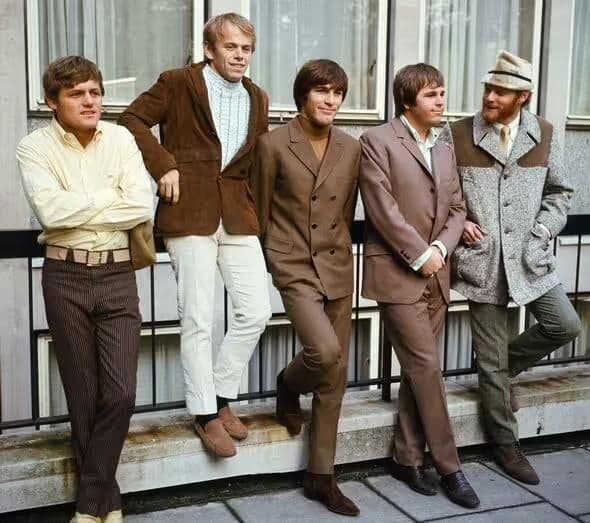
Sloop John B — a familiar folk tale transformed into a timeless voyage of homesickness, harmony, and the longing to go home
When The Beach Boys released “Sloop John B” in early 1966, it arrived like a postcard from another world — sunlit, melodic, and deceptively simple, yet carrying a deep undercurrent of weariness and longing. Placed prominently on the landmark album Pet Sounds, the song became one of the group’s most enduring recordings, reaching No. 3 on the U.S. Billboard Hot 100 and climbing to No. 2 on the UK Singles Chart shortly after its release. These numbers mattered, of course, but what truly secured the song’s place in history was its emotional resonance — a feeling that has only grown richer with time.
At its heart, “Sloop John B” is not a modern pop composition at all. Its roots lie in a traditional Bahamian folk song, sometimes known as “The John B. Sails.” The tale of a troubled voyage, passed down through generations, was brought into the modern era when Al Jardine introduced it to Brian Wilson, who immediately recognized its potential. Wilson reshaped the song with lush harmonies, inventive arrangements, and that unmistakable Beach Boys blend of innocence and melancholy. The result was something extraordinary: an old seafaring lament reborn as a California pop classic.
On the surface, the song tells a simple story. A group of passengers boards a small boat — the Sloop John B — only to encounter chaos, drunkenness, theft, and despair. The narrator grows increasingly desperate, repeating the plaintive refrain: “I wanna go home.” But beneath the nautical imagery lies something far more universal. This is a song about disillusionment, about realizing that a journey once filled with promise has gone wrong, and about the aching desire to return to a place of safety and familiarity.
That refrain — “Let me go home” — is the emotional anchor of the song. Sung in those unmistakable layered harmonies, it feels both communal and deeply personal. It resonates with anyone who has ever felt out of place, overwhelmed, or simply tired of the noise of the world. In the context of Pet Sounds, an album steeped in introspection and quiet anxiety, “Sloop John B” fits perfectly. Though more upbeat than many of its surrounding tracks, it shares the same emotional DNA: vulnerability wrapped in beauty.
Musically, the recording is a masterclass in balance. Brian Wilson’s production elevates the folk melody with rich vocal stacks, crisp percussion, and a sense of forward motion that mirrors the rocking of the sea. Yet there is restraint here too. The song never feels crowded; instead, it breathes, allowing the story and the harmonies to carry the weight. It is this careful craftsmanship that allows the song to feel both joyous and weary at the same time — a rare and delicate emotional blend.
For listeners who first encountered The Beach Boys in the 1960s, “Sloop John B” often triggers memories of radios playing by open windows, of long drives, of summers that seemed endless. But with the passage of years, the song takes on new meaning. What once sounded like a cheerful sing-along gradually reveals itself as a quiet confession: sometimes the adventure disappoints, sometimes the world is too much, and sometimes all we truly want is to go home.
In the long arc of The Beach Boys’ legacy, “Sloop John B” stands as a bridge between tradition and innovation, between carefree youth and reflective adulthood. It reminds us that even the brightest harmonies can carry sorrow, and that longing is as much a part of life as joy. Like the best songs, it grows with us — and each time we hear that familiar chorus, we are reminded of our own journeys, and of the places, real or imagined, that still feel like home.
 Oldies Songs