
A Song About Roots, Memory, and the Quiet Pull of Home That Never Truly Leaves Us
When Gram Parsons brought Hickory Wind into the world through Sweetheart of the Rodeo, he was not simply adding another song to a landmark album. He was offering a deeply personal meditation on belonging, loss, and the invisible threads that tie a person to the place that formed them. From its very first lines, the song feels less like a performance and more like a confession spoken softly, meant for listeners who have lived long enough to understand how memory can ache as sharply as it comforts.
Released in August 1968, Sweetheart of the Rodeo was credited to The Byrds, but it bore the unmistakable spiritual and musical imprint of Gram Parsons. Commercially, the album was modest upon its American release, peaking at number 77 on the Billboard 200. It did not dominate radio or sales charts in the United States at the time. Yet its long term influence proved immeasurable. In the United Kingdom, the album was received with far greater enthusiasm, reaching the top of the UK Albums Chart and signaling that something quietly revolutionary had taken place. Hickory Wind itself was never released as a single, and therefore carried no chart position of its own. Its importance has always rested not in numbers, but in resonance.
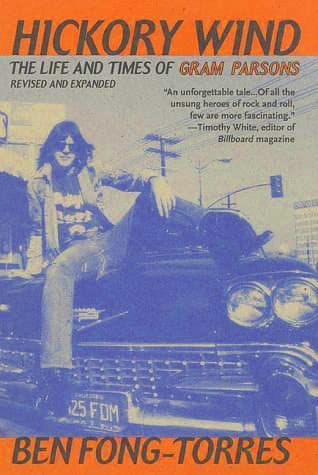
The story behind Hickory Wind is inseparable from Gram Parsons himself. Co written with Bob Buchanan in early 1968, the song was shaped by Parsons’s memories of his youth in Waycross, Georgia. The title refers to a real, physical sensation familiar to anyone raised in the American South. The wind that moves through hickory trees carries a distinct sound and presence, one that evokes childhood, land, and seasons long gone. For Parsons, whose early life was marked by privilege shadowed by profound loss, including the suicide of his father and later his mother, the song became a way to speak to a past that could never be reclaimed.
Musically, Hickory Wind stands apart even within an album already breaking boundaries. At a time when rock music was growing louder, more psychedelic, and more confrontational, this song chose restraint. Its melody is gentle, almost hymnal, grounded in country tradition rather than rebellion. Parsons’s vocal delivery is unadorned and vulnerable, carrying a weary sincerity that feels lived in rather than performed. There is no irony here, no pose. What you hear is a man looking backward, measuring what has been lost and what still lingers in memory.
The meaning of Hickory Wind unfolds slowly, like a conversation held late in the evening. It speaks of leaving home, chasing experience, and discovering that distance does not weaken attachment. Instead, absence sharpens it. The song understands that adulthood often brings achievement and freedom, but rarely peace. Home becomes an idea rather than a place, and the past begins to whisper more insistently with each passing year. This is why the song continues to speak so powerfully to mature listeners. It reflects a truth learned only through time, that progress does not erase longing.
Within the context of Sweetheart of the Rodeo, Hickory Wind also represents a turning point in popular music. The album helped define what would later be called country rock, influencing generations of artists from The Flying Burrito Brothers to Emmylou Harris, The Eagles, and countless others. Parsons’s vision was not about blending genres for novelty, but about restoring emotional honesty to modern music. In this song, country music was not a costume. It was memory, history, and identity.
Decades later, Hickory Wind endures because it refuses to age. Its themes grow more relevant as years pass. The song does not demand attention. It waits patiently, knowing that one day the listener will be ready. When that moment comes, the wind rises again, carrying with it the sound of hickory trees, the echo of youth, and the quiet understanding that some parts of us never leave home, no matter how far we travel.