
A Road Song About Freedom, Temptation, and the Price of Living on Your Own Terms
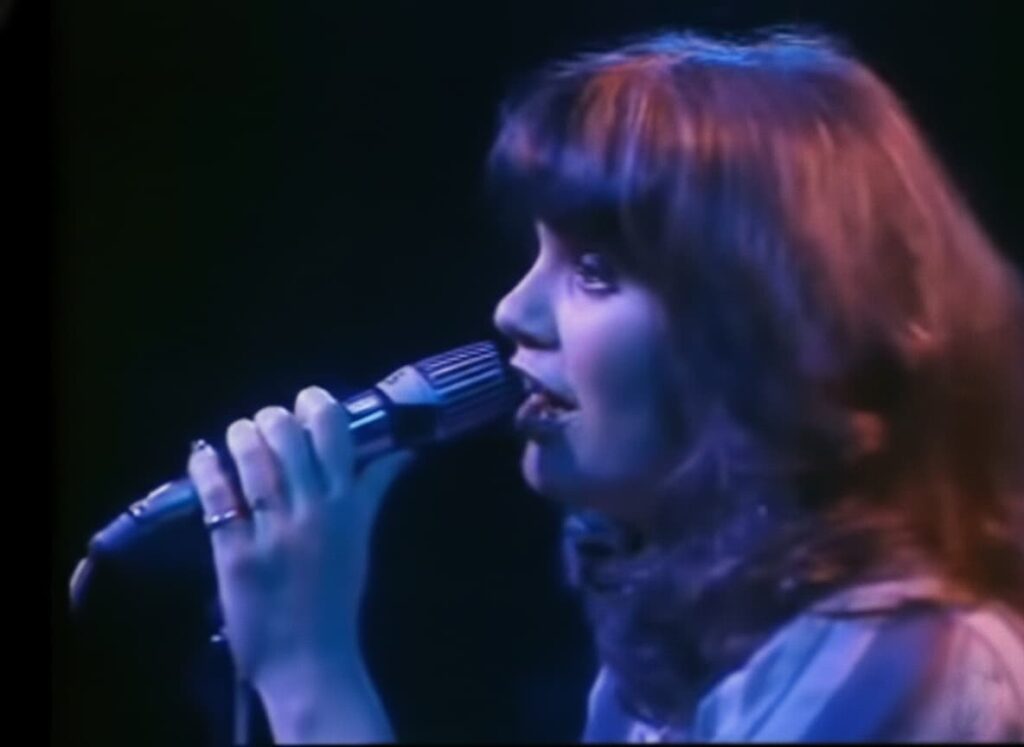
When Linda Ronstadt performed “Willin’” live in 1976, she was not introducing a new song to the world. She was offering her audience a moment of recognition. By that time, Ronstadt had already become one of the most trusted voices in American popular music, a singer whose interpretations could illuminate the emotional core of a song without distorting its truth. Her live rendition of “Willin’”, a song written by Lowell George of Little Feat, stands as a quiet but powerful example of how interpretation can be as meaningful as authorship.
It is important to clarify the historical footing at the outset. “Willin’” was written by Lowell George and first recorded by Little Feat for their self titled debut album “Little Feat” released in 1971. The song was never a major hit on the singles charts. It did not enter the Billboard Hot 100 at the time of its release. Yet its influence traveled far beyond chart positions. Over the years, “Willin’” became one of the most respected road songs in American rock, embraced by musicians and listeners who understood its understated honesty. Linda Ronstadt’s 1976 live performances did not correspond to a single release, and therefore there is no chart placement associated with her version. What mattered was not commercial measurement, but emotional resonance.
By 1976, Ronstadt was at a career peak. Her album “Hasten Down the Wind”, released that same year, reached number one on the Billboard 200, confirming her status as one of the defining voices of the decade. In concert, she often stepped away from radio hits to explore songs that reflected her musical roots, folk, country, rock, and the American road tradition. “Willin’” fit naturally into that space. It was a song about motion, endurance, and compromise, themes that resonated deeply in an era when many artists were reckoning with the cost of freedom.
The story behind “Willin’” is inseparable from Lowell George’s own life. Written while he was still searching for stability, the song reflects the perspective of a man who lives from mile to mile, taking risks, crossing borders, and accepting consequences. Lines about “weed, whites, and wine” were controversial at the time, even leading to George’s dismissal from The Mothers of Invention under Frank Zappa. Yet those words were never included for shock. They were presented plainly, as facts of a life lived on the margins of comfort and safety.
What Linda Ronstadt brought to the song in 1976 was a subtle shift in gravity. Her voice did not romanticize the road. It softened it. Where George sang with weary defiance, Ronstadt sang with reflective acceptance. Her phrasing suggested not rebellion, but understanding. The danger, the longing, and the loneliness were all still present, but they were filtered through empathy rather than bravado. This made the song feel less like a confession and more like a shared memory.
The meaning of “Willin’” has always rested in its willingness to admit contradiction. Freedom is intoxicating, but it is not clean. Independence demands sacrifice. Love is possible, but never guaranteed. Ronstadt’s live interpretation emphasized these tensions without overstating them. She trusted the song and trusted her audience to listen closely.
For listeners who had lived through changing decades, who had known long drives, difficult choices, and moments of quiet resolve, her performance carried particular weight. It did not ask for nostalgia, but it invited reflection. In that sense, Linda Ronstadt’s live 1976 performance of “Willin’” stands as a testament to the enduring power of great songwriting and thoughtful interpretation. It reminds us that some songs do not belong to a moment on a chart, but to a lifetime of listening.
 Oldies Songs