
A Song About Leaving Without Anger, and the Quiet Strength It Takes to Walk Away
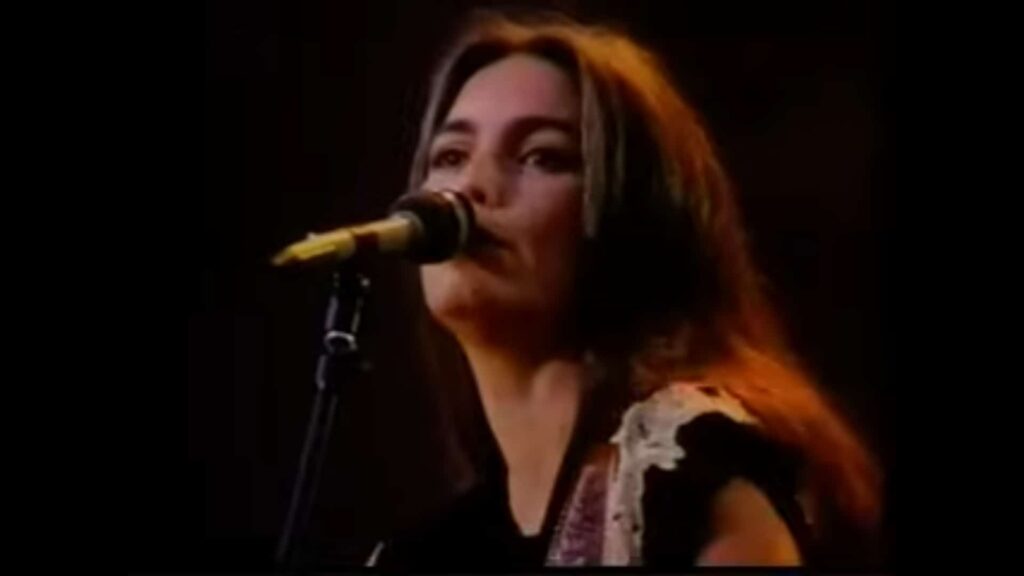
When Emmylou Harris stepped onto the stage of Red Rocks Amphitheatre in 1984 and sang “I’m Movin’ On”, she was not simply revisiting a country standard. She was engaging in a conversation across generations, drawing a straight emotional line from the hard-edged honky-tonk era to the reflective, literate country music of the late twentieth century. For listeners with long memories, the performance carried both historical weight and personal resonance.
“I’m Movin’ On” was first recorded and made famous by Hank Snow in 1950. Upon its release, the song reached No. 1 on the Billboard Country and Western chart, where it remained for an extraordinary 21 consecutive weeks, making it one of the most dominant country hits of its era. Written by Snow himself, the song told a simple story of departure: a man leaving a relationship that has run its course, without bitterness, without drama, and without looking back. At the time, this emotional restraint was unusual. Country music often thrived on heartbreak and accusation, yet Snow offered dignity instead of grievance.
By the time Emmylou Harris chose to include “I’m Movin’ On” in her live repertoire decades later, the song had already become a pillar of country tradition. Harris, known for her deep respect for the genre’s foundations, approached it not as an artifact but as a living text. Her 1984 performance at Red Rocks Amphitheatre, backed by the Hot Band, reframed the song through a softer, more introspective lens. Where Snow’s original carried the forward momentum of postwar optimism and personal resolve, Harris brought an ache of reflection, as though the decision to leave had been contemplated for a long time.
This performance came during a significant period in Harris’s career. By the mid-1980s, she had already established herself as one of the most important voices in country and Americana music, bridging traditional country, folk, and emerging roots rock. Albums such as “Elite Hotel”, “Luxury Liner”, and “Blue Kentucky Girl” had confirmed her role as both a curator of classic songs and a fearless interpreter willing to find new emotional ground within them. Her choice to sing “I’m Movin’ On” live in such a monumental natural setting felt deliberate. Red Rocks, with its vast openness and ancient stone, mirrored the song’s emotional geography: wide, honest, and unadorned.
The meaning of “I’m Movin’ On” lies not in escape, but in acceptance. The narrator does not seek revenge or validation. He simply acknowledges that staying would be dishonest. This theme resonates powerfully with listeners who have lived long enough to understand that some endings are acts of self-respect. Harris’s voice, seasoned and clear, emphasizes this maturity. Each line is delivered without haste, allowing the listener to sit with the weight of the decision. In her hands, the song becomes less about physical movement and more about emotional clarity.
What makes this 1984 performance especially affecting is its sense of quiet confidence. There is no theatrical farewell, no raised voice. Instead, Harris lets the melody breathe, trusting the audience to meet the song halfway. For those who grew up with the original version, the performance invites comparison. For others, it offers discovery. In both cases, it affirms that great songs do not age. They deepen.
Emmylou Harris, standing under the open Colorado sky, transformed “I’m Movin’ On” into a meditation on time itself. Leaving, in this context, is not loss. It is continuity. The road goes on, and the song goes with it, carried forward by voices that understand what it means to walk away with grace.