
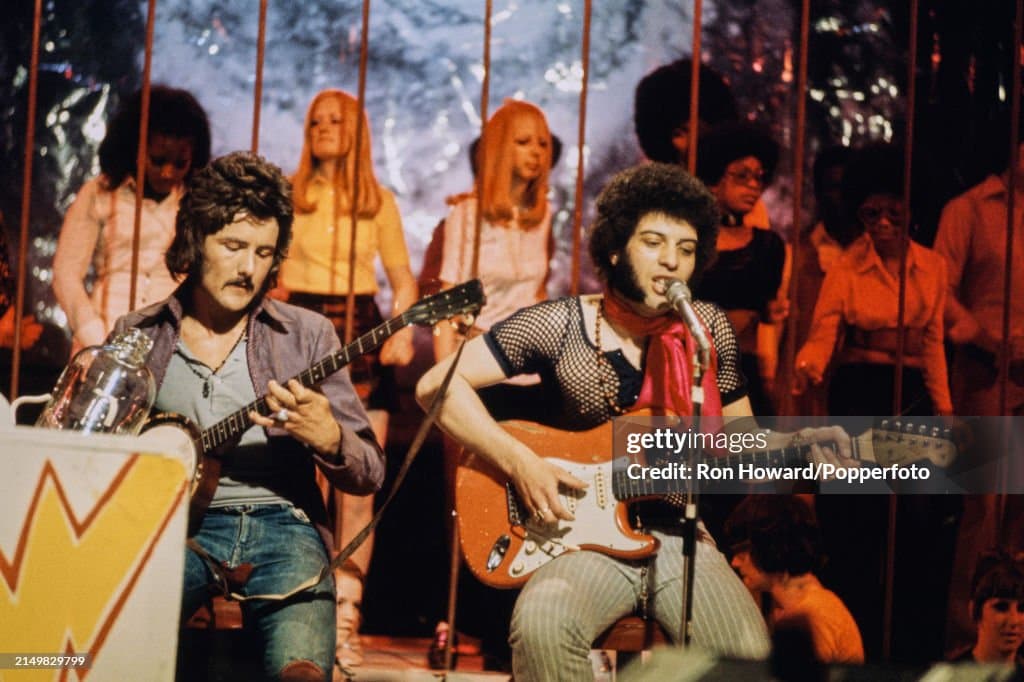
A breezy celebration of freedom and tenderness, where a wandering spirit pauses just long enough to honor grace, affection, and the quiet poetry of everyday life.
Released in 1971, “Lady Rose” by Mungo Jerry arrived at a fascinating crossroads in popular music. Coming just a year after the explosive, sun-soaked success of “In the Summertime,” this song showed a different shade of the band’s personality—less rowdy, more reflective, but no less rooted in warmth and human connection. Upon its release as a single in the UK, “Lady Rose” climbed confidently to No. 5 on the UK Singles Chart, confirming that Mungo Jerry were far more than a novelty act riding on one carefree hit. The song was later included on the album Electronically Tested (1971), an album that subtly expanded the band’s musical palette.
At the heart of “Lady Rose” is a deceptively simple musical arrangement. Built around acoustic guitar, light percussion, and a gently rolling rhythm, the song feels almost like a conversation carried by the breeze. Ray Dorset’s vocal delivery is relaxed, affectionate, and conversational—never forcing emotion, but letting it emerge naturally. This unhurried approach is part of the song’s enduring charm. It doesn’t demand attention; it invites it.
The story behind “Lady Rose” is not one of grand drama or explicit narrative twists. Instead, it reflects Mungo Jerry’s distinctive ability to elevate ordinary moments into something quietly meaningful. The song addresses a woman—Lady Rose—who seems to symbolize grace, kindness, and emotional refuge. She is not idealized as unreachable or mythical; rather, she feels present, real, and grounded. This groundedness is crucial. In an era when rock music often leaned toward excess or abstraction, “Lady Rose” stands out for its human scale.
Lyrically, the song speaks in plain language, yet it resonates with deeper emotional undercurrents. There is admiration here, but also gratitude. The narrator does not conquer or possess; he observes, appreciates, and cherishes. That tone of respect gives the song a timeless quality. It reflects a worldview shaped by experience rather than impulse—a perspective that values companionship, understanding, and emotional balance over fleeting excitement.
From a broader musical perspective, “Lady Rose” sits comfortably within the early 1970s British pop and folk-rock tradition, while still sounding unmistakably like Mungo Jerry. The band’s trademark blend of skiffle, blues, folk, and light rock is present, but softened. The boisterous jug-band energy that fueled earlier hits is replaced here by restraint and subtlety. This stylistic shift demonstrated maturity and confidence, suggesting a group willing to trust silence and simplicity as much as rhythm and drive.
The album Electronically Tested itself was an interesting statement. Despite its title, it is far from cold or mechanical. Instead, it captures a band experimenting gently with texture while staying loyal to their roots. “Lady Rose” functions as the album’s emotional anchor—a reminder that technology and trends matter less than feeling and connection.
Over time, “Lady Rose” has remained one of those songs that quietly endures. It may not dominate retrospectives in the way “In the Summertime” does, but it often leaves a deeper, more personal impression. For many listeners, it evokes memories of long afternoons, open windows, and a slower pace of life—when songs seemed to breathe, and meaning was found in tone as much as in words.
Ultimately, “Lady Rose” is a song about appreciation—of another person, of shared moments, and of emotional steadiness in a changing world. Its success on the charts was significant, but its real achievement lies elsewhere: in its ability to sound sincere decades later, untouched by cynicism or spectacle. In the catalog of Mungo Jerry, it stands as a gentle reminder that sometimes the most lasting music is not the loudest, but the kindest.