
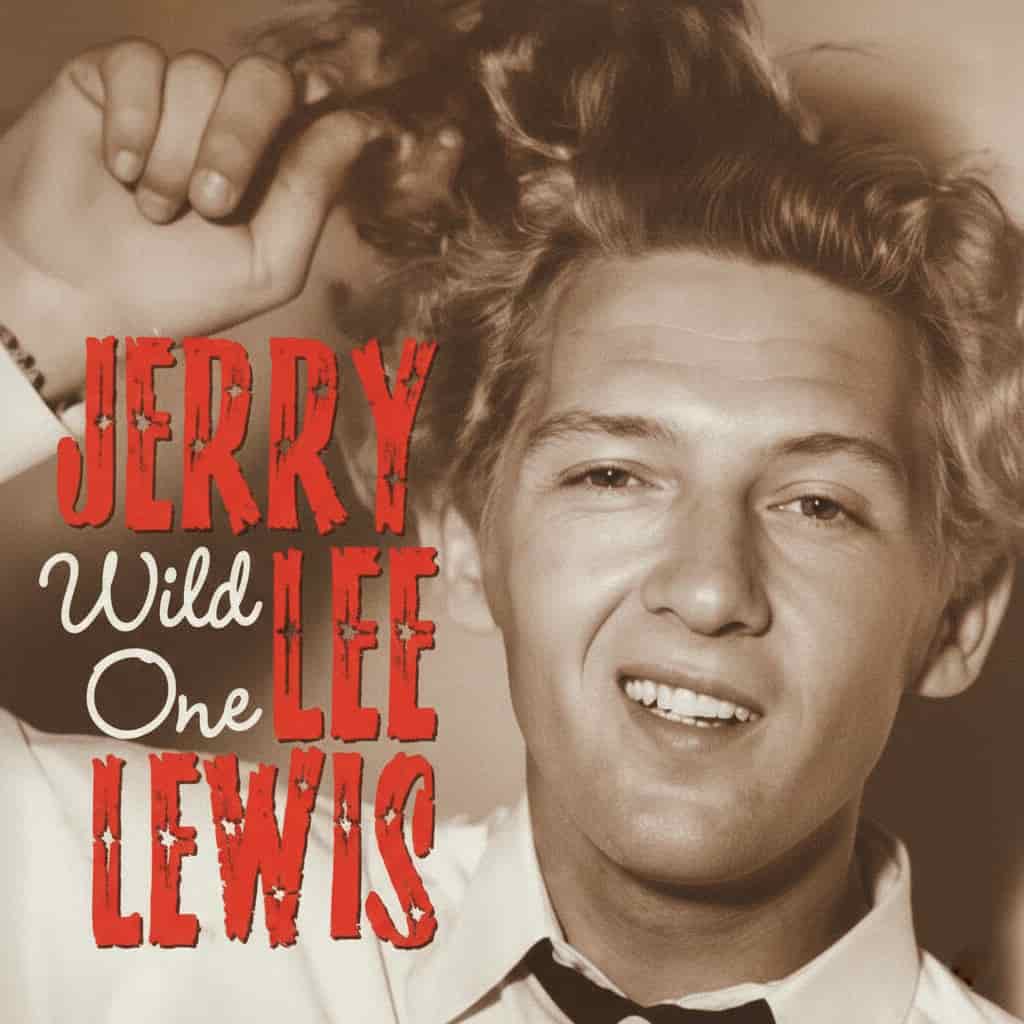
A Portrait of Untamed Youth and Rock and Roll Defiance at Its Rawest Core
Few recordings capture the reckless pulse of early rock and roll as vividly as “Wild One”, a song forever linked to the volcanic presence of Jerry Lee Lewis. Known also as “Real Wild Child”, this track stands as a distilled expression of rebellion, sweat, and unfiltered energy, the very qualities that defined rock and roll in its most dangerous and formative years. From its pounding rhythm to its defiant refrain, “I’m a wild one, oh yeah I’m a wild one”, the song feels less like a performance and more like a declaration of identity.
Originally written and first recorded in 1958 by Australian rock pioneer Johnny O’Keefe, “Wild One” was inspired by a real-life brawl O’Keefe witnessed at one of his concerts. His version captured the youthful volatility of the late 1950s and became a commercial success, reaching No. 20 on the Billboard Hot 100 in the United States that same year. It was one of the earliest international rock hits to travel from Australia to America, a notable achievement at the time.
Jerry Lee Lewis recorded his own version of “Wild One” in 1958 at Sun Records in Memphis, during the most explosive period of his career. This was the era of “Great Balls of Fire”, “Whole Lotta Shakin’ Goin’ On”, and nights when pianos were pounded, kicked, and occasionally set ablaze. Yet, despite its ferocity and perfect alignment with Lewis’s image, his recording of “Wild One” was not released as a single at the time and therefore did not enter the charts upon its original recording. The reasons were partly commercial and partly circumstantial, as Sun Records was already juggling multiple incendiary Lewis releases.
The song finally saw official release years later, appearing on compilations such as Collector’s Edition and Rockin’ and Free in the 1970s. By then, its cultural impact was less about chart numbers and more about mythmaking. When the biographical film Great Balls of Fire! was released in 1989, “Wild One” found new life, introducing younger listeners to the raw force of Jerry Lee Lewis and reaffirming his status as rock and roll’s most uncontrollable spirit. The song also appeared in films like The Outsiders and Nowhere Boy, where it served as shorthand for youthful rebellion and emotional volatility.
Musically, Lewis’s version strips the song down to its bare essentials. The piano attacks rather than accompanies. The rhythm surges forward with barely contained momentum. Vocally, Lewis sounds less like a singer and more like a man daring the world to stop him. This was the essence of “The Killer”, a nickname Lewis earned not through marketing but through sheer force of personality. Where many performers of the era flirted with rebellion, Jerry Lee Lewis lived it, and “Wild One” sounds like an extension of that life rather than a scripted role.
Lyrically, the song is simple, almost primitive, but that simplicity is its strength. There is no metaphor, no apology, no reflection. It speaks to a time when rock and roll did not explain itself. It announced itself. For listeners who lived through the rise of this music, “Wild One” evokes memories of a world suddenly louder, faster, and less obedient. It recalls jukeboxes glowing in dim rooms, radios turned up just a little too high, and a generation discovering that music could be dangerous.
In retrospect, “Wild One” may not be remembered for chart dominance under Jerry Lee Lewis, but it endures as a perfect embodiment of his artistic soul. It captures the moment when rock and roll stopped asking for permission and started kicking down doors. For those who remember that moment, the song still crackles with electricity. For those who came later, it remains a thrilling reminder of what rock and roll was when it was young, unruly, and gloriously alive.