
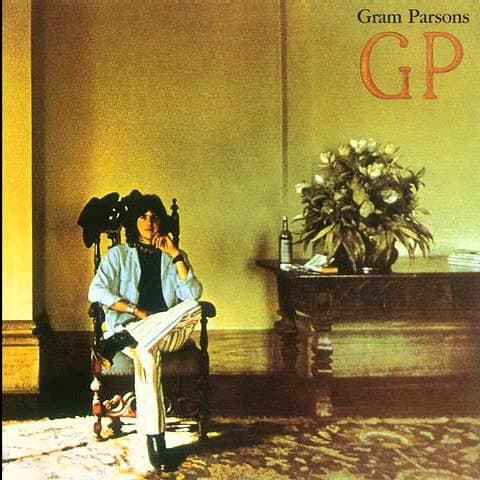
“A Song for You” stands as Gram Parsons’ quiet confession about home, love, and the ache of leaving before one is ready.
Released in January 1973, “A Song for You” occupies a central emotional position on Gram Parsons’ solo debut album GP, a record that would later be recognized as one of the most influential roots albums of the twentieth century. Although GP did not achieve immediate commercial success, peaking modestly at No. 195 on the Billboard Top LPs chart, its legacy has grown steadily over the decades. The album did not produce a charting single, but charts were never the true measure of Parsons’ ambition. What mattered to him was the creation of what he famously called Cosmic American Music, a deeply personal synthesis of traditional country, gospel, folk, and the restless spirit of rock and roll.
From the opening moments of “A Song for You,” the listener is drawn into a reflective, almost whispered narrative. The arrangement is sparse and restrained, allowing the emotional weight of the lyrics to breathe. Parsons sings not as a performer seeking attention, but as a man quietly confessing truths he can no longer keep to himself. The song tells a love story, but not in the conventional sense. It is a love letter to the place where he was born, to the emotional landscape of the American South, and to the complicated pain of knowing that staying would mean suffocation while leaving would mean loss.
This track is historically significant as one of the earliest recorded collaborations between Gram Parsons and Emmylou Harris, whose harmony vocals drift through the song like a distant memory. Her voice does not compete with Parsons; it shadows him, reinforces him, and sometimes seems to echo thoughts he cannot quite finish. This partnership would soon become one of the most revered duets in American music, but here it feels fragile and tentative, as if both singers sense that something important is being born without fully understanding its future weight.
Parsons once described “A Song for You” as a story about where he came from and what it felt like to leave it behind. That sense of departure is everywhere in the lyric. There is longing, but also resignation. The narrator understands that certain choices, once made, cannot be undone. Unlike many country songs that frame departure as an act of rebellion or freedom, this one treats it as a wound that never fully heals. The song does not ask for forgiveness, nor does it seek redemption. It simply states the truth as it exists.
What gives “A Song for You” its enduring power is the quiet awareness of fate embedded in its tone. Listening today, it is difficult not to hear the song as prophetic. Gram Parsons lived fast, carried deep emotional scars, and died young later in 1973, only months after GP was released. While it would be unfair to romanticize his struggles, there is an undeniable sense that he understood, on some level, that his time was limited. The sadness in this song is not dramatic or theatrical. It is weary, reflective, and deeply human.
Within the context of GP, the track functions as an emotional anchor. While other songs on the album explore romance, faith, and American musical tradition, “A Song for You” feels like the moment when the curtain is briefly pulled back and the artist stands alone with his thoughts. It is here that Parsons’ vision of Cosmic American Music becomes most clear. This was not a genre exercise, but an attempt to reconcile conflicting identities: country boy and rock star, believer and skeptic, homebound soul and eternal wanderer.
For listeners who have lived long enough to understand regret, distance, and the cost of choosing one path over another, “A Song for You” remains quietly devastating. It does not demand attention. It waits patiently, trusting that those who need it will eventually find it. And when they do, it offers no easy comfort, only recognition. In that recognition lies its lasting beauty, and its truth.