
A joyful surrender to love, where defeat becomes freedom and a pop song rewrites musical history
When ABBA released “Waterloo” in early 1974, few could have predicted that this bright, exuberant pop single would mark not only the turning point of a band’s career, but also a quiet revolution in European popular music. Yet from its very first public triumph, “Waterloo” announced itself as something new: confident, clever, and irresistibly alive.
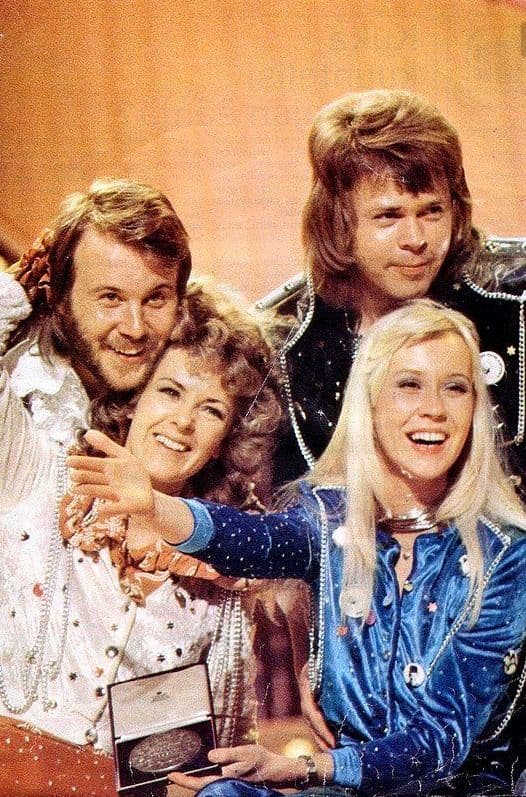
“Waterloo” was released in March 1974 and quickly reached No. 1 on the UK Singles Chart, where it remained for two weeks. Across Europe, the song topped the charts in countries such as Sweden, Germany, Ireland, and Switzerland. In the United States, where European pop acts often struggled to gain traction, “Waterloo” climbed to No. 6 on the Billboard Hot 100, an impressive achievement that introduced ABBA to a global audience. Most famously, the song won the Eurovision Song Contest 1974, held in Brighton, England—an event that transformed four talented Swedish musicians into international stars overnight.
The song later became the title track of ABBA’s album Waterloo (1974), their second studio album, which consolidated their breakthrough and laid the foundation for a decade of extraordinary success.
Behind the sparkling melody and playful rhythm lies a story both simple and deeply human. Written by Benny Andersson and Björn Ulvaeus, with lyrics that cleverly reference the historic Battle of Waterloo, the song turns military defeat into a metaphor for emotional surrender. The narrator resists love at first, only to realize that fighting it is pointless. In the end, giving in becomes an act of liberation rather than loss.
“I was defeated, you won the war,” the lyrics declare—not with bitterness, but with a smile. This sense of cheerful acceptance is at the heart of “Waterloo.” Love, the song suggests, does not always arrive as a gentle companion. Sometimes it overwhelms, disarms, and conquers. But there is dignity—and even joy—in laying down one’s defenses.
Musically, “Waterloo” stood apart from much of early-1970s pop. It fused classic pop songwriting with glam rock energy, driven by a pounding piano, layered harmonies, and a rhythm that borrowed as much from rock as from traditional Eurovision fare. The confident vocals of Agnetha Fältskog and Anni-Frid Lyngstad brought warmth and clarity, while the production sounded bold without being heavy, polished without losing its sparkle.
For many listeners, especially those who remember hearing the song when it first filled radios and living rooms, “Waterloo” carries more than historical importance. It recalls a time when pop music felt optimistic, when melodies were allowed to be joyful, and when songs did not hide their emotions behind irony or distance. There is an openness here—an emotional honesty wrapped in bright colors—that continues to resonate decades later.
In retrospect, “Waterloo” was more than a hit single or a Eurovision winner. It was the moment ABBA discovered their true voice: accessible yet intelligent, light on the surface but thoughtful underneath. The song’s success gave them the freedom to explore more complex emotional territory in later works, from romantic longing to heartbreak and reflection.
Today, “Waterloo” remains a defining chapter in pop history. Not because it is loud or revolutionary in a dramatic sense, but because it understands something timeless—that surrender, when chosen freely, can be its own kind of victory. In that sense, the song still speaks gently but clearly, reminding us of a moment when pop music smiled, took a deep breath, and dared to believe in joy.