
A Song for the Working Man: Billy Joe Shaver’s “Bottom Dollar” and the Price of Living with Dignity
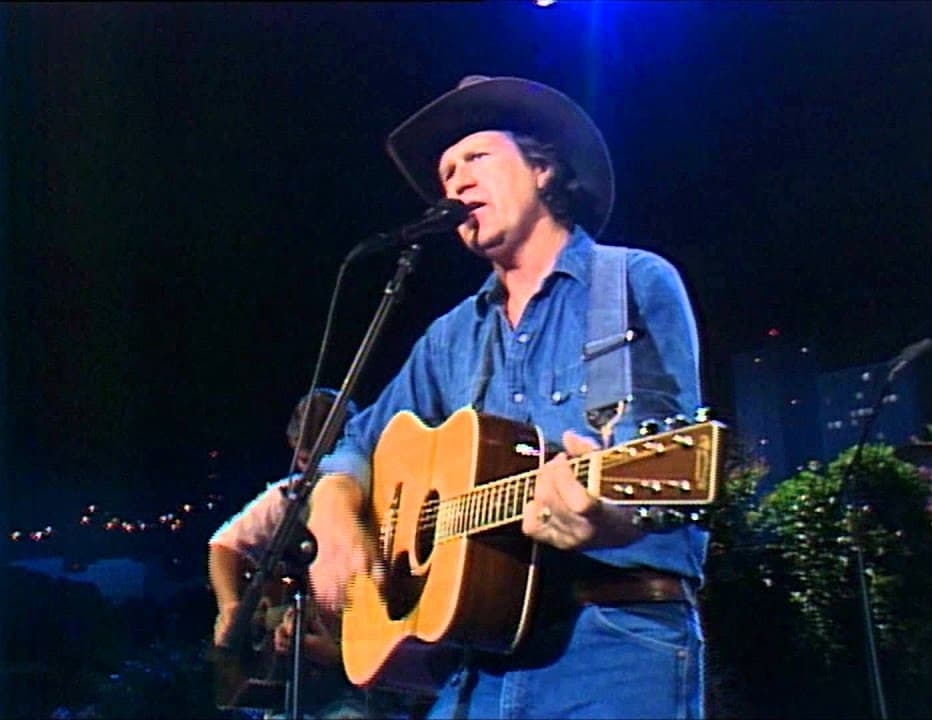
On August 14, 1984, under the familiar studio lights of Austin City Limits in Texas, Billy Joe Shaver stood before a quiet, attentive audience and delivered “Bottom Dollar” with the unvarnished honesty that had long defined his songwriting. The performance, now cherished by longtime country music devotees, captured Shaver at a mature, reflective point in his career lean, weathered, and utterly authentic.
By 1984, Shaver was already revered among musicians as one of the principal architects of the outlaw country movement. Though he never chased commercial superstardom, his songs had been recorded by Waylon Jennings, Willie Nelson, and Johnny Cash. Yet when he stepped onto that Austin stage, there was no entourage, no spectacle just a Telecaster, a steady band, and a voice etched with miles of Texas highway.
“Bottom Dollar” is not a flashy song. It does not rely on vocal acrobatics or elaborate production. Instead, it speaks plainly of hardship, pride, and the stubborn resilience of a man who may be down to his last coin but refuses to surrender his sense of self. In Shaver’s hands, the phrase “bottom dollar” becomes more than a financial metaphor; it is a moral line in the sand. When you’re down to your bottom dollar, what do you still stand for?
That night in Austin, his delivery was measured and deliberate. His phrasing carried the cadence of lived experience no theatrical sorrow, only the quiet authority of someone who had known struggle firsthand. Shaver’s own life had been marked by poverty, loss, and hard-earned redemption. Raised in Corsicana, Texas, by a single mother who worked in honky-tonks, he understood the dignity of working-class survival. The audience many of them older Texans who had followed his career since the early ’70s recognized themselves in his words.
What made the Austin City Limits performance particularly powerful was its intimacy. The camera did not rush; it lingered. Close-ups revealed the concentration in Shaver’s eyes, the slight tremor in his voice when a lyric cut too close to the bone. The band supported him without overshadowing the narrative core of the song. It felt less like a television taping and more like a gathering of old friends who knew exactly what he meant when he sang about scraping by.
For viewers today especially those who remember tuning into PBS on Saturday nights the 1984 performance carries a special resonance. It recalls a time when country music still centered on storytelling, when songs about hardship were not stylized but lived. There were no digital enhancements, no arena theatrics. Just a songwriter standing squarely in his truth.
“Bottom Dollar” endures because its message is timeless. Economic uncertainty, personal trials, the quiet fear of losing everything these are not bound to one decade. Yet Shaver’s performance offered something more enduring than worry: it offered resolve. Even at rock bottom, a person retains honor, memory, and faith.
As the final chords rang out that August evening in Austin, there was no dramatic flourish. Only applause warm, steady, deeply respectful. In that applause lived the recognition that Billy Joe Shaver was not merely singing about the bottom dollar. He was singing about the value of a human soul when all the rest has been stripped away.
 Oldies Songs
  Oldies Songs