
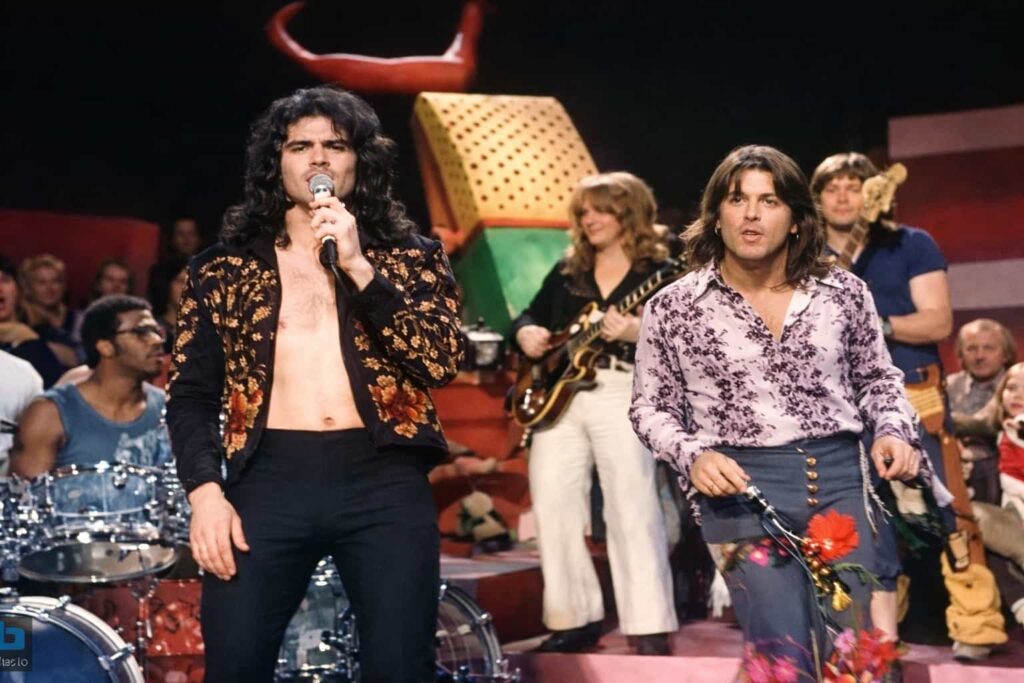
Three Dog Night’s Enduring Legacy Shines Through “Black and White”
The performance of “Black and White” stands as a powerful reminder of why Three Dog Night remains one of the most celebrated vocal groups in American rock history. Known for their rich harmonies, energetic stage presence, and ability to transform great songs into timeless hits, the band built a remarkable career that continues to resonate decades after their rise to fame.
Three Dog Night first captured international attention during the early 1970s with chart topping successes such as “Joy To The World.” Their signature blend of pop, rock, and soulful vocal harmonies helped define an era of popular music. Rather than limiting themselves to material they had written, the group developed a reputation for identifying outstanding songs from talented songwriters and bringing them to a wider audience. That approach proved extraordinarily successful, resulting in fourteen gold albums, nine gold singles, and more than forty million records sold worldwide.
Originally formed in 1968 by Danny Hutton, the band was built around a unique concept. Hutton, Cory Wells, and Chuck Negron would each serve as lead singers while also contributing to the group’s distinctive harmony driven sound. This formula quickly set Three Dog Night apart from many of their contemporaries and helped establish them as one of the most successful touring acts of the decade.
The lineup featured in later years included founding vocalists Danny Hutton and Cory Wells, alongside original keyboardist Jimmy Greenspoon and guitarist Michael Allsup. Joined by bassist Paul Kingery and drummer Pat Bautz, the group carried forward the musical identity that made Three Dog Night famous.
Despite enormous success, years of relentless touring eventually took their toll. In 1975 the band stepped away from the spotlight after an exhausting period of nonstop performances. According to Wells, the decision reflected a desire to leave with dignity rather than prolong their career through repeated farewell tours. It was a choice rooted in respect for both their music and their legacy.
During the hiatus, Hutton pursued management and booking ventures while Wells devoted time to travel and his passion for fishing, becoming a respected outdoor writer and television personality.
“Black and White” captures the spirit that made Three Dog Night exceptional. The performance reflects confidence, musical excellence, and a sense of joy that continues to define the band’s enduring place in rock history. Even after generations have passed, their harmonies remain a testament to the timeless power of great songs performed by extraordinary voices.