
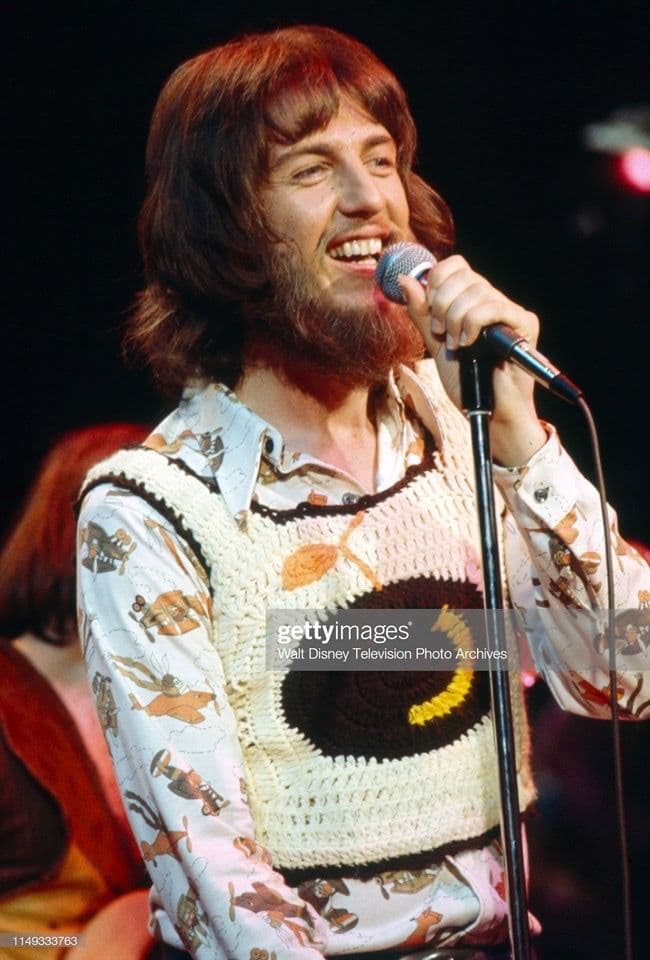
A Quiet Farewell from a Voice That Once Shook the Airwaves
When Cory Wells released “End Of A Good Thing”, it felt less like a single chasing chart glory and more like a reflective sigh from one of rock’s most distinctive voices. Known to the world as one of the three lead singers of Three Dog Night, Wells had already etched his place in popular music history by the time he stepped into the spotlight alone. This song, drawn from his 1978 solo album Touch Me, did not storm the charts the way his band’s hits once did—indeed, it did not enter the Billboard Hot 100—but it remains a revealing chapter in the story of a singer learning to live with change.
To understand the emotional weight behind “End Of A Good Thing,” one must first remember the extraordinary run of Three Dog Night during the late 1960s and early 1970s. The band achieved an astonishing string of Top 10 hits on the Billboard Hot 100, including “Mama Told Me (Not to Come)” (No. 1 in 1970), “Joy to the World” (No. 1 in 1971), and “Black and White” (No. 1 in 1972). Their harmonies were bold, theatrical, and immediate. But by the mid-1970s, internal tensions, changing musical tastes, and the natural fatigue of relentless touring began to take their toll. The group officially disbanded in 1976.
It was in that atmosphere—after the cheers had softened and the bright lights dimmed—that Cory Wells stepped forward with Touch Me. Released in 1978 on A&M Records, the album showcased a more intimate, reflective side of his artistry. “End Of A Good Thing” is emblematic of that mood. While not a major commercial success, it stands as a deeply personal artistic statement, one that captures the emotional residue left behind when something once vibrant fades into memory.
Musically, the song moves with a gentle, adult-contemporary sensibility. The arrangement is restrained—piano-led, subtly orchestrated, and carried by Wells’ unmistakable rasp. Unlike the exuberant, multi-vocal fireworks of Three Dog Night, here the focus rests squarely on a single voice. And what a voice it is. There is no need for bombast; the power lies in nuance. Wells sings not as a frontman commanding a crowd, but as a man quietly confronting the inevitable.
Lyrically, “End Of A Good Thing” contemplates the bittersweet reality of endings—whether of love, partnership, or a chapter of life. It does not dramatize the loss. Instead, it acknowledges it with a sense of maturity and acceptance. There is sadness, certainly, but also gratitude. The message is clear: not all endings are failures. Sometimes they are simply the natural conclusion of something that once burned brightly.
One cannot help but hear echoes of Wells’ own journey in the song. The “good thing” may be a romantic relationship, but for listeners aware of his history, it resonates on another level. The end of Three Dog Night’s original run marked the close of a remarkable era. For those who had grown up with the band’s triumphant anthems filling radios and dance floors, the silence that followed was palpable. In that sense, “End Of A Good Thing” feels almost like a quiet goodbye—not bitter, not resentful, but reflective.
There is a particular poignancy in the way Wells delivers certain lines, allowing his voice to crack ever so slightly at the edges. It is the sound of experience. Unlike many artists who chase trends in pursuit of renewed chart success, Wells chose authenticity. The absence of a high chart position does not diminish the song’s value. If anything, it reinforces its sincerity. This was not crafted for mass consumption; it was crafted from the heart.
In retrospect, the song offers a glimpse into the transitional period many artists faced in the late 1970s, when the grandiose optimism of early ’70s pop-rock gave way to softer, more introspective sounds. Wells embraced that shift gracefully. Touch Me may not have replicated the commercial triumphs of Three Dog Night, but it revealed a different strength: vulnerability.
Listening today, decades removed from its release, “End Of A Good Thing” carries a timeless resonance. It speaks to anyone who has watched a cherished chapter close—whether in love, friendship, or creative partnership. It reminds us that endings are not merely losses; they are markers of having lived, having felt, having shared something real.
And perhaps that is the quiet triumph of Cory Wells in this moment of his career. After the roaring crowds and the platinum records, he offered something gentler, but no less profound: a song that understands that even when the music changes, its echoes remain.