
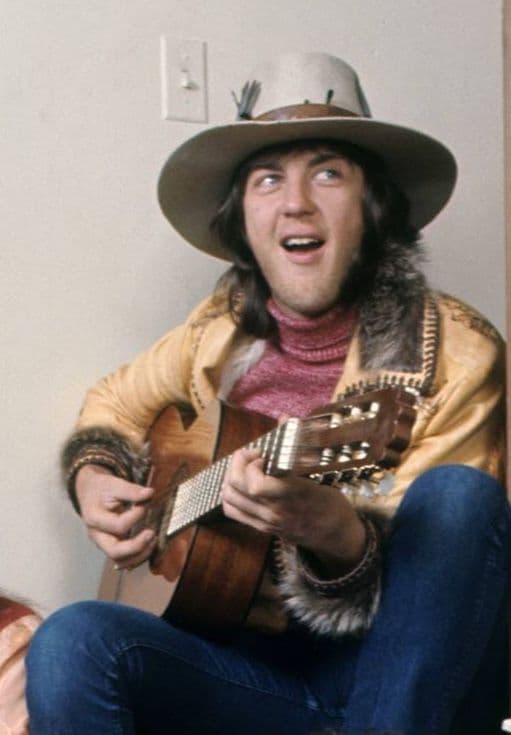
A Quiet Farewell to Love’s Last Illusion
When Cory Wells released “Walk Away” as a solo single in 1978, he stepped briefly out of the powerful three-voice blend that had defined his fame with Three Dog Night, and into a more intimate, reflective light. Known primarily as one of the three lead vocalists of that chart-dominating band of the early 1970s, Wells had already left an indelible mark on American pop and rock history with towering performances on songs like “Mama Told Me (Not to Come)” and “Shambala.” Yet “Walk Away” revealed something subtler: a man unguarded, confronting the emotional cost of staying too long in a love that had already faded.
Released during a period when Three Dog Night was winding down its original run (the group disbanded in 1976 before re-forming later), “Walk Away” arrived without the machinery or momentum of his former band’s Top 10 legacy behind it. The single did not break into the Billboard Hot 100, reflecting the shifting musical climate of the late 1970s—a time when disco, slick soft rock, and emerging new wave were beginning to dominate American radio. Yet commercial chart performance has never been the sole measure of artistic worth. In truth, “Walk Away” stands today as a poignant footnote in Wells’ career—an emotional document of a singer who had already known stadium applause, now turning inward.
The late 1970s were not kind to many of the early-decade rock vocalists who had thrived in the era of AM radio dominance. For Wells, whose voice carried both grit and gospel-tinged soul, stepping into a solo space allowed him to explore a more personal register. “Walk Away” is built on a restrained arrangement—soft electric piano, measured rhythm, and understated guitar lines—that gives full room to his voice. And that voice, still resonant and unmistakable, sounds less like a showman here and more like a confidant.
Lyrically, the song centers on the painful clarity that sometimes comes only after endurance has turned into quiet resignation. The title itself—“Walk Away”—is not delivered with bitterness or theatrical heartbreak. Instead, it carries a tone of weary acceptance. This is not the impulsive departure of youth; it is the deliberate step back of someone who has loved deeply and finally understands that love cannot be forced into permanence.
There is something especially moving about hearing Wells in this context. With Three Dog Night, he had often been the powerhouse interpreter of outside songwriters—singing Harry Nilsson’s “One” or Hoyt Axton’s “Joy to the World” with commanding conviction. But here, freed from the shared spotlight of Danny Hutton and Chuck Negron, he sings with a singular emotional gravity. The layered harmonies of his band days are replaced by solitude. And in that solitude, the listener hears maturity.
Behind the scenes, this period of Wells’ life coincided with broader transitions in the music industry. The dominance of arena rock acts was giving way to more polished, genre-specific marketing. Solo projects from former band members did not always receive the sustained promotional push required to break into radio rotation. In that sense, “Walk Away” reflects not only personal departure but professional crosscurrents as well.
Yet the song’s enduring value lies in its emotional honesty. There is a quiet dignity in the act of walking away—not out of anger, but out of self-preservation. Wells’ phrasing lingers just slightly behind the beat, giving each line a reflective weight. He does not oversing; he does not dramatize. Instead, he allows silence to carry part of the story. And in those spaces between lines, memories settle.
Listening to Cory Wells on “Walk Away” decades later, one hears more than a late-70s soft rock ballad. One hears a seasoned voice acknowledging that some endings are necessary, even when they hurt. The song may not have climbed the charts as his earlier hits did, but its emotional truth feels timeless. It speaks to anyone who has stood at the quiet threshold of goodbye—aware that staying would cost more than leaving.
In retrospect, “Walk Away” becomes a gentle reminder that careers are not defined solely by chart positions. Sometimes, they are defined by the moments when an artist dares to strip away the grand arrangement and stand alone. For Cory Wells, that moment arrived in 1978—not with bombast, but with reflection.
And perhaps that is why the song still resonates. It does not shout. It remembers.