
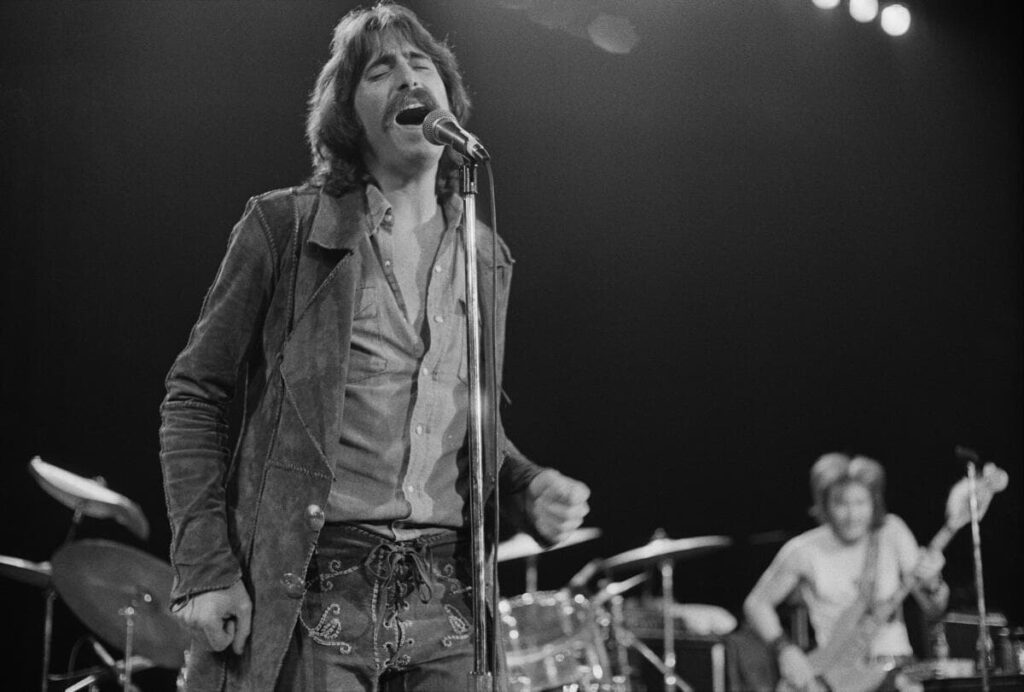
A Tender Prayer for a Better World, Sung with the Wisdom of Time and the Innocence of Youth
When “Grown-Up Christmas List” is mentioned, many listeners immediately recall the luminous voice of Amy Grant, whose 1992 recording carried the song to No. 1 on the Billboard Adult Contemporary chart. But in later years, it found a different, deeply resonant home in the voice of Chuck Negron, former lead singer of Three Dog Night. Negron’s interpretation does not compete with the song’s earlier success; instead, it reframes it. Where Grant’s version glows with gentle optimism, Negron’s carries the quiet authority of experience—an earned tenderness shaped by life’s triumphs and trials.
Originally written in 1990 by songwriters David Foster and Linda Thompson, “Grown-Up Christmas List” was conceived not as a child’s plea for toys, but as an adult’s sober, heartfelt wish for a world healed of its deepest wounds. That distinction is essential. The song was never about holiday sentimentality. It was about longing—mature, reflective longing—for peace, dignity, and compassion in a fractured world.
By the time Chuck Negron recorded the song for his 2013 Christmas album “Chuck Negron’s Christmas”, he was no longer the soaring tenor who electrified audiences with Three Dog Night classics like “Joy to the World” or “One.” He was a survivor—of addiction, of loss, of personal reckoning. That context matters. Negron’s voice, weathered but still expressive, brings an authenticity that transforms the lyrics from hopeful aspiration into something closer to testimony.
Unlike the chart-topping 1992 rendition, Negron’s version did not climb the Billboard charts, nor was it positioned as a commercial single aimed at mainstream radio dominance. Its significance lies elsewhere. It belongs to a quieter tradition of artists revisiting meaningful songs not to chase numbers, but to reflect on what those words mean after decades of living.
And what words they are.
“No more lives torn apart
That wars would never start…”
In Negron’s delivery, these lines do not feel abstract. They feel personal. Having navigated the tumultuous rise and fall of fame, and having rebuilt his life through recovery and faith, Negron sings not as a pop idol but as a man who understands brokenness—and redemption.
There is something profoundly moving about hearing a voice once synonymous with 1970s rock exuberance turn inward in this way. The contrast is striking. In the early days of Three Dog Night, Negron’s vocals soared above bold, brassy arrangements, projecting youthful energy and confidence. In “Grown-Up Christmas List,” the performance is restrained, reflective. The vibrato lingers. The phrasing breathes. Silence between lines becomes as important as the melody itself.
The song’s enduring meaning lies in its refusal to grow cynical. It acknowledges suffering without surrendering to it. For listeners who have watched decades unfold—who have witnessed wars begin and end, cultural tides shift, and personal chapters close and reopen—the song resonates differently than it might have in youth. It is no longer an idealistic wish. It is a quiet reckoning.
Musically, Negron’s arrangement leans toward traditional adult contemporary styling: gentle piano, restrained orchestration, and a measured tempo that allows the lyrics to carry the emotional weight. There is no dramatic crescendo designed to overwhelm. Instead, the power builds subtly, line by line, until the final plea feels less like a performance and more like a prayer.
What makes this song timeless is its universal simplicity. It does not ask for wealth, success, or even personal happiness. It asks for something larger—peace, compassion, equality. In that sense, it stands among the great reflective holiday compositions of the late 20th century, alongside songs that transcend seasonal novelty and become meditations on the human condition.
For those who remember Chuck Negron at the height of his fame, hearing him sing “Grown-Up Christmas List” carries an added layer of poignancy. It is the sound of maturity—not only in years, but in understanding. The exuberant rock frontman has become a storyteller of hope tempered by reality.
And perhaps that is the true message of the song: that as we grow older, our wishes change. We no longer ask for what sparkles under the tree. We ask for what mends the world.
In Negron’s voice, that wish feels genuine. It feels lived. And that is why his rendition, though not chart-dominating, remains quietly powerful—a reminder that some songs do not need a No. 1 ranking to leave a lasting mark on the heart.