
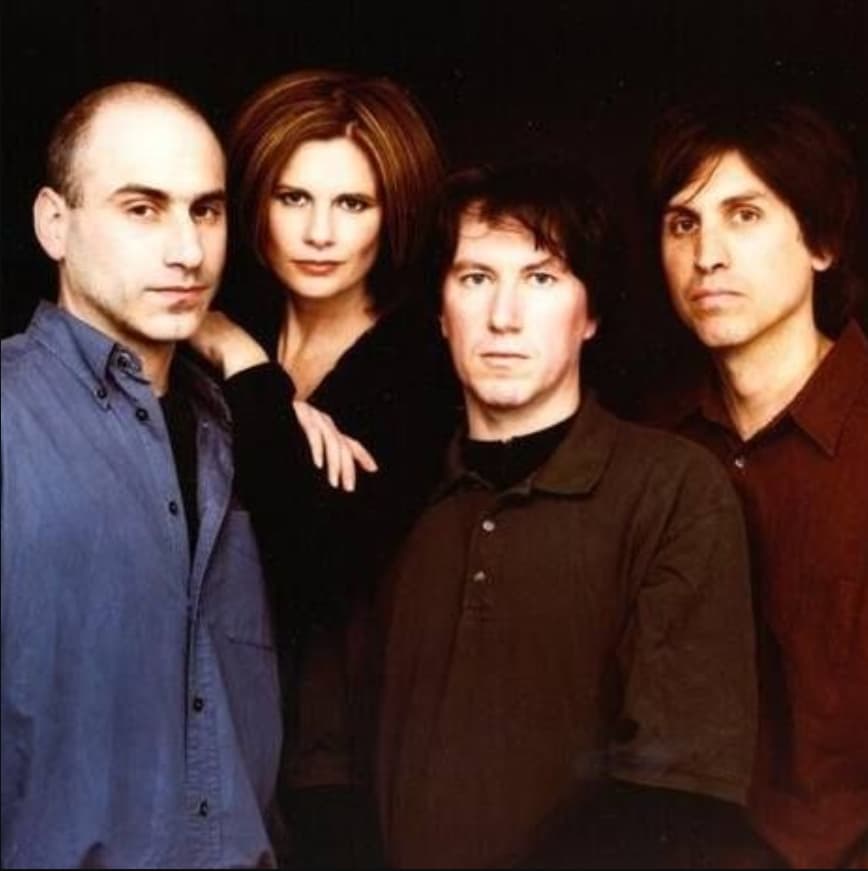
A Whispered Hymn to Love and Longing: How “Sweet Jane” Became a Meditative Masterpiece in the Hands of Cowboy Junkies
When Cowboy Junkies released their haunting rendition of “Sweet Jane” in 1988 on the album The Trinity Session, few could have predicted that this hushed, reverent reimagining would become one of the most beloved alternative recordings of its era. Originally written by Lou Reed and first recorded by The Velvet Underground in 1970 for their album Loaded, the song had already carved out its place in rock history. Yet it was the Canadian quartet’s stripped-down interpretation that reintroduced the composition to a new generation—and invited longtime listeners to hear it anew.
The original “Sweet Jane” did not chart as a major single upon its release in 1970, though Loaded eventually reached No. 109 on the Billboard 200. The song itself grew in stature over the years through live performances and covers, becoming one of Lou Reed’s signature pieces. In contrast, Cowboy Junkies’ version was never a high-charting pop single either, but it became their defining song, especially after its inclusion on the soundtrack of the 1994 film Natural Born Killers directed by Oliver Stone. The album The Trinity Session reached No. 18 on the UK Albums Chart and No. 5 in Canada, while also peaking at No. 118 on the Billboard 200. Quiet numbers sometimes travel further than loud anthems.
What makes this version so enduring is not chart placement but atmosphere. Recorded inside Toronto’s Church of the Holy Trinity using a single Calrec Ambisonic microphone, The Trinity Session was an exercise in minimalism. There were no studio tricks, no layered overdubs—just space, breath, and restraint. The band gathered in a circle, and the church’s natural acoustics carried the sound upward like a prayer. In that sacred hush, Margo Timmins’ voice emerged—not as a rock declaration, but as a confession.
Where The Velvet Underground’s original carried a streetwise swagger, the Cowboy Junkies transformed “Sweet Jane” into something intimate and reflective. The tempo slowed dramatically. The guitars shimmered rather than snarled. And Timmins delivered the lyrics with a gentleness that revealed their hidden tenderness. Lines that once felt ironic now sounded sincere. “Anyone who’s ever had a heart…”—in her voice, it felt less like a clever aside and more like a shared truth, quietly acknowledged.
It is worth remembering that Lou Reed himself often revised the song’s structure in performance. Notably, the “Heavenly wine and roses” bridge—absent from the original 1970 album version—was restored in later releases and live renditions. Cowboy Junkies chose to include this bridge, adding to the song’s sense of longing and spiritual ache. That decision alone deepened the emotional arc of their recording, allowing the narrative to unfold more completely.
At its core, “Sweet Jane” is about love in its most human form—imperfect, resilient, and stubbornly hopeful. It speaks of small rebellions, domestic moments, and the quiet courage of staying together. In the hands of Cowboy Junkies, the song sheds its urban grit and becomes something almost pastoral. The defiance softens into devotion. The irony dissolves into introspection.
Listening now, decades later, one hears not just a cover but a conversation across time—between Lou Reed’s New York cool and Cowboy Junkies’ Canadian stillness. It is a reminder that great songs are living things. They breathe differently depending on who sings them, where they are sung, and who is listening.
There is something deeply moving about how this version unfolds. It does not demand attention; it earns it. The pauses matter as much as the notes. The silence between phrases carries weight. And perhaps that is why it lingers—because it understands that some truths are better whispered than shouted.
In the end, “Sweet Jane” by Cowboy Junkies stands as proof that reinterpretation can be revelation. It did not replace the original—it illuminated it. And in doing so, it gave us a version that feels less like a performance and more like a memory gently revisited, a familiar melody drifting through the quiet hours, reminding us that love, in all its ordinary glory, is still worth singing about.