
A Working Man’s Dream, Sung with Quiet Fire and Hard-Earned Hope
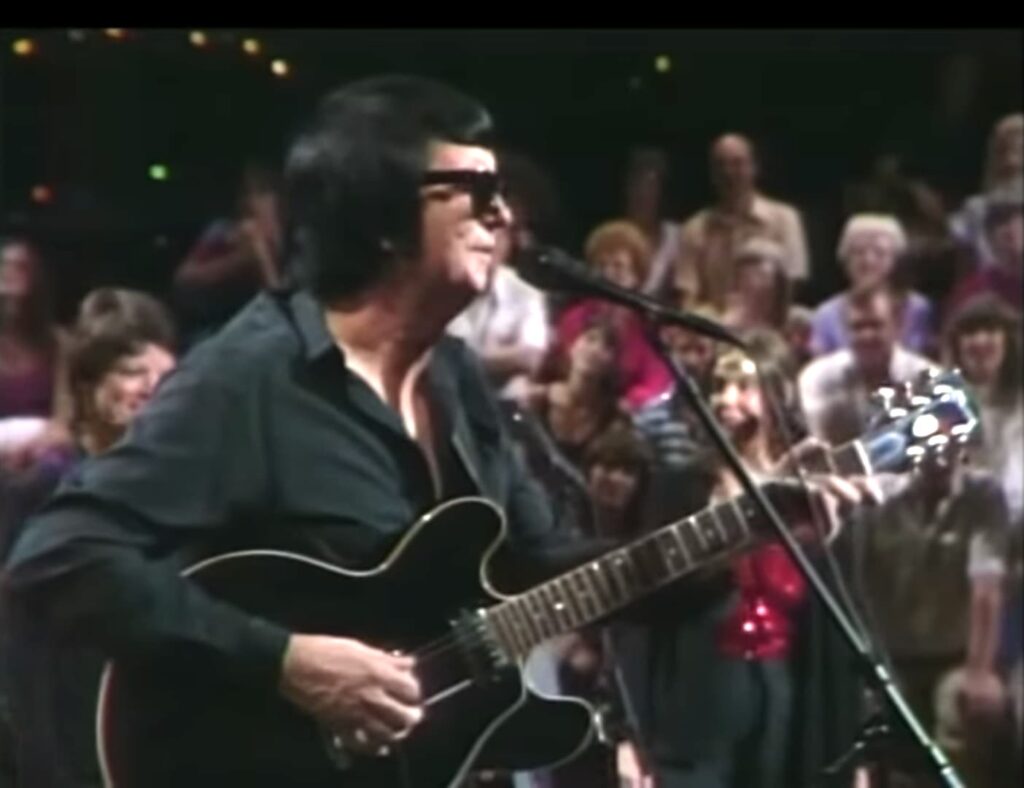
On October 4, 1982, Roy Orbison stepped onto the stage of Austin City Limits and delivered a performance of “Working for the Man” that felt less like nostalgia and more like testimony. The song, originally released in 1962 on the album Cryin’, had once captured the restless ambition of a young man determined to rise above small-town limits. Two decades later, under the warm studio lights in Texas, it carried the weight of lived experience.
Written by Roy Orbison himself, “Working for the Man” tells the story of a laborer toiling under a boss while quietly planning his own ascent. In the early 1960s, America was brimming with postwar optimism. Factories hummed, small businesses thrived, and young men believed that persistence could buy freedom. Orbison’s crisp rhythm and buoyant melody wrapped that belief in rockabilly energy. The original recording climbed into the Top 40, standing alongside his more dramatic hits like “Only the Lonely” and “Crying.”
But the 1982 performance revealed something deeper. By then, Orbison had endured professional drought, personal loss, and the shifting tides of popular music. Yet when he sang, his voice retained its unmistakable clarity. That soaring tenor, capable of heartbreak and defiance in the same breath, transformed a youthful anthem into a reflection on resilience.
The stage at Austin City Limits was simple. No grand theatrics. No elaborate choreography. Just a band locked into a tight groove and Orbison standing steady, dressed in black, guitar in hand. The audience responded not with frenzy but with recognition. The lyrics about saving money, buying a business, and finally becoming “the man” resonated as both memory and aspiration. It was a reminder of long hours spent under fluorescent lights, of calloused hands, of dreams postponed but never abandoned.
There was also a quiet irony. Orbison himself had once been that ambitious young songwriter knocking on doors in Nashville. By 1982, he was a legend revisiting his own beginnings. Each note carried the awareness of roads traveled and roads closed. Yet there was no bitterness in his delivery. Only conviction.
Television viewers who tuned in that night witnessed more than a revival of a classic track. They saw an artist reclaiming his catalog at a time when his influence was beginning to be reassessed. The early 1980s would soon bring renewed recognition, collaborations, and the formation of the Traveling Wilburys later in the decade. But in that moment, none of it was guaranteed. What existed was the song, the band, and the unmistakable voice.
Listening now, the performance feels like a bridge between eras. The brisk tempo still carries the energy of early rock and roll, yet the maturity in Orbison’s phrasing adds gravity. When he sings about working every day and saving his pay, it sounds less like youthful impatience and more like gratitude for endurance.
In the end, “Working for the Man” at Austin City Limits 1982 stands as proof that ambition does not fade with time. It evolves. The young dreamer becomes the seasoned storyteller. The factory floor becomes the concert stage. And the man who once sang about escaping the boss had already become his own master, commanding attention with nothing more than a voice that could stop a room.
For those who remember the early 1960s, the performance rekindles the feeling of believing that tomorrow would reward today’s effort. For anyone hearing it now, it remains a stirring declaration that honest work and quiet determination still matter. And when Roy Orbison sang it that night in Texas, he was not merely revisiting a hit. He was honoring the journey.