
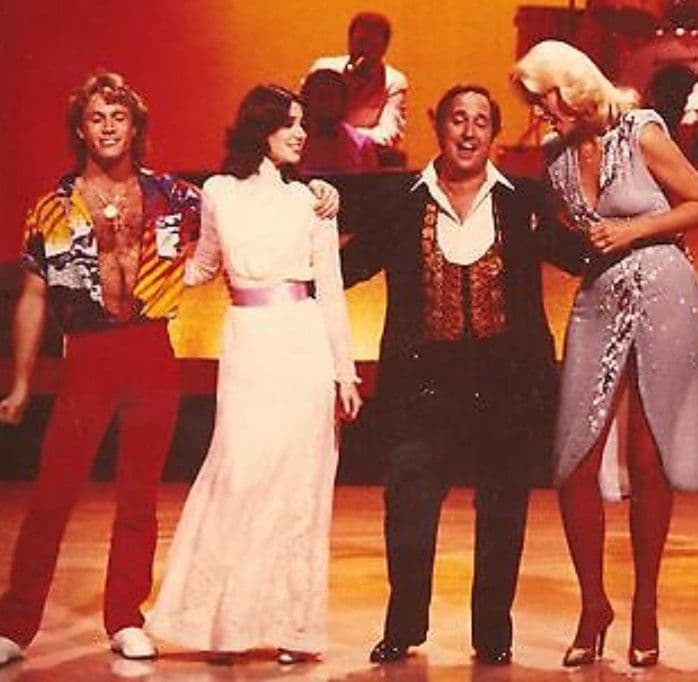
A Tender Affirmation of Love, Family, and Gratitude — a Song That Whispers Instead of Shouting
In the long and winding career of Neil Sedaka, few songs feel as quietly sincere as “You’re So Good for Me.” It is not a song built for stadiums or dramatic climaxes. Instead, it unfolds like a personal letter—measured, thoughtful, and deeply human. When later shared as a duet with his daughter Dara Sedaka, the song gained an added layer of meaning: not just romantic devotion, but the enduring warmth of family and trust across generations.
Released originally in 1969, “You’re So Good for Me” arrived at a moment when Neil Sedaka was reestablishing himself after the initial wave of early-1960s teen pop had faded. The song performed especially well in the United Kingdom, where it reached the UK Top 10 upon release—an important milestone that signaled Sedaka’s artistic rebirth. At a time when popular music was growing louder, more confrontational, and more experimental, this gentle declaration of gratitude stood apart for its restraint and emotional clarity.
The song was written by Neil Sedaka and his longtime collaborator Howard Greenfield, a partnership responsible for many of Sedaka’s most enduring works. Musically, “You’re So Good for Me” leans on a graceful piano line, soft rhythmic accents, and a melody that never forces itself on the listener. It is classic Sedaka: tuneful, elegant, and emotionally transparent. There is no irony here, no clever twist—only a straightforward acknowledgment of love as something steady, grounding, and quietly life-saving.
Lyrically, the song speaks from a place of humility rather than passion. The narrator does not boast about love or dramatize longing. Instead, he reflects on how another person brings balance, reassurance, and meaning into his life. This sense of emotional maturity is one reason the song resonates so strongly with listeners who have lived long enough to understand that the deepest relationships are often the calmest ones. Love, in this song, is not fireworks—it is shelter.
Years later, when Neil Sedaka performed “You’re So Good for Me” as a duet with Dara Sedaka, the song subtly transformed. Dara, herself a capable and expressive vocalist, did not overpower the piece. Her presence added intimacy rather than novelty. Hearing father and daughter share the song reframed its message: gratitude is not limited to romantic love, but extends to family bonds that quietly shape a lifetime. In this context, the lyrics take on a generational echo—one voice seasoned by experience, the other carrying warmth and continuity.
The song is also closely associated with Sedaka’s reflective period in the early 1970s, later appearing on compilations and performances linked to albums such as The Other Side of Me, a record that emphasized introspection, craftsmanship, and emotional honesty. This phase of his career laid the groundwork for his massive mid-1970s comeback, proving that thoughtful songwriting could still find an audience in a changing musical landscape.
What gives “You’re So Good for Me” its lasting power is its emotional modesty. It does not beg to be remembered, yet it lingers. For listeners who have walked through decades of change—personal and cultural alike—the song feels like a quiet pause, a moment to acknowledge those people who made life gentler simply by being there. It speaks to endurance rather than excitement, to appreciation rather than desire.
In the vast catalog of Neil Sedaka, this song may not be the loudest or the most celebrated, but it is among the most sincere. When shared with Dara Sedaka, it becomes something even rarer in popular music: a conversation across time, carried by melody, gratitude, and the soft reassurance that some bonds only grow stronger as the years pass.
 Oldies Songs