
“Hurricane” — Bob Dylan’s Sweeping Musical Protest That Echoed a Cry for Justice
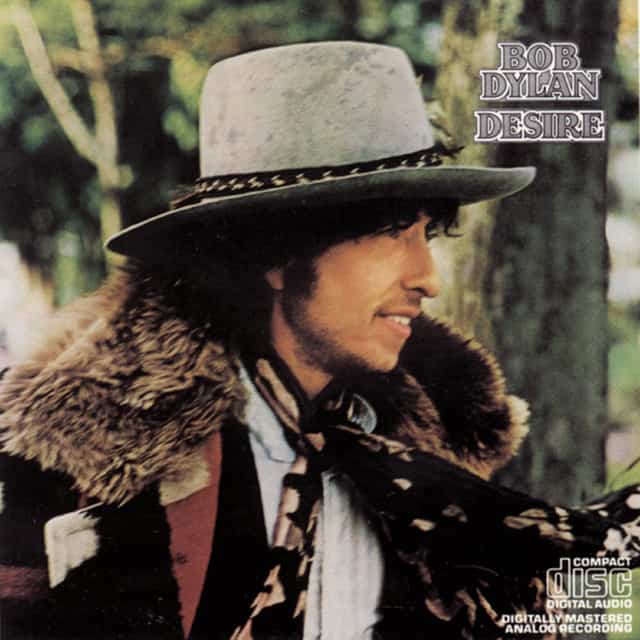
At its core, “Hurricane” is an unflinching musical indictment of racial injustice and judicial failure, and one of the most powerful protest songs of its era. Released as a single in late 1975 and opening Bob Dylan’s album Desire in early 1976, it reached No. 33 on the Billboard Hot 100 in the United States and No. 43 on the U.K. Singles Chart, making it one of Dylan’s most commercially successful and widely discussed works of the 1970s.
From the first jagged harmonica note to the last impassioned vocal line, “Hurricane” stands apart from the pastoral laments and introspective ballads that had dominated much of Dylan’s work in the early 1970s. Here, Dylan stretched the very limits of popular song nearly nine minutes in length, woven with a relentless narrative drive and propelled by the violin of Scarlet Rivera and a rollicking ensemble drawn from his Rolling Thunder Revue tour. It was a dramatic reawakening of the protest tradition that had defined his earliest albums but now voiced in sharper, more urgent terms than ever.
The story behind “Hurricane” is inseparable from the life of Rubin “Hurricane” Carter, a promising middleweight boxer whose arrest in 1966 for a triple homicide in Paterson, New Jersey, led to two convictions he steadfastly denied. Carter’s autobiography, The Sixteenth Round, described his ordeal and the systemic biases he believed had sealed his fate. When that book found its way to Dylan, it stirred something elemental in the songwriter’s conscience, compelling him to travel to Rahway State Prison in New Jersey to meet Carter and hear his voice directly.
Out of that encounter and his collaboration with playwright-lyricist Jacques Levy grew “Hurricane,” a song that reads like an epic in verse. There are no metaphors obfuscating the message here just bold, cinematic storytelling that evokes gunshots in a barroom, confessions of innocence, and the terrifying machinery of prejudice and policing. Dylan’s use of direct scene-setting, almost like a screenplay, was deliberate: he wanted listeners not merely to hear the injustice, but to see it, feel it, and confront it.
Yet the path from pen to public was not without its own controversies. Lawyers for Dylan’s record label urged him to alter lyrics that referenced specific individuals by name, prompting a re-recorded version for the Desire album that softened those potentially libelous elements. Even so, the song ignited debates about artistic responsibility, historical truth, and the role of the musician as social commentator.
Commercially, the impact was notable: a top 40 hit in the U.S. during an era when few eight-minute protest songs could break through mainstream radio, and a spirited entry into the U.K. charts. But the measure of “Hurricane” was never merely its chart statistics. For many listeners, especially those coming of age amid the tumult of civil rights struggles and post-Vietnam disillusionment, the song was a rallying cry a reminder that the music of our time could still speak to the gravest issues of our society.
The broader legacy of Desire, with “Hurricane” at its vanguard, was to reaffirm Dylan’s capacity to fuse narrative storytelling with fierce moral purpose. While the album as a whole spans love, longing, and mysticism, its opening track is relentless in its moral clarity: injustice remains a hurricane, devastating and capricious, and those caught in its winds like Carter deserve not just empathy but advocacy.
It would be another decade before Carter’s convictions were finally vacated, and even then the long struggle for justice echoed the urgency of Dylan’s song. “Hurricane” thus remains more than a moment in musical history; it is a testament to the belief that music can matter, that rhythm and rhyme can sharpen the conscience, and that even a mainstream hit can carry the weight of social protest and enduring human empathy.
 Oldies Songs