
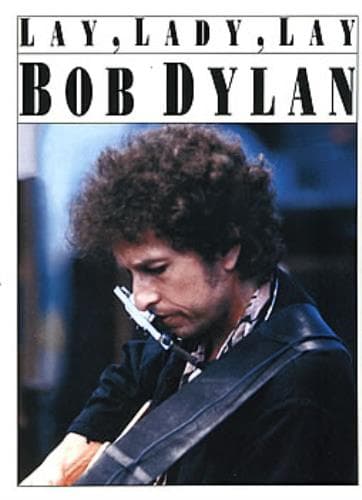
A Quiet Invitation to Intimacy, Vulnerability, and the Moment Before Love Slips Away
When Bob Dylan released “Lay Lady Lay” in 1969, it arrived not as a protest anthem, not as a riddle wrapped in surreal imagery, but as something far more disarming: a soft-spoken confession. Issued on the album Nashville Skyline, the song marked one of the most unexpected turns in Dylan’s long career. Commercially, it became his final Top 10 single in the United States, peaking at No. 7 on the Billboard Hot 100, a remarkable achievement for an artist who had never chased radio-friendly formulas. Artistically, it signaled a profound shift in tone, voice, and emotional posture.
At the top of the story is Nashville Skyline, released in April 1969. The album itself stunned listeners. Dylan abandoned the sharp nasal delivery that had defined his voice through the 1960s and adopted a warm, low croon, almost intimate in its closeness. This was not an accident, nor a studio trick. It was a deliberate reinvention. With “Lay Lady Lay”, that new voice feels essential to the song’s meaning. Sung any other way, the lyrics might sound demanding or possessive. In this gentle register, they sound tentative, human, and quietly vulnerable.
The song was written during a period when Dylan was retreating from the public role that had been imposed upon him. After the motorcycle accident in 1966 and years of relentless scrutiny, he chose privacy over proclamation. “Lay Lady Lay” was originally intended for the soundtrack of the film Midnight Cowboy, but it was not submitted in time. That missed opportunity turned out to be a quiet blessing. Free from cinematic context, the song was able to stand entirely on its own terms, personal rather than illustrative.
Lyrically, “Lay Lady Lay” is deceptively simple. There are no extended metaphors, no political undertones, no cryptic allusions demanding interpretation. Instead, the song captures a moment suspended in emotional time. The narrator asks for closeness not forever, not even tomorrow, but now. “Stay, lady, stay” is not a command; it is a plea shaped by uncertainty. Beneath the warmth of the melody lies the awareness that moments like this do not last, that intimacy is fragile, and that delay often becomes regret.
Musically, the arrangement reinforces that sense of restraint. The prominent pedal steel guitar, played by Pete Drake, lends the song its unmistakable country texture. Kenny Buttrey’s drums are steady but unintrusive, and Charlie Daniels contributes bass and guitar with remarkable subtlety. Nothing competes with the voice. Everything serves the atmosphere. It is a sound that feels unhurried, confident enough to leave space between notes, trusting silence as much as sound.
What makes “Lay Lady Lay” endure is not merely its chart success or its polished production. It is the way the song acknowledges emotional risk without dramatizing it. The narrator does not promise salvation or eternal devotion. He offers presence. He offers the truth of the moment. In doing so, Dylan touches on a universal experience: the realization that love is often most powerful before it is defined, when it exists in that fragile space between possibility and loss.
Over the decades, the song has become a standard, covered by artists across genres, from country to rock to soul. Yet few versions capture the quiet authority of the original. Dylan’s performance is notable precisely because it refuses excess. It does not insist on being profound. It simply is. That restraint is what gives the song its lasting emotional weight.
Within Dylan’s vast catalog, “Lay Lady Lay” occupies a unique place. It represents the moment when a songwriter known for challenging the world chose instead to speak softly to one person. It reminds listeners that transformation does not always announce itself loudly. Sometimes it arrives in a lowered voice, a slowed tempo, and a simple request made before the night passes.
 Oldies Songs