
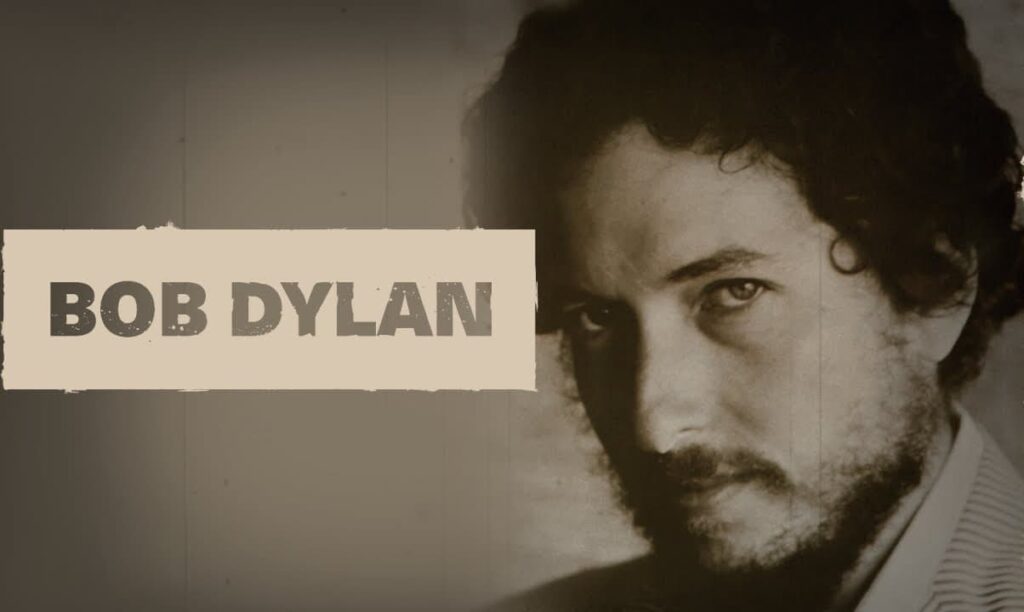
A Quiet Declaration of Love and Humanity in a Noisy World
When Bob Dylan released The Man in Me in October 1970 as part of the album New Morning, it arrived without fanfare, without controversy, and without the sharp edges that had defined much of his work in the previous decade. Yet beneath its gentle surface lies one of the most revealing emotional statements Dylan ever put to tape. It is not a protest song, not a surreal riddle, not a sermon. It is something far rarer in his catalog: a warm, open expression of love and self-recognition.
The Man in Me appears as the tenth track on New Morning, an album that marked a decisive turning point in Dylan’s career. After the austere restraint of John Wesley Harding and the subdued introspection of Nashville Skyline, this record found Dylan sounding relaxed, domestic, and quietly joyful. The album reached No. 7 on the Billboard 200, signaling a commercial and critical rebound after several years of uncertainty. The song itself was not released as a single and therefore did not chart independently, but its placement within the album is significant. By the time it appears, the listener has already been immersed in a world of renewal, morning light, and emotional openness.
Written during Dylan’s so-called pastoral period in Woodstock, New York, The Man in Me is widely understood as a love song to his wife at the time, Sara Lownds. Unlike the cryptic muses of earlier songs, Sara inspired something direct and deeply personal. Dylan sings not of conquest or longing, but of transformation. Love, in this song, does not overwhelm or dominate. Instead, it restores. “The man in me will hide sometimes,” he admits, before acknowledging that love brings that hidden self back into the light.
Musically, the song is built on a simple, lilting piano line, buoyed by gentle horns and a relaxed rhythm section. Dylan’s voice, often criticized for its abrasiveness, sounds unguarded here. There is a smile in his phrasing, a softness that suggests trust rather than performance. It feels less like a recording session and more like a private confession accidentally preserved on tape.
Lyrically, The Man in Me explores themes that Dylan had rarely addressed so plainly: male vulnerability, domestic stability, and the fear of emotional mechanization. The line “But he can be captured, but he can be killed, he can be turned into some machine” stands out as the song’s quiet warning. After years of being mythologized, politicized, and commodified, Dylan seems acutely aware of how easily a person can lose their inner life. Love, here, is not merely romantic. It is protective. It safeguards the soul against becoming something cold and mechanical.
This perspective gains additional weight when placed in historical context. By 1970, Dylan was a husband and father, no longer interested in leading movements or embodying generational anger. New Morning was, in many ways, a declaration of independence from expectation. The Man in Me sits at the emotional center of that declaration, affirming that fulfillment can be found not in revolution, but in connection.
In later years, the song would find a surprising second life. Its inclusion in the opening sequence of The Big Lebowski in 1998 introduced it to a new generation of listeners, many of whom were struck by the contrast between the song’s tenderness and the film’s absurdist humor. Yet for those who had lived with the song since 1970, its power had never faded. It remained a reminder of a moment when Dylan allowed himself to be simply human.
Today, The Man in Me endures as one of Bob Dylan’s most sincere compositions. It does not demand interpretation or admiration. It invites recognition. In its modest length and unassuming tone, it captures something timeless: the relief of being seen, the gratitude of being loved, and the quiet triumph of remaining oneself in a world that constantly pressures us to become something else.
 Oldies Songs