
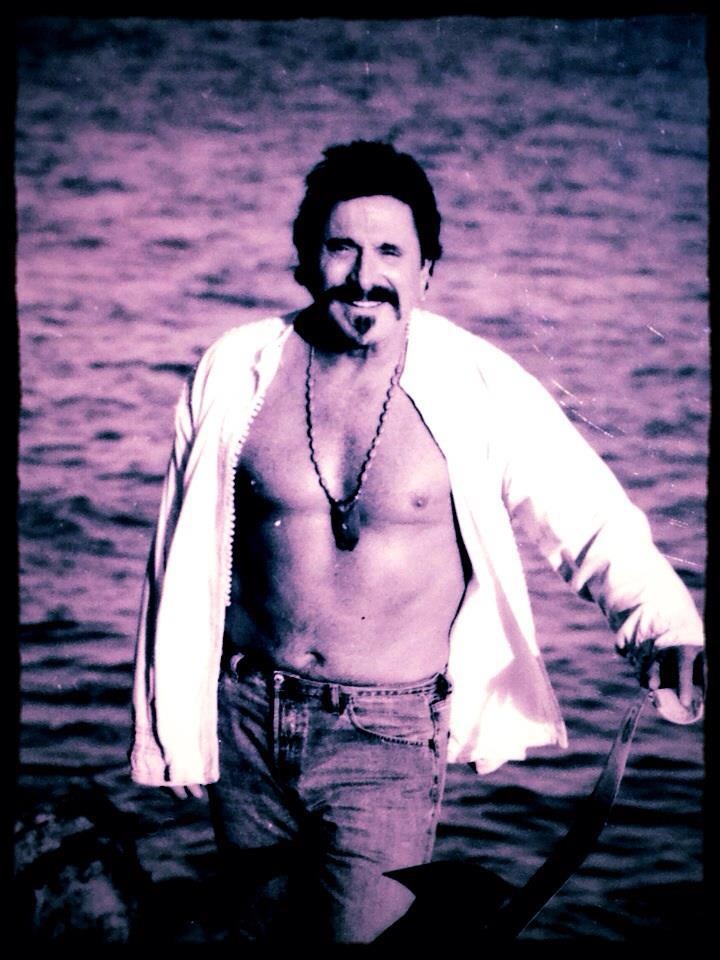
“O Holy Night” — A timeless hymn of wonder, lifted once more by Chuck Negron’s evocative voice, where sacred beauty meets the breath of memory.
When we speak of “O Holy Night,” we do not simply speak of a song—especially not in the voice of Chuck Negron. We speak of a moment in time, a convergence of world‑old reverence and a voice that once sang the anthemic age of * Three Dog Night*. Written originally as Cantique de Noël in 1847 by French poet Placide Cappeau with music by Adolphe Adam, this carol has been translated, arranged, and beloved across generations and continents, rising to become one of the most cherished expressions of the Christmas spirit ever committed to sheet music. Its story begins in a small French village but has echoed ever since in churches, concert halls, family gatherings, and in the quiet places of the heart where awe and devotion still find room to breathe.
By the time Chuck Negron, whose rich tenor voice had once propelled the rock‑soul juggernaut Three Dog Night to a succession of Top 20 hits, chose to include “O Holy Night” on his 2001 solo album Joy to the World, the carol was already an emblem of Christmas’s deepest sentiments: hope, redemption, and a kind of quiet joy that persists through hardship. Unlike the pop charts that marked Negron’s earlier career—as a leading voice on songs like “Joy to the World” and “An Old Fashioned Love Song”—this version didn’t chase commercial rankings or radio play. It stood instead as a personal testament: the song of a seasoned artist who had wandered far from the golden heights of rock stardom into the shadows of addiction and back into the light of reflection.
There is no specific chart position recorded for Negron’s rendition of “O Holy Night.” It was one of many carols on an album that served not as a commercial vehicle but as a devotional space—an offering of comfort to listeners who grew up with the familiar strains of these melodies the way others might revisit an old photograph or a long‑closed journal. But while it never scaled the Billboard charts in the way his 1970s hits once did, the emotional resonance of Negron’s performance occupies a different kind of ranking: high in the memory of those who have turned to music in moments of reflection, nostalgia, and yearning.
The story behind “O Holy Night” itself is as deeply human as the voices that have sung it. Born of a chance request in 1847 and first heard at Midnight Mass in a small French town, the carol was quickly embraced across Europe as a sacred hymn of celebration. Its English words—more an adaptation than a direct translation—speak of a night that changed the world, of stars aglow with promise, and of hearts touched by wonder. Over the ensuing centuries, the song found its way into the repertoires of opera singers and pop artists alike—Mariah Carey, Celine Dion, Josh Groban, and countless others—each bringing their own shade of emotion to the melody.
In the context of Negron’s life, the carol becomes more than a holiday standard. Many who remember his voice from the rock era—powerful, expressive, full of soul—will hear in his interpretation a tenderness that speaks of survival and grace. Here was an artist who had once shouted the exuberant opening lines of a chart‑topping rock anthem, now offering a softer, more contemplative gift: a reminder that the sacred can be found even in voices that have known the rough winds of life. His Joy to the World album, inclusive of “O Holy Night,” was met with warm reception among those who cherished its heartfelt approach to classics; critics noted the blend of adult contemporary sensibilities with seasonal tradition, and listeners appreciated the sincere, sometimes blue‑eyed soul with which Negron approached each song.
To hear “O Holy Night” in Negron’s voice is to feel the weight of years and experiences—joys, losses, celebrations, and quiet introspection—woven into each phrase. It is a reminder that music connects us across time: from a 19th‑century French village to the concert stages of the 20th century, into living rooms warmed by firelight, and finally back into the still, revered spaces of our own hearts.
In its essence, “O Holy Night” is about wonder—that breathless moment when beauty and truth seem to meet in the quiet of a starlit sky. And in Chuck Negron’s earnest, reflective delivery, that wonder feels as fresh and powerful as it must have on the very first Christmas night so long ago.