
It’s the Downpour of Heartbreak You Can Hear in Every Note of “It Keeps Rainin’” – a Testament to Love Lost and New Orleans Soul
When we speak of “It Keeps Rainin’” by Fats Domino with longtime collaborator Dave Bartholomew, we are not merely recounting a song from 1961. We are entering a room full of memory and mood, where each piano chord and horn fill carries the weight of a downtown barroom dusk and the ache of lost love. This song stands as one of those gems from an era when rhythm and blues transmuted into something universal and timeless. In its original release, “It Keeps Rainin’” appeared on Imperial Records as the B-side to “I Just Cry,” yet its resonance reached far beyond its initial pairing. At the time of its release, the single reached number 23 on the Billboard Hot 100 and climbed to number 18 on the Billboard R&B chart in the United States, while in the United Kingdom it made its way to number 49 on the UK singles chart not headline smash numbers, yet significant for a performer who was defining a genre and speaking directly to the heartstrings of his audience.
“It Keeps Rainin’” was recorded on December 28, 1960 and emerged amid a fertile period for Fats that saw him transform his New Orleans roots into the broader rock and roll vernacular. The song was written by Domino, Dave Bartholomew, and Bobby Charles, a trio that captured both the musical chemistry and the shared storytelling soul of New Orleans rhythm and blues. In its essence, the song tells the story of unrelenting sorrow. The simple refrain “It keeps rainin’ and rainin’ / Tears from my eyes” echoes like a lament from the corner of some late-night club where the lights are low, the piano lingers in the background, and heartbreak is no abstract concept but a familiar companion.
The structure of the song itself is worth reflecting on. It is anchored by Domino’s warm but weary vocals and piano work, his touch both rhythmic and tender. The arrangement features Bartholomew’s trumpet and the soulful interplay of saxophones and guitar, all woven together to create a sound that is both buoyant and plaintive. This juxtaposition the warmth of the melody with the melancholy of the lyrics — mirrors so much of life’s own contradictions. In the hands of less intuitive performers, the song could easily slip into either blandness or melodrama. But here, it exists in that poetic interstice where sorrow is transformed by groove and where sadness is given a kind of grace.
The backstory of the song’s creation adds another layer to its emotional impact. Bobby Charles originally wrote a version under the title “Little Rascal” with very different lyrics, intending a different narrative tone. When the demo reached Domino who was on the road for a show the vocal track was accidentally absent. In a moment of intuitive creativity, Domino wrote new lyrics to match the rhythm track, recasting the song into the melancholic gem it became. Charles later insisted that his original lyrics were superior, yet they have never been released, leaving Domino’s version to speak to generations of listeners.
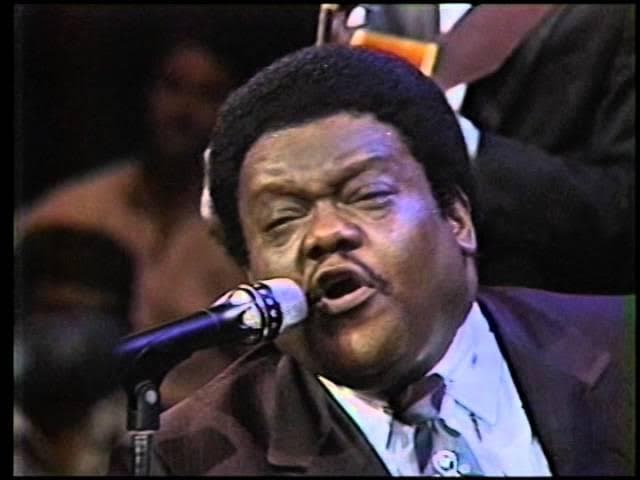
By the time 1986’s live performance in Austin was recorded, Domino’s stature had grown well beyond the charts. That live rendition captured on video and cherished by aficionados reveals the old master not as a static relic but as a vibrant bearer of all the musical history that preceded him. On stage, there was no pretense; every note seemed an acknowledgment of where the music came from and how deeply it was felt. You can almost see the ghosts of smoky halls and late-night studios in the way Domino’s fingers dance over the keys, the crowd’s warmth echoing back at him.
Perhaps what makes “It Keeps Rainin’” endure, even for those who first encountered it decades after its release, is how it captures the paradox of joy and sorrow. It is a blues song that never succumbs entirely to darkness, much like life itself. Its influence can be traced not only in later covers including the 1993 reggae-inspired version by Bitty McLean that brought the song renewed chart success in Europe and New Zealand but in how countless artists have learned from its seamless blend of narrative, feeling, and rhythm.
For audiences who grew up with this music, “It Keeps Rainin’” is not just a track in a catalogue. It is a reminder of an era when music was personal and communal, when heartbreak had a groove and healing could start with a piano’s first chord. The song’s title evokes the persistence of rain, much like memories that remain long after the moment has passed. In the echoes of its refrain, listeners find both the lament and the music that carries them through.