
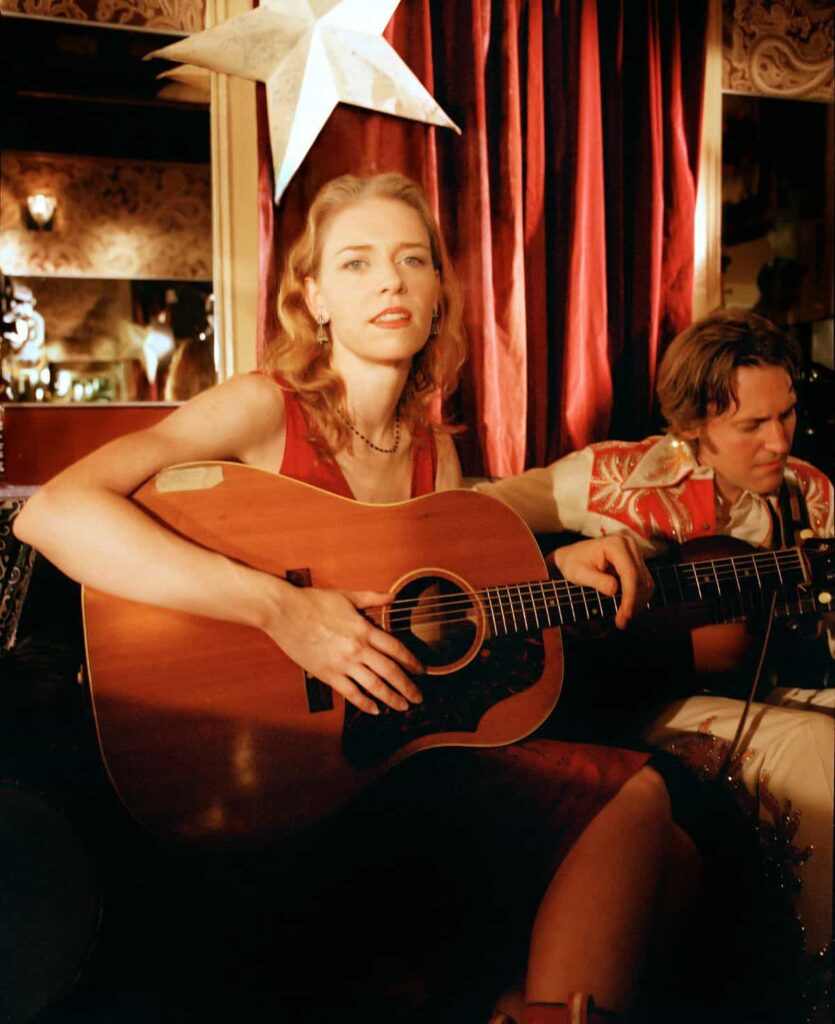
The Way It Goes — a quiet acceptance of fate, time, and the unspoken weight of living
From its very first notes, “The Way It Goes” by Gillian Welch unfolds like a slow, deliberate walk through memory — measured, restrained, and deeply honest. Released in 2011 on the album The Harrow & the Harvest, the song did not arrive with the noise of chart ambition, nor did it chase radio success. It was never meant to. Instead, it belongs to a rarer tradition: songs that sit with you, age with you, and speak more clearly the longer you live with them.
Important context first:
“The Way It Goes” was written by Gillian Welch and her longtime musical partner David Rawlings, a duo whose collaboration has remained one of the most respected and enduring partnerships in American roots music. The album The Harrow & the Harvest was nominated for the Grammy Award for Best Contemporary Folk Album, a recognition not of popularity, but of artistic depth and integrity. The record itself became a quiet landmark — widely praised by critics, embraced by listeners who value subtlety over spectacle.
There is no dramatic narrative in “The Way It Goes.” And that is precisely its power.
The song is built around repetition — lyrical, melodic, emotional. Lines return almost unchanged, like thoughts that circle endlessly in the mind. Welch sings of things that come and go, of effort and resignation, of the simple truth that some things cannot be fixed, only accepted. The phrase “that’s the way it goes” is not delivered with bitterness, nor with optimism. It is delivered with clarity.
This is not a song about giving up. It is a song about understanding.
Gillian Welch has always written with a voice that feels older than its time, drawing from Appalachian traditions, early country, gospel, and folk. But here, the wisdom feels especially distilled. There is no excess. No ornamentation. The instrumentation is spare — acoustic guitar, harmony, silence. Silence matters in this song. It gives the words room to breathe, and the listener room to reflect.
For those who have lived long enough to see plans unravel, relationships change, and certainties fade, “The Way It Goes” feels uncomfortably familiar. It speaks to moments when effort does not guarantee outcome, when doing everything “right” still leads to loss. Yet the song does not protest. It does not argue with reality. It simply names it.
And in doing so, it offers a strange kind of comfort.
David Rawlings’ harmony vocal is essential here — not decorative, but grounding. His voice does not rise above Welch’s; it walks beside it. Together, they sound less like performers and more like witnesses. Two people standing still while the world moves around them, acknowledging its motion without trying to stop it.
This song resonates deeply with listeners who have grown tired of easy answers. It does not promise redemption, nor does it wallow in despair. Instead, it suggests something quieter: endurance. The understanding that life continues, regardless of our wishes, and that meaning is often found not in control, but in awareness.
In the broader arc of Gillian Welch’s career, “The Way It Goes” feels like a statement of artistic philosophy. After years of working outside the mainstream, refusing trends, and trusting patience over exposure, the song mirrors the life that produced it. Slow. Intentional. Uncompromised.
There are songs you hear once and forget. There are songs you remember because they remind you of a specific time. And then there are songs like “The Way It Goes” — songs that feel less like memories and more like companions. They don’t tell you what to feel. They simply sit with you, acknowledging the truth you already know but rarely say out loud.
 Oldies Songs