
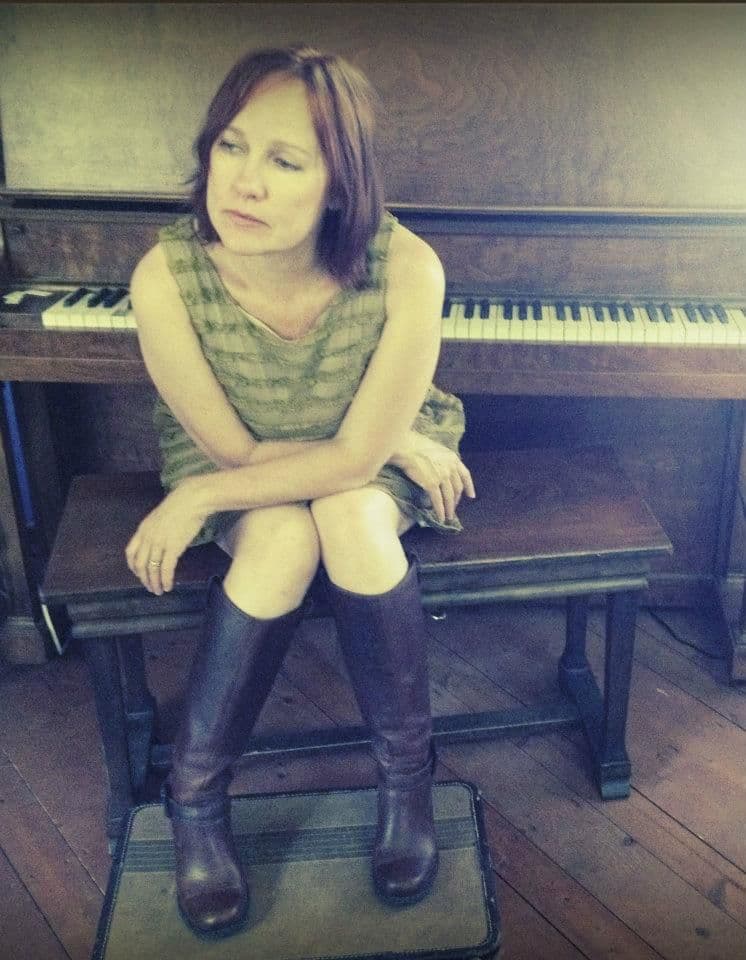
My Life — a plainspoken hymn to independence, dignity, and the courage to live on one’s own terms
When Iris DeMent sings “My Life,” she does not raise her voice. She doesn’t need to. The power of the song lies in its calm certainty — the sound of a woman standing firmly inside her own truth, unafraid of judgment, untempted by approval. Released in 1994 as the title track of her second album, My Life, the song never appeared on mainstream singles charts. Yet, like many enduring folk-country recordings, its influence has quietly traveled far beyond rankings and radio playlists, settling instead into the deeper spaces of memory and conscience.
My Life arrived at a crucial moment in Iris DeMent’s career. After the raw, almost shockingly honest debut Infamous Angel (1992), listeners had already learned that she was not interested in polish or convention. Her voice — high, quivering, unmistakably human — divided audiences at first, but it carried something rare: sincerity without armor. With My Life, she leaned even further into that honesty, presenting a collection of songs that spoke directly about choice, responsibility, faith, doubt, and the quiet defiance of living authentically.
The song “My Life” stands at the center of that statement. Written solely by Iris DeMent, it reads almost like a personal creed. The lyrics address expectations placed upon her — about marriage, about children, about what a woman’s life should look like — and gently but firmly set them aside. “I don’t want to be married,” she sings, not with bitterness or rebellion, but with clarity. It is not a rejection of love; it is an assertion of self-knowledge.
What makes the song so deeply affecting is its lack of drama. There is no anger here, no argument. Instead, DeMent sings as if she has already made peace with her decision. The melody moves slowly, almost conversationally, supported by sparse, traditional instrumentation that never intrudes on the message. This simplicity is deliberate. It mirrors the life she describes — one not defined by milestones or approval, but by inner alignment.
For many listeners, especially those who have lived long enough to see how easily lives can be shaped by expectation, “My Life” feels like a quiet vindication. It speaks to anyone who has ever chosen a path that did not fit the blueprint handed to them. In a musical landscape often dominated by romance or regret, DeMent offers something rarer: contentment rooted in self-respect.
The cultural context of the early 1990s matters here. While popular music increasingly leaned toward gloss and irony, Iris DeMent stood firmly in a lineage of American folk storytellers who valued truth over trend. Her influences — traditional hymns, Appalachian ballads, rural gospel — are audible in both the melody and the moral backbone of the song. Yet “My Life” never feels old-fashioned. Its message remains quietly radical precisely because it is timeless.
Critics at the time recognized the album My Life as a significant artistic step forward, praising its emotional intelligence and lyrical restraint. Though it did not generate hit singles, it cemented DeMent’s reputation as a songwriter of uncommon integrity — someone more interested in saying something meaningful than saying it loudly.
Over the years, “My Life” has taken on additional layers of meaning. What once sounded like a personal explanation now feels like a universal meditation on autonomy. As time passes, the song seems to grow wiser rather than dated. It reminds us that fulfillment is not a performance, and happiness does not require witnesses.
Listening to Iris DeMent sing “This is my life” feels like hearing someone close a door — not in anger, but in peace. It is the sound of a woman choosing stillness over noise, truth over comfort, and self-understanding over applause. And for those who hear their own unspoken thoughts reflected back in her voice, the song offers something profoundly rare: permission.
 Oldies Songs