
A sharp-tongued confession of excess and self-inflicted trouble, wrapped in humor, weariness, and the sound of a restless American decade
When people mention “Poor Poor Pitiful Me,” they are often reacting not just to a song, but to an attitude—a voice that sounds bruised, sarcastic, and oddly self-aware all at once. Though frequently associated with celebrated live performances by Jackson Browne and Bonnie Raitt, the song’s deeper roots reveal a fascinating journey through the songwriting circles of 1970s Los Angeles, where irony, excess, and emotional honesty lived side by side.
“Poor Poor Pitiful Me” was written by Warren Zevon, one of the era’s most biting and literate songwriters. It first appeared on his 1976 self-titled album Warren Zevon, a record produced by Jackson Browne, who at the time was not only Zevon’s friend but also his most important champion. Zevon’s original version was raw, cynical, and deliberately uncomfortable—more spoken than sung, full of characters who are both victims and perpetrators of their own misery. It was not a major hit upon release, and it did not enter the major singles charts in its original form. But like many Zevon compositions, its afterlife would prove far more influential than its debut.
The song reached a much wider audience in 1977, when Linda Ronstadt recorded it for her landmark album Simple Dreams. Released as a single, Ronstadt’s version peaked at No. 31 on the Billboard Hot 100, and it performed even better on some U.S. retail-based charts of the time. Her take softened the song’s sharpest edges without losing its sense of irony, transforming Zevon’s bitter self-portrait into something more playful and radio-friendly. Yet the song never lost its uneasy core—the sense that the narrator’s complaints are both real and faintly ridiculous.
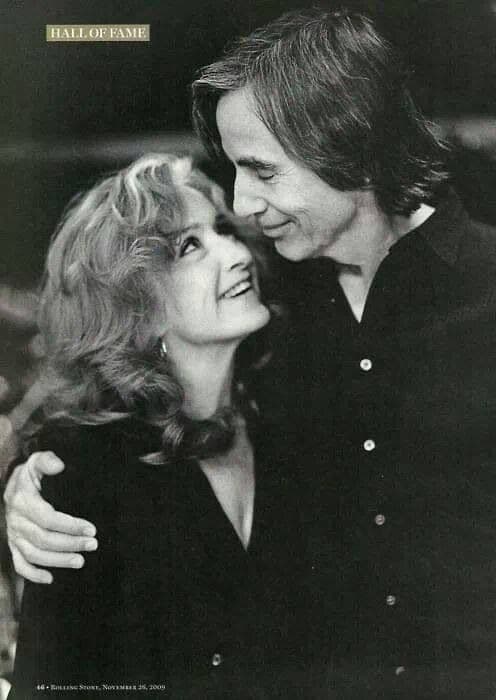
This tension is exactly what made “Poor Poor Pitiful Me” such a compelling piece for live interpretation, especially in the hands of Jackson Browne and Bonnie Raitt. When they performed the song together in the mid-to-late 1970s, it took on an added dimension. Browne, known for his introspective seriousness, brought an undercurrent of moral fatigue, while Raitt—earthy, sly, and emotionally fearless—leaned into the song’s sexual politics and gallows humor. Their shared performances never charted as official singles, but among audiences, they became memorable moments: seasoned musicians inhabiting a song about the consequences of living too fast and thinking too little.
At its heart, “Poor Poor Pitiful Me” is a song about accountability disguised as self-pity. The narrator lists his grievances—bad lovers, bad luck, emotional exhaustion—but never quite escapes the suspicion that he is the architect of his own downfall. Lines that sound comic on the surface reveal a deeper moral exhaustion beneath them. This was a recurring theme in Zevon’s writing, and it resonated strongly in a decade when the optimism of the 1960s had faded into something more skeptical and bruised.
Musically, the song sits at a crossroads between folk-rock, roots rock, and barroom confession. Its structure is deceptively simple, allowing performers like Browne and Raitt to emphasize phrasing, tone, and character rather than vocal virtuosity. This flexibility is one reason the song has endured: it can sound bitter, amused, regretful, or defiant depending on who sings it and when.
Looking back, “Poor Poor Pitiful Me” feels less like a protest song or a personal diary entry and more like a mirror held up to a certain kind of American adulthood—the moment when bravado gives way to reflection, and humor becomes a defense against regret. In the shared musical universe of Jackson Browne, Bonnie Raitt, and Warren Zevon, it stands as a reminder that great songs do not always offer comfort. Sometimes, they offer recognition. And for those who have lived long enough to understand the joke—and the pain behind it—that recognition can be quietly profound.
 Oldies Songs