
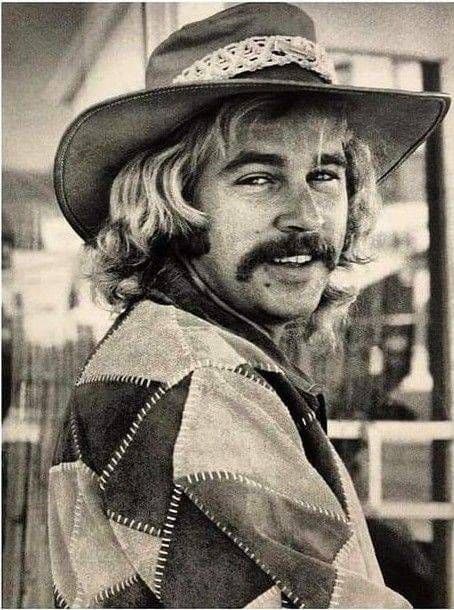
Cheeseburger in Paradise — a joyful hunger for simple pleasures in a restless American soul
From the very first strum, “Cheeseburger in Paradise” sounds like a grin you can hear. It is light, sun-washed, and deceptively simple — yet beneath its easy rhythm lies one of the most enduring statements of Jimmy Buffett’s worldview: that happiness is often found not in grand ambitions, but in small, honest comforts. Released in 1978 on the album Son of a Son of a Sailor, the song became one of Buffett’s signature works, reaching No. 32 on the Billboard Hot 100 and climbing higher to No. 18 on the Adult Contemporary chart shortly after its debut. More importantly, it secured a permanent place in the cultural memory of American popular music.
At the time of its release, Jimmy Buffett was no longer just a singer-songwriter — he was becoming a storyteller of a particular way of life. A former sailor, a wanderer of coastlines and bars, Buffett had already carved out a niche blending folk, country, Caribbean rhythms, and a laid-back philosophy that rejected excess seriousness. “Cheeseburger in Paradise” arrived at exactly the right moment, when audiences were ready to laugh again, to breathe again, and to remember that joy did not always need a reason.
The song’s origin is as charming as its melody. Buffett famously conceived the idea after enduring days at sea with little to eat but canned food. When he finally returned to land, the thought of a simple cheeseburger became almost mythical — a symbol of abundance, safety, and civilization after hardship. That craving turned into metaphor. The cheeseburger was no longer just food; it was comfort, reward, and home.
Lyrically, the song balances humor and longing with remarkable grace. Buffett sings of tropical escapes, beach bars, and hunger — not only of the body, but of the spirit. In a world that often demands constant motion and ambition, the song quietly asks: What if enough is enough? What if paradise is not an island, but a moment — a bite, a laugh, a shared table?
Musically, “Cheeseburger in Paradise” is built for ease. The rhythm feels like a slow sway of a boat at anchor. The melody is instantly memorable, inviting listeners to sing along even if they don’t quite know why. And Buffett’s voice — relaxed, slightly mischievous — sounds like someone who has seen storms but chooses joy anyway. There is no urgency here, no desperation. Only contentment earned through experience.
For many listeners, especially those who had already traveled far from their younger selves by the late 1970s, the song struck a deep chord. It wasn’t about escape from responsibility; it was about perspective. Buffett wasn’t mocking ambition — he was gently reminding us that life’s richness often lies in moments we overlook. A cheeseburger. A cold drink. A song playing just right at the end of the day.
Over time, “Cheeseburger in Paradise” grew beyond the radio. It became an anthem at concerts, a ritual sing-along, and eventually the inspiration for restaurants, gatherings, and a shared sense of belonging among fans. Yet the heart of the song never changed. Strip away the smiles and the sway, and you find a quietly profound truth: that after wandering long enough, we all crave something familiar, something grounding, something warm.
In retrospect, the song feels like a snapshot of an era — not because of fashion or sound, but because of its spirit. It captures a generation learning to slow down, to laugh at itself, and to savor what remains after dreams have been tested by time.
Jimmy Buffett once said that his songs were postcards from a life well-lived. If that is true, then “Cheeseburger in Paradise” is one of the most honest postcards he ever sent. Faded at the edges, perhaps, but still warm to the touch — reminding us that paradise doesn’t always shine. Sometimes, it sizzles quietly on a grill, waiting patiently for us to notice.