
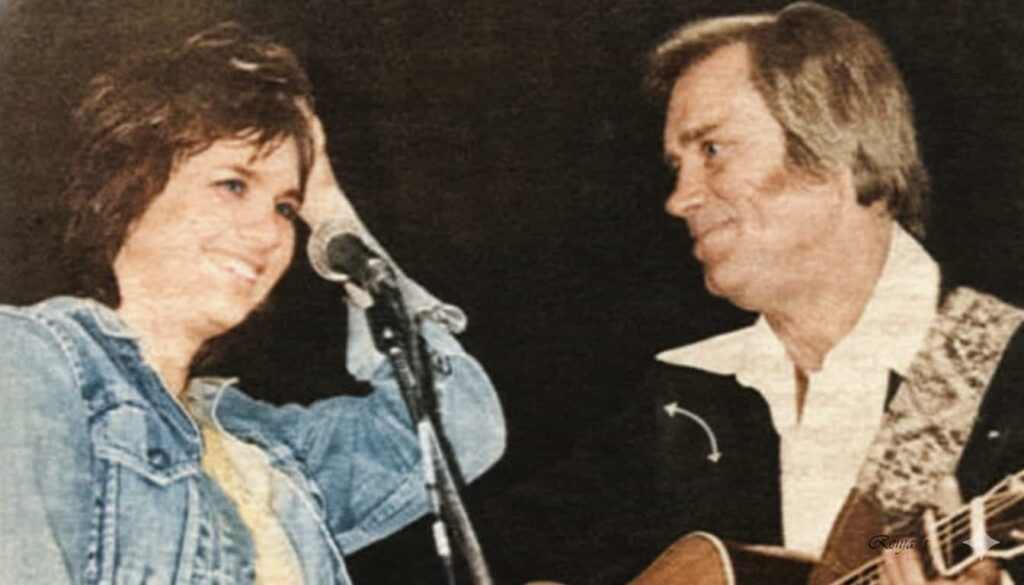
A duet that sounds like a confession, where love hardens into silence and regret becomes permanent
When “I’ve Turned You to Stone” was released in 1979, it arrived not as a commercial spectacle, but as a quiet emotional reckoning. The song did not storm the very top of the charts, yet it left a deeper imprint than many No.1 hits of its era. Recorded by George Jones and Linda Ronstadt, it peaked at No. 8 on the Billboard Hot Country Singles chart, a respectable position that understated its lasting power. For listeners who lived through the golden age of country music, this song felt less like entertainment and more like a moment of recognition, an honest mirror held up to the damage love can do when pride and pain go unanswered.
At the time, George Jones was already known as the most emotionally devastating voice in country music. His reputation was forged not only by classics like “He Stopped Loving Her Today”, but by a life lived in public collapse and private sorrow. Addiction, failed marriages, and long absences from the stage had turned him into a symbol of self destruction and wounded masculinity. Linda Ronstadt, on the other hand, stood at the peak of artistic control and commercial success. She was admired for her crystalline voice, her genre crossing ambition, and a career that moved effortlessly between rock, folk, country, and pop. On paper, they seemed like opposites. In sound, they became inseparable.
“I’ve Turned You to Stone” tells its story with devastating restraint. There is no melodrama in the lyrics, no grand accusations. Instead, the song unfolds like a late night realization, when the room is quiet and memory speaks louder than forgiveness. The narrator admits to emotional neglect, to words withheld, to love starved of warmth. The title itself is one of the most painful metaphors in country music. Turning someone to stone does not suggest anger alone. It suggests time, repetition, and the slow erosion of feeling until nothing responds anymore.
What gives the song its lasting resonance is the way Jones and Ronstadt inhabit opposite sides of the same wound. Jones sings with the weary authority of someone who knows he has caused irreversible harm. His voice cracks not from weakness, but from truth. Ronstadt answers with controlled sorrow, not pleading, not accusing, but accepting the finality of emotional numbness. Their harmonies do not comfort each other. They coexist, like two people sitting in the same room long after love has left.
Behind the recording lies a deeper irony. George Jones was living the very consequences the song describes. His personal relationships had been marked by absence, broken promises, and emotional distance fueled by addiction. For him, the lyrics were not a role. They were a confession. Linda Ronstadt, who often spoke later about the emotional cost of loving artists in turmoil, brought a clarity that balanced Jones’s rawness. Together, they created a performance that feels less like studio work and more like captured truth.
The song appeared during a transitional moment in country music, when the genre was beginning to polish its edges for broader appeal. Yet “I’ve Turned You to Stone” resisted that trend. It remained rooted in traditional country values. Honesty over polish. Pain over sentimentality. Silence over resolution. It trusted the listener to understand what was left unsaid.
For those who grew up with this music, the song carries a weight beyond its runtime. It recalls nights spent with the radio low, marriages strained by unspoken words, and the knowledge that love, once neglected, does not always return. This is not a song about heartbreak at the moment of separation. It is about what happens long after, when regret becomes clearer than desire.
In the long catalog of both artists, “I’ve Turned You to Stone” stands as a reminder that great music does not need triumph. It needs truth. And sometimes, truth arrives quietly, settles in the chest, and stays there for the rest of our lives.
 Oldies Songs