
A Song of Restless Roads and Quiet Resolve, Where Folk Roots Met a New Voice Finding Its Strength
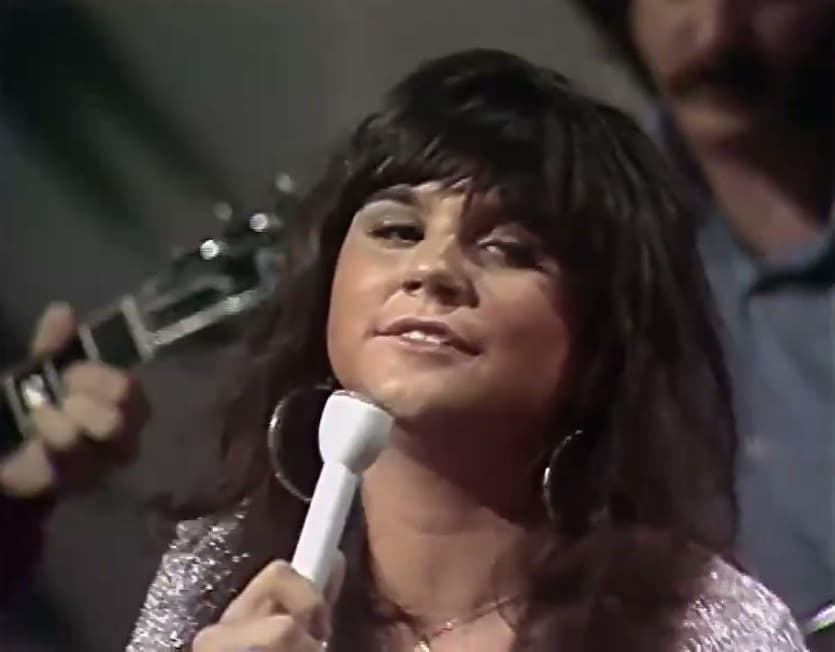
When Linda Ronstadt stepped onto the softly lit set of Playboy After Dark on April 7, 1970, she carried with her more than a microphone and a band. She carried a song already etched into the American folk conscience, “Walkin’ Down the Line”, and reshaped it with a voice that was just beginning to reveal its full emotional authority. Originally written and recorded by Bob Dylan in 1963, the song had long been associated with youthful restlessness and the weary dignity of a man moving forward with little more than resolve. In Ronstadt’s hands, it became something subtly different, a reflective meditation delivered with poise rather than protest.
By early 1970, Linda Ronstadt was standing at a critical crossroads in her career. Her days with the Stone Poneys were behind her, and her solo identity was still forming in the public imagination. Though she would not achieve her massive commercial breakthrough until the mid 1970s, this period was essential. It was a time when she tested material, voices, and traditions, searching for the sound that would later make her one of the defining interpreters of American popular music. “Walkin’ Down the Line” was not released as a single by Ronstadt and therefore did not enter the Billboard charts in her version, but its importance lies elsewhere. It documents a moment of artistic transition rather than commercial ambition.
The performance on Playboy After Dark is particularly revealing. The show itself was known for presenting contemporary music in an intimate, late night setting, favoring authenticity over spectacle. Within that atmosphere, Ronstadt’s interpretation feels unforced and deeply respectful of the song’s origins. She does not attempt to out-Dylan Dylan. Instead, she leans into clarity, phrasing each line with emotional restraint. Her voice, already recognizably pure, carries a gentle ache that reframes the song’s themes. Where Dylan’s original suggests a young man hardened by experience beyond his years, Ronstadt’s reading introduces empathy and quiet endurance.
The song’s narrative remains simple yet profound. A traveler moves forward, uncertain of what lies ahead, carrying disappointment, longing, and determination in equal measure. Lines about leaving town, feeling misunderstood, and continuing onward resonate as universal truths rather than personal confession. In Ronstadt’s delivery, those lines seem less defiant and more contemplative. The road is not an escape but a necessity. Movement becomes survival.
This interpretation aligned closely with Ronstadt’s own artistic path at the time. She was absorbing influences from folk, country, rock, and traditional pop, learning how to inhabit songs written by others while making them unmistakably her own. This skill would later define her landmark albums such as “Heart Like a Wheel” and “Simple Dreams”, but its foundation is already evident here. Even in 1970, she understood that emotional truth mattered more than vocal display.
Though “Walkin’ Down the Line” does not appear as a centerpiece on a chart-topping album from Ronstadt’s catalog, it fits naturally alongside the material she was exploring during this era, including songs that would later appear on “Silk Purse” released later that same year. That album, her second solo effort, reached the Billboard Top 100 and further established her as a serious interpreter of American songwriting traditions. The seeds of that success can be heard clearly in this performance.
In hindsight, this rendition stands as a quiet but telling artifact. It captures Linda Ronstadt before superstardom reshaped her public image, when the music itself was still the central focus. There is humility in the way she approaches the song, a recognition that some compositions carry their own gravity and require only honesty to endure.
For listeners returning to this performance decades later, “Walkin’ Down the Line” feels less like a song bound to its era and more like a reflection on persistence. It speaks to the long road of a career, the patience required to find one’s voice, and the courage to keep moving forward even when the destination remains unclear. In that sense, Ronstadt’s version is not merely a cover. It is a quiet self portrait, drawn before the world fully realized who she was becoming.
 Oldies Songs