
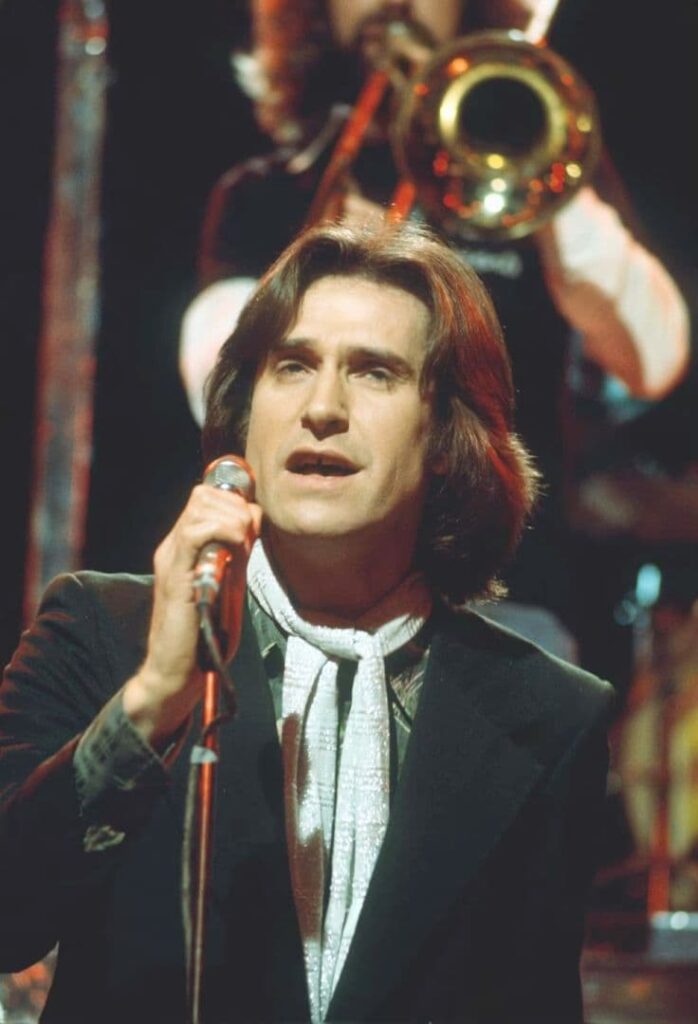
A primal cry of desire and defiance, where raw emotion shattered the polite surface of early-1960s pop and announced a new, rougher future for rock music
When Ray Davies wrote “You Really Got Me”, few could have predicted that a song barely over two minutes long would redraw the emotional and sonic boundaries of popular music. Released in August 1964 by The Kinks, the single stormed straight to No. 1 on the UK Singles Chart, and soon after reached No. 7 on the US Billboard Hot 100. These chart positions are not merely statistics; they mark the moment when British pop, still dressed in the clean suits of beat music, suddenly tore its jacket open and revealed something more urgent, more physical, and far more dangerous underneath.
At its core, “You Really Got Me” is disarmingly simple. The lyric circles around obsession, desire, and emotional helplessness. “You really got me, so I don’t know what I’m doing,” sings Ray Davies, not with theatrical flourish, but with an almost startled urgency. There is no poetry in the traditional sense, no elaborate metaphor. Instead, there is repetition—relentless, insistent repetition—mirroring the way desire itself can trap the mind in a loop. This was not accidental. Ray Davies understood that sometimes emotional truth lies not in clever wording, but in the inability to say anything else.
Musically, the song was revolutionary. The infamous distorted guitar riff, played by Dave Davies, came from a small, almost rebellious act: slashing the speaker cone of his amplifier with a razor blade to achieve a rougher sound. That buzzing, snarling tone became the song’s heartbeat. It was abrasive, even shocking, in 1964. Yet it spoke directly to something unarticulated in the listener—a hunger, a frustration, a sense that polite melodies were no longer enough. In hindsight, this riff stands as one of the founding moments of hard rock and heavy metal, influencing artists from The Who to Led Zeppelin, and later bands like Van Halen, whose 1978 cover brought the song roaring into a new generation.
The song first appeared on The Kinks’ debut album, Kinks (released in the UK), and on the US version titled You Really Got Me. For Ray Davies, this sudden success was both a breakthrough and a burden. It cemented the band’s reputation as raw and aggressive, even though Davies himself would soon reveal a far more reflective, observational songwriting voice. In that sense, “You Really Got Me” feels like the opening chapter of a long novel—loud, impulsive, and driven by instinct—before the author settles into deeper psychological terrain.
What gives the song its lasting emotional power, especially for older listeners, is not just its historical importance, but its honesty. There is vulnerability beneath the noise. The narrator is not in control; he is overwhelmed. In a time when masculinity in pop music was often presented as confident and unshakable, Ray Davies dared to admit emotional dependence. That confession, wrapped in distortion and urgency, made the song feel both dangerous and deeply human.
Listening to “You Really Got Me” today can feel like opening a time capsule. It carries the scent of a world on the edge of change—the early 1960s, when youth culture was beginning to question restraint, tradition, and emotional silence. For those who lived through that era, the song may recall the first time music felt like a physical force rather than a polite companion. For others, it remains a reminder that great songs do not age; they simply wait for new ears to recognize themselves.
More than six decades on, Ray Davies and “You Really Got Me” endure not because of volume or speed, but because they captured a feeling that never truly leaves us: the moment when desire strips away composure, and all that remains is a raw, repeated truth we cannot escape.