
A Restless Heart Searching for Truth in Love and Independence
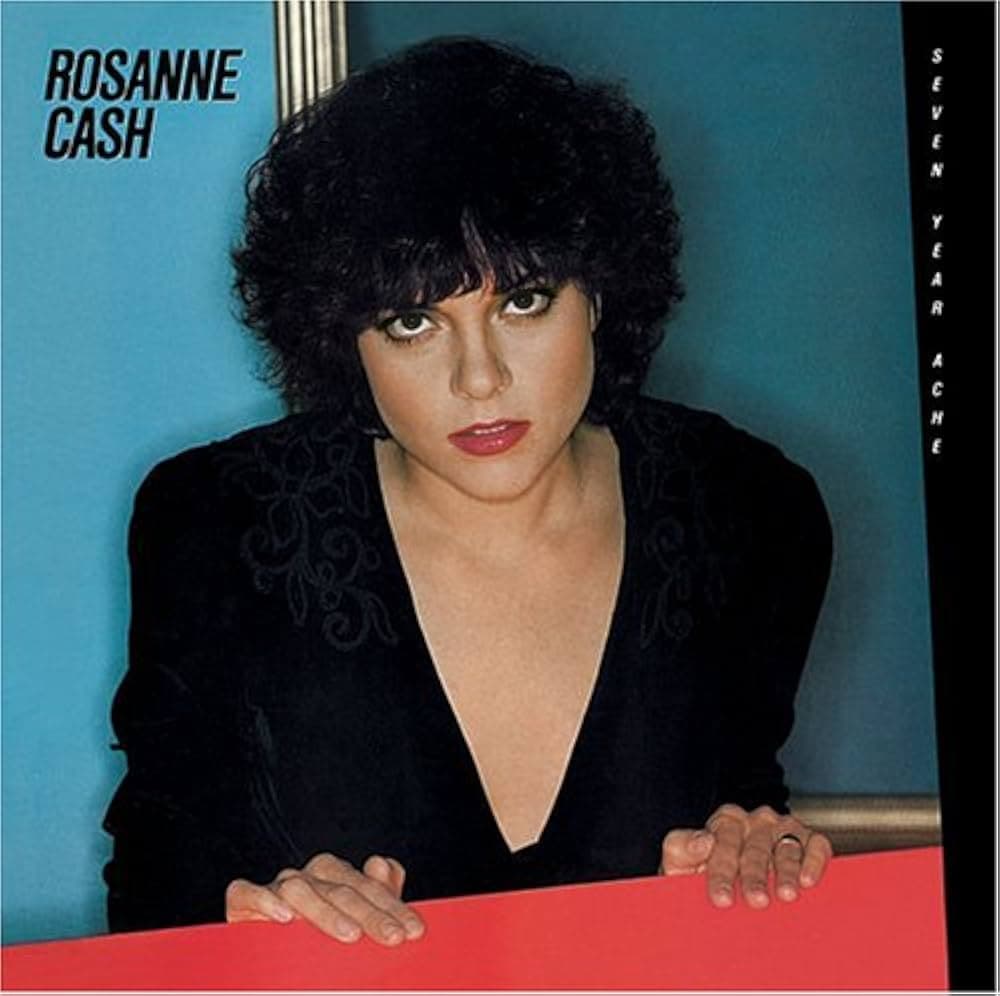
Released in February 1981, “Seven Year Ache” by Rosanne Cash marked a decisive turning point not only in her career, but in the broader landscape of early 1980s country music. Issued as the lead single and title track from her third studio album, Seven Year Ache, the song quickly rose to No. 1 on the Billboard Hot Country Singles chart, becoming her first of ten chart-topping country hits. It also crossed over to the Billboard Hot 100, peaking at No. 22, and reached No. 3 on the Adult Contemporary chart. Those numbers alone tell us something significant: this was not merely a country hit. It was a cultural moment, a bridge between Nashville tradition and a more polished, contemporary sound that resonated far beyond country radio.
Written solely by Rosanne Cash, the song is a masterclass in emotional restraint and lyrical precision. At first listen, it carries a bright, almost deceptively buoyant arrangement, shaped by producer Rodney Crowell’s clean, radio-friendly production. The gentle pulse of the rhythm section and the shimmering keyboards place it firmly within the early 1980s crossover era. Yet beneath that polished surface lies a quietly devastating meditation on disillusionment, emotional distance, and the slow erosion of intimacy.
The phrase “seven year ache” itself plays on the old adage of the “seven year itch,” but Cash reshapes it into something far more introspective. This is not a song about impulsive temptation. It is about the dull, persistent ache that settles into a relationship when communication falters and expectations quietly drift apart. Her narrator is neither accusatory nor hysterical. Instead, she observes with weary clarity. “You act so surprised when it all goes wrong,” she sings, a line delivered not with anger but with a calm, almost clinical recognition.
In 1981, Rosanne Cash was stepping out from the long shadow of her father, Johnny Cash, and asserting her own artistic identity. She had already established credibility with earlier recordings, but “Seven Year Ache” was the moment when critics and audiences alike recognized her as a songwriter of depth and intelligence. The album itself went on to achieve Gold certification, further solidifying her status in Nashville. Importantly, this success was built not on novelty or spectacle, but on craft.
There is something timeless in the way the song captures the emotional geography of a strained partnership. The imagery is vivid but understated. The “little boys” and “little girls” referenced in the lyrics are not literal children but symbolic representations of immaturity and unspoken needs. Cash writes with psychological insight, revealing how adults sometimes retreat into defensiveness when faced with vulnerability. The ache she describes is not explosive. It lingers. It echoes in quiet rooms after arguments have faded.
Musically, the track exemplifies the “urban cowboy” era’s blend of country instrumentation with pop sensibility. Yet unlike many crossover attempts of the time, “Seven Year Ache” never feels calculated. Its authenticity comes from Cash’s measured vocal delivery. She does not oversing. Her phrasing is conversational, almost detached, and that restraint gives the song its emotional power. One senses that the narrator has already moved past the stage of pleading. What remains is reflection.
Looking back more than four decades later, the song retains its clarity. It speaks to anyone who has felt the slow drift of affection turning into habit, and habit into silence. It captures that uneasy realization when love does not end dramatically but erodes gradually. In an era when country music was redefining itself, Rosanne Cash offered something deeply personal and quietly radical: a woman’s perspective articulated with intelligence and autonomy.
“Seven Year Ache” remains a cornerstone of her catalog and a defining artifact of early 1980s country crossover. Its chart success confirmed its popularity, but its lasting legacy lies in its emotional honesty. Long after the radio fades, the ache it describes continues to resonate, not loudly, but persistently, like a memory that refuses to disappear.