
A Lonesome Southern Legend of Love, Loss, and the Long Road Home
When The Band joined forces with Emmylou Harris on “Evangeline”, released as a single in 1978, they created more than a song. They offered a modern folk ballad that felt as old as the American South itself. Written by Robbie Robertson, the song first appeared on The Band’s final studio album Islands in 1977, and soon reached a wider audience through The Last Waltz soundtrack and film. Upon its single release in early 1978, “Evangeline” climbed to No. 34 on the Billboard Hot 100 and an impressive No. 7 on the Adult Contemporary chart, confirming that its quiet power resonated deeply with listeners who valued storytelling over spectacle.
At this stage in their career, The Band were already legends. Once the earthy backbone behind Bob Dylan, they had gone on to redefine roots music with albums like Music from Big Pink and The Band, shaping what would later be called Americana. Yet by the late 1970s, the group was fragmenting, burdened by exhaustion, internal tensions, and the weight of their own legacy. Islands, assembled from remaining recordings after their farewell concert, carries a reflective tone, and “Evangeline” stands as one of its emotional anchors.
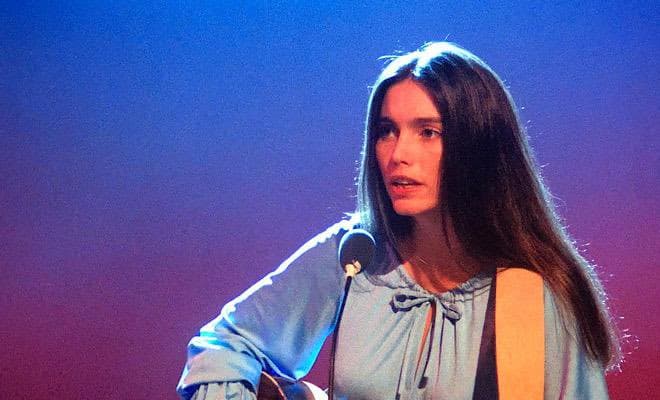
The presence of Emmylou Harris is essential to the song’s enduring grace. By 1978, she had already established herself as one of the most expressive voices in country and folk music, known for her crystalline tone and emotional restraint. Her harmony does not dominate the song, nor does it decorate it. Instead, it deepens the sense of longing, as if another memory has stepped into the room. Her voice blends with Levon Helm’s lead vocal in a way that feels intimate and human, never polished, never distant.
Lyrically, “Evangeline” tells a story of separation and waiting. Evangeline is left behind while her lover goes downriver, promising return but leaving only absence in his wake. The imagery of southern rivers, dusty roads, and quiet towns evokes a world where time moves slowly, yet heartbreak arrives without warning. There is no dramatic climax, no redemption neatly tied at the end. Instead, the song lingers in uncertainty, reflecting a truth many recognize but rarely articulate. Some people leave. Some promises dissolve. And life continues, quietly and without explanation.
What gives “Evangeline” its depth is restraint. Robbie Robertson’s writing avoids sentimentality, choosing suggestion over declaration. The music, built on a gentle rhythmic pulse and subtle instrumental textures, mirrors the emotional landscape of the lyrics. Levon Helm’s vocal performance is weary but compassionate, as though he is not just telling Evangeline’s story, but remembering many others like it. There is dignity in that voice, shaped by years of music and lived experience.
The song’s appearance in The Last Waltz film further cemented its place in music history. Surrounded by farewells and final bows, “Evangeline” felt like a quiet confession amid the grandeur of that evening. It was not about fame, or success, or the end of a band. It was about ordinary loss, the kind that happens far from stages and spotlights, and stays with people long after applause fades.
Today, “Evangeline” remains one of The Band’s most affecting later recordings. It does not shout for attention. It waits patiently, like the woman at its center, trusting that those who hear it are ready to listen. In its measured pace and aching simplicity, the song speaks to memory, endurance, and the gentle sorrow of roads that do not always lead back home.
 Oldies Songs