
A Timeless Whisper of Love That Refuses to Fade
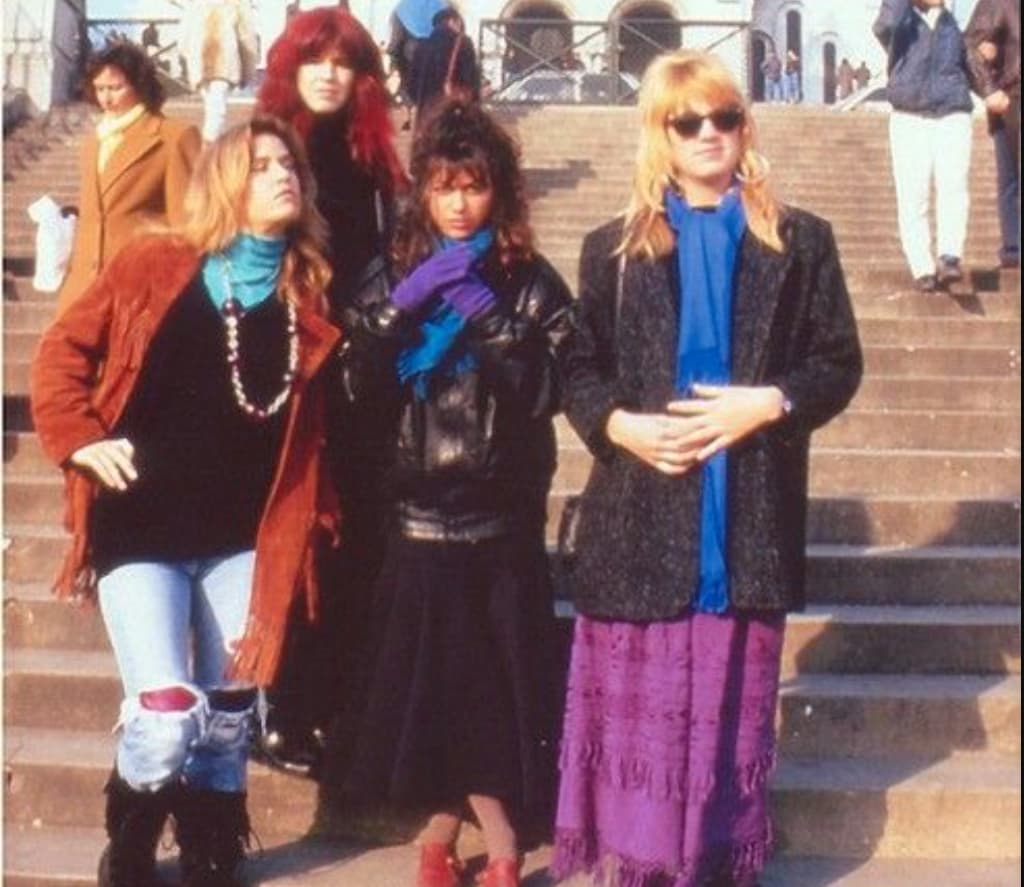
When The Bangles released “Eternal Flame” in 1989, few could have predicted that this gentle ballad—so delicate, so intimate—would become the most enduring song of their career. Yet it did just that. The single soared to No. 1 on the Billboard Hot 100 in the United States in April 1989, becoming the group’s second American chart-topper after “Walk Like an Egyptian.” It also reached No. 1 on the UK Singles Chart, and topped charts in Australia and several other countries. Taken from their third studio album, Everything (1988), “Eternal Flame” became the final great commercial triumph before the band’s initial breakup later that same year.
By the late 1980s, The Bangles had already defined a bright, jangly, California-infused pop-rock sound. Songs like “Manic Monday” and “Hazy Shade of Winter” had cemented their place in the MTV era. But “Eternal Flame” was something else entirely—quieter, more vulnerable, stripped of swagger. Written by Susanna Hoffs, Billy Steinberg, and Tom Kelly, the song emerged during sessions that aimed to expand the band’s musical palette. Steinberg and Kelly were seasoned hitmakers, known for penning Madonna’s “Like a Virgin” and Cyndi Lauper’s “True Colors.” Yet “Eternal Flame” feels far more intimate than those glossy pop landmarks.
The title was inspired by an actual eternal flame—at Graceland, Elvis Presley’s Memphis home, and also by a flame at a synagogue in Palm Springs that Steinberg had visited. The image of a flame that never goes out became the perfect metaphor for love that survives absence, distance, even doubt. Lyrically, the song poses simple yet profound questions: “Close your eyes, give me your hand, darling / Do you feel my heart beating?” These lines do not shout; they tremble. The song captures the fragile uncertainty of love—especially love tested by separation.
One of the most intriguing stories behind the recording involves Susanna Hoffs herself. Producer Davitt Sigerson reportedly told her that Olivia Newton-John had once recorded vocals in the nude to create a freer, more uninhibited sound. Hoffs, half in jest and half in artistic trust, tried the same approach while recording the lead vocal. Whether myth or fact embellished over time, the result is undeniable: her performance is disarmingly sincere. There is a softness in her voice that feels almost confessional, as if she were singing not to an arena but to one person in the quiet of night.
Musically, “Eternal Flame” departs from the band’s guitar-driven identity. The arrangement leans on tender piano chords, subtle strings, and restrained percussion. It is a masterclass in understatement. In an era dominated by bombast—big drums, bigger hair, towering choruses—this song dared to be small. And in that smallness, it found universality.
Commercially, it became The Bangles’ biggest-selling single, and its success briefly masked the internal tensions that were pulling the group apart. Creative disagreements and the perception that Hoffs was being positioned as the focal point had begun to strain relationships within the band. Thus, “Eternal Flame” stands as both a crowning achievement and a poignant farewell. When the group disbanded in 1989, the song lingered on the airwaves like an echo of something beautiful that had slipped away too soon.
Over the decades, “Eternal Flame” has been covered by numerous artists, including Atomic Kitten, whose 2001 version once again topped the UK charts. Yet no rendition quite captures the fragile grace of the original. The Bangles’ version feels suspended in time, untouched by trends.
There is something about this song that resonates deeply with memory itself. It speaks to letters once written by hand, to phone calls made across continents, to moments of uncertainty when love felt both close and impossibly far away. It reminds us that devotion is not always loud; sometimes it is a quiet promise carried in the heart.
More than three decades later, “Eternal Flame” remains exactly what its title suggests—a flame that continues to burn softly in the landscape of popular music. It is not merely a hit from 1989. It is a reminder that tenderness, when expressed honestly, never truly fades.