
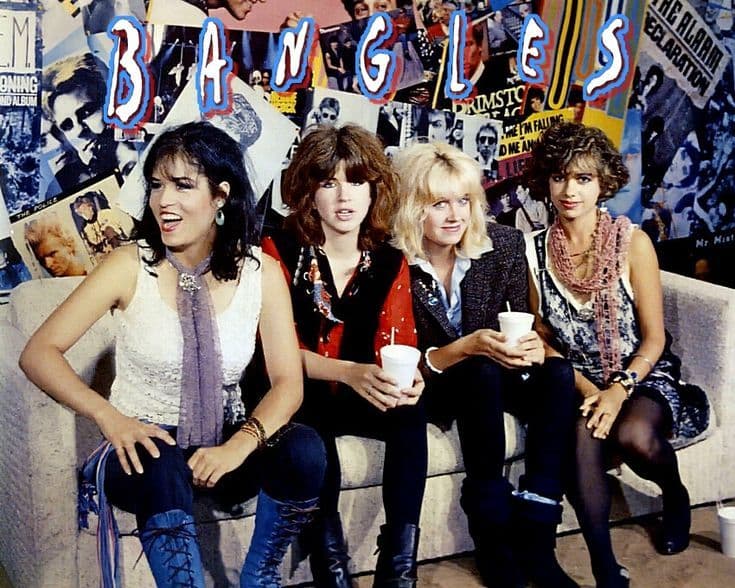
A tender anthem of weekday weariness and romantic longing, “Manic Monday” captures the universal sigh between dreams and responsibility.
When “Manic Monday” by The Bangles arrived in January 1986, it felt instantly familiar—as if it had always existed somewhere between the kitchen radio and the morning light through half-open blinds. Released as the lead single from their second studio album, Different Light (1986), the song quickly climbed the charts, peaking at No. 2 on the Billboard Hot 100 in the United States and No. 2 on the UK Singles Chart. In America, it was famously kept from the top spot by Prince’s “Kiss”—a poetic twist, considering that Prince himself had written “Manic Monday.” Few chart stories are as charmingly circular.
Indeed, one of the most fascinating aspects of the song lies behind the scenes. Prince, credited under the pseudonym Christopher, originally wrote the track for the girl group Apollonia 6 in 1984. When that version never materialized, he offered it to The Bangles, reportedly because he admired their debut album and had taken a particular interest in their sound. Prince’s gift was generous and transformative. He even declined publishing royalties in favor of the band, a gesture that speaks volumes about his respect for them as musicians.
Yet while the pedigree is remarkable, what made “Manic Monday” endure was not simply its authorship—it was its emotional truth. The song opens with a chiming guitar figure that feels like an alarm clock softened by melody. Then comes Susanna Hoffs’ voice: intimate, slightly weary, but never defeated. “Six o’clock already, I was just in the middle of a dream…” With that single line, an entire generation recognized itself. The dream—romantic, tender, full of promise—collides with the unromantic insistence of Monday morning.
Unlike many glossy pop productions of the mid-1980s, “Manic Monday” carries a subtle ache beneath its brightness. Its structure is classic pop craftsmanship—tight verses, a soaring chorus, immaculate harmonies—but the heart of the song lies in its contrast between obligation and desire. The narrator does not rage against responsibility; she simply longs, quietly, for one more day of love, one more Sunday. That longing gives the song its staying power.
Musically, The Bangles balanced jangling 1960s-inspired guitars with 1980s sheen. Their harmonies, often compared to The Mamas & the Papas, brought warmth and humanity to Prince’s composition. There is an understated sophistication in the arrangement—the interplay of rhythm guitar and keyboard textures, the disciplined restraint in the percussion. Nothing overwhelms the song’s emotional core.
At the time of its release, Different Light marked a turning point for the band. Their earlier work leaned more heavily into garage-rock revivalism, but “Manic Monday” introduced them to a broader global audience. The success of the single helped propel the album into the Top 10 on the Billboard 200, and it established The Bangles as more than a cult favorite—they became a defining voice of mid-’80s pop.
And yet, what lingers decades later is not chart data or industry trivia. It is the feeling. “Manic Monday” became a small ritual in itself—a song that met listeners in that fragile space between sleep and duty. Its melody seems to stretch like morning light across hardwood floors; its chorus feels like a shared confession.
There is something profoundly human about a song that does not promise escape, only empathy. It does not solve the tension between dreams and deadlines. It simply acknowledges it, wraps it in harmony, and sends it gently into the airwaves.
In that sense, “Manic Monday” is more than a hit single from 1986. It is a time capsule of ordinary longing—of alarm clocks, unfinished dreams, and the quiet hope that Sunday might come again just a little sooner.