
Beg, Steal or Borrow — A Heart’s Quiet Plea for Love
“Beg, Steal or Borrow” by The New Seekers is a nostalgic ballad of devotion, one that whispers of willingness to do anything for true love — even if it means pleading, taking, or borrowing just to bring sunshine into someone’s life.
At the time of its release, “Beg, Steal or Borrow” captured hearts across Europe. It was the United Kingdom’s entry in the 1972 Eurovision Song Contest, and in that fiercely competitive arena, it finished in 2nd place with 114 points. On the UK Singles Chart, the song peaked at No. 2, spending a total of 13 weeks on the chart. Internationally, it climbed to No. 1 in Norway, reached No. 3 in the Netherlands and Ireland, and charted in other countries including Germany, Switzerland, and Canada. In the United States, it made a more modest impact, peaking at No. 81 on the Billboard Hot 100.
When you listen to “Beg, Steal or Borrow,” you’re transported to a time of earnest sincerity. The lyrics, penned by Tony Cole, Steve Wolfe, and Graeme Hall, speak to a deep, almost desperate love. The narrator admits: “You know I’ll beg, steal or borrow, to give you sunny days … in a hundred ways, I’ll bring you love.” It’s not just romantic drama — it’s a solemn vow, a promise that if needed, they would steal time from the world, borrow moments, even beg, just to nurture the relationship, to make their beloved’s “garden grow.”
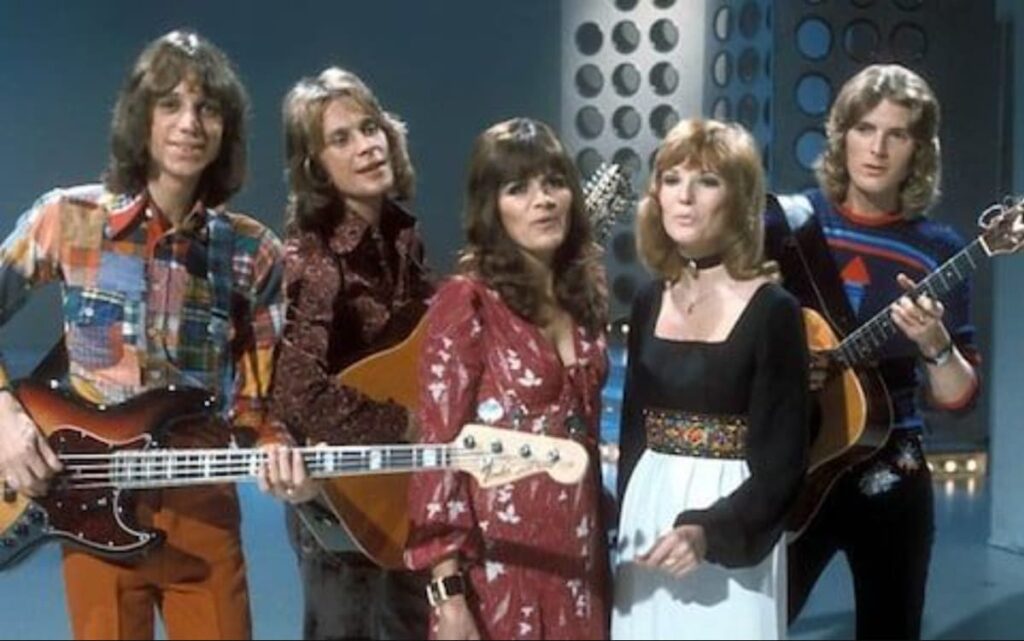
Behind the song lies a meaningful chapter in The New Seekers’ story. By 1972, the group – composed of Lyn Paul, Peter Doyle, Paul Layton, Marty Kristian, and Eve Graham – had already won attention with earlier hits. But their Eurovision entry became a defining moment: a chance to showcase their harmony, warmth, and sincerity across Europe. Their performance at Eurovision in Edinburgh was met with enthusiastic applause, and while they didn’t win, their second place elevated their international profile.
The song was produced by David Mackay, under the Polydor label. It later appeared on the group’s 1972 album Circles, released during the peak of their popularity. That album itself captured a mixture of original works and thoughtful covers, reflecting the group’s gentle but resonant musical style.
What makes “Beg, Steal or Borrow” resonate so deeply, especially with listeners who look back on the music of those times, is the purity of its emotional plea. It’s not flashy or dramatic in a grand, theatrical way — rather, it’s intimate, humble, and sincere. The narrator doesn’t demand love; they offer everything they can, even their own vulnerability. In the lines “Better late than never … And although we’ve just begun, we’ll go on forever,” there is a beautiful mix of hope and realism, as though love is both fragile and enduring.
For older listeners, the song often evokes memories of the early 1970s — a time when pop music felt more personal, less bombastic, and carried a certain innocence. It reminds us of simpler times, of vinyl records played on lazy afternoons, and of heartfelt promises whispered softly. The New Seekers, with their clear harmonies and warm delivery, felt like friends singing directly to you, and “Beg, Steal or Borrow” is perhaps one of their most tender, earnest offerings.
Beyond its Eurovision legacy, the song stands as a testament to the universal nature of love’s longing — the willingness to go to any lengths, to humble oneself, just to be with someone who matters. And in that humility, there is great strength.