
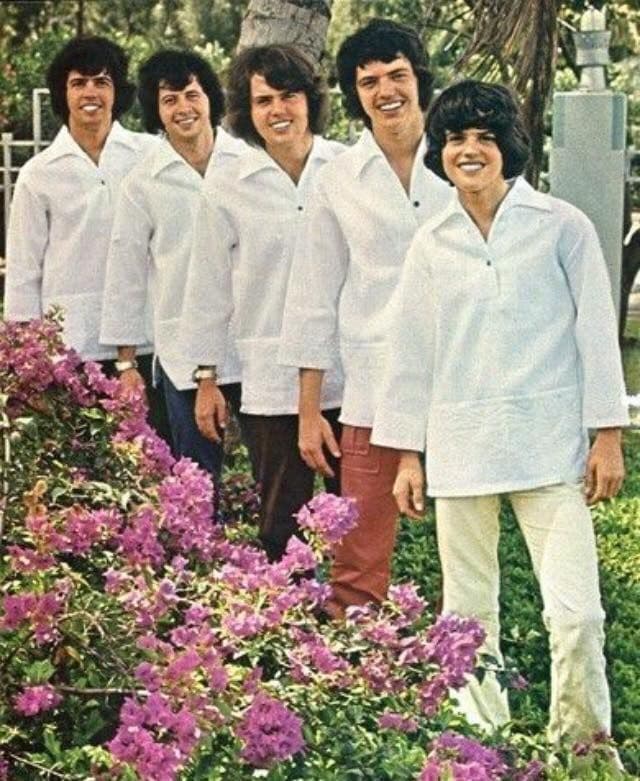
I’ll Be Home for Christmas — a promise sung with harmony, hope, and the ache of distance
When The Osmonds sang “I’ll Be Home for Christmas,” they were not simply revisiting a familiar holiday standard; they were placing their unmistakable family harmony into one of the most emotionally loaded songs in popular music. Few Christmas songs carry such a quiet weight. Beneath its gentle melody lies a promise that may or may not be kept, a longing that feels especially sharp when the year draws to a close. In the hands of The Osmonds, that longing becomes warmer, more communal, yet no less poignant.
The group recorded “I’ll Be Home for Christmas” during the early 1970s, at the height of their popularity, when their image as a close-knit family band resonated deeply with audiences around the world. The song appeared on their holiday releases during this period, most notably within their Christmas recordings that showcased not youthful pop energy, but reverence, restraint, and harmony. Unlike their chart-driven singles, this track was never about rankings or radio dominance. It was about atmosphere — about creating a moment that listeners could step into, year after year.
Originally written during World War II, “I’ll Be Home for Christmas” has always carried the shadow of separation. Its final line — “if only in my dreams” — transforms the song from reassurance into quiet heartbreak. The Osmonds understood this instinctively. Their arrangement avoids excess sentimentality. Instead, they lean into blended vocals, soft phrasing, and a sense of togetherness that feels earned rather than performed. Listening closely, you hear not just a group singing in harmony, but a family breathing together, shaping each phrase with care.
At the time of its release, The Osmonds were known primarily for upbeat, polished pop hits and exuberant television appearances. Yet this Christmas recording revealed another side of them — one rooted in tradition and reflection. Their version does not rush. It lingers. It allows silence and space to do some of the emotional work. For listeners who grew up with the song, it became inseparable from the rituals of the season: dim lights, familiar rooms, and the feeling that the year’s joys and losses were finally settling into place.
What gives their rendition lasting meaning is how naturally it aligns with the group’s identity. The Osmonds were, above all, a symbol of family. Hearing them sing about returning home carries an added layer of sincerity. It feels less like a character in a song and more like a shared understanding — that home is not merely a location, but a gathering of voices, memories, and unspoken bonds. Their harmonies suggest safety, continuity, and the quiet reassurance that someone is waiting.
Over time, this version of “I’ll Be Home for Christmas” has taken on a reflective quality. It reminds us of years when being home was uncertain, of loved ones whose chairs now sit empty, and of promises made with the best intentions. Yet it also offers comfort. The song does not demand happiness; it allows tenderness. It acknowledges that sometimes home exists only in memory — and that memory itself can be a kind of shelter.
For listeners revisiting the song decades later, it carries more than seasonal charm. It carries the weight of lived experience. The Osmonds’ voices, once youthful and bright, remain frozen in that moment — a reminder of a time when the world felt smaller, families felt closer, and the idea of coming home held enormous emotional power.
In the end, “I’ll Be Home for Christmas” as sung by The Osmonds is less about arrival than about yearning. It is a song for those who understand that the promise of home is sometimes fulfilled not by distance traveled, but by memory held close. And each time it plays, it gently asks us the same question: where, and with whom, does home truly live?