
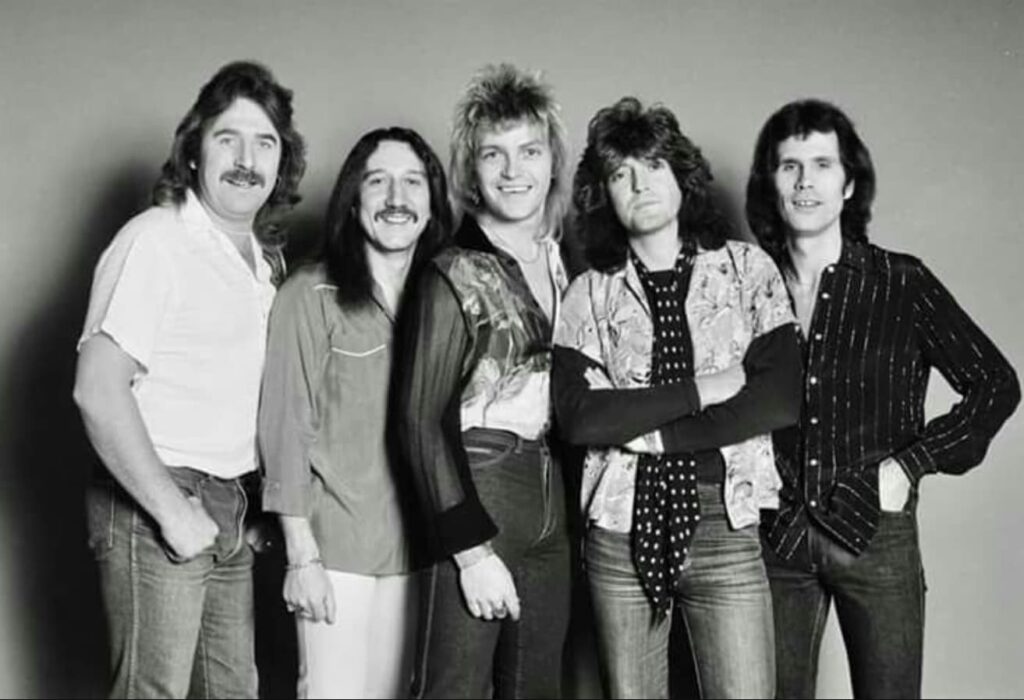
Easy Livin’ — when hard rock first learned how to breathe, swagger, and live in the moment
Few songs announce themselves as boldly and unapologetically as “Easy Livin’” by Uriah Heep. From its opening keyboard stabs to its urgent, driving rhythm, the song feels like a door kicked open — not with anger, but with confidence. Released in 1972 as a single from the landmark album Demons and Wizards, “Easy Livin’” quickly became the band’s signature track and their most commercially successful song.
Right from the start, the facts place it firmly in rock history.
“Easy Livin’” was written by Ken Hensley, the creative backbone of Uriah Heep during their classic era. Upon release, the song reached No. 32 on the UK Singles Chart, No. 39 on the US Billboard Hot 100, and climbed as high as No. 20 in Canada. To this day, it remains Uriah Heep’s only Top 40 hit in the United States, a remarkable achievement for a band often described as more influential than fashionable.
But charts only tell part of the story.
By 1972, the musical landscape was shifting. Rock had grown louder, heavier, and more adventurous. Bands were stretching songs longer, themes darker, and performances more theatrical. Uriah Heep, often mentioned alongside Deep Purple, Black Sabbath, and Led Zeppelin, occupied a unique space: blending hard rock power with melodic sensibility, rich harmonies, and fantasy-tinged lyricism. Demons and Wizards was the album where all those elements finally locked into place — and “Easy Livin’” was its sharpest, most accessible edge.
Unlike many hard rock songs of its era, “Easy Livin’” doesn’t dwell in darkness or myth. Its power lies in something simpler and, perhaps, more elusive: freedom. The lyrics are brief, direct, almost conversational. There’s no grand narrative, no elaborate metaphor. Instead, there is a declaration — a statement of independence, of self-assurance, of choosing one’s own way in a complicated world.
When David Byron sings “Easy livin’, this ain’t no fantasy,” his voice carries both defiance and joy. It sounds like someone who has made peace with who he is, even if the road ahead remains uncertain. There is urgency in his delivery, but also release — as if the act of singing the words makes them true, if only for three minutes.
Musically, the song is a masterclass in controlled intensity. Ken Hensley’s Hammond organ doesn’t soften the track; it fuels it, pushing against Mick Box’s sharp, muscular guitar riffs. The rhythm section drives relentlessly forward, giving the song its breathless momentum. There is no excess here — no wasted space. Everything serves the feeling of motion, of living fast and fully, without apology.
For listeners who first encountered “Easy Livin’” on the radio in the early seventies, the song often became a marker of time. It played in cars with open windows, in living rooms filled with smoke and conversation, in moments when the future still felt wide and unwritten. Decades later, it carries that same spark — not as nostalgia alone, but as a reminder of a moment when rock music spoke directly to the desire for autonomy.
What makes “Easy Livin’” endure is not just its energy, but its honesty. Life, of course, is rarely easy. Yet the song doesn’t deny struggle; it pushes through it. It suggests that “easy living” isn’t about comfort — it’s about clarity. About knowing what matters, and refusing to be weighed down by what doesn’t.
In the long career of Uriah Heep, filled with epic compositions and devoted audiences across Europe and beyond, “Easy Livin’” stands as a distilled essence of their spirit. Loud but melodic. Simple but powerful. Grounded, yet soaring.
And when it plays today, it still feels like a promise whispered through amplifiers and time itself:
that for a few minutes, at least, living can feel free — and that freedom, once felt, is never forgotten.