
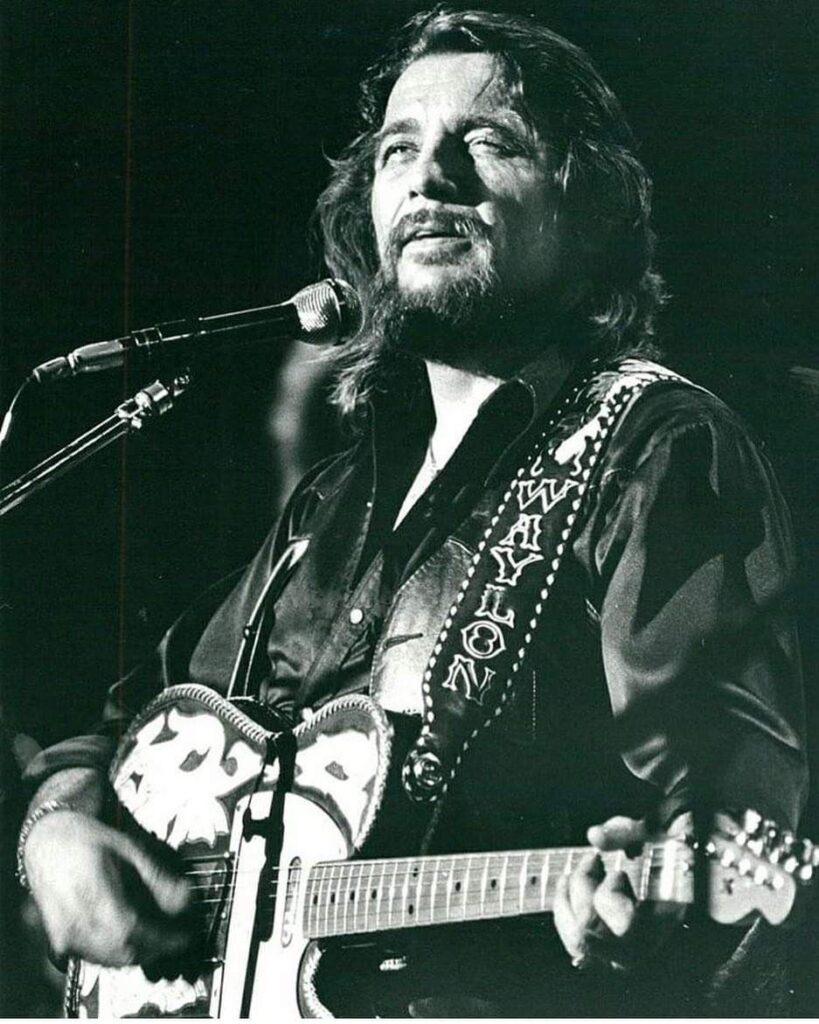
A Tender Country Reverie About Devotion, Redemption, and the Quiet Hope of Lasting Love
Few songs in the outlaw country canon carry the emotional gravity and understated grace of “Dreaming My Dreams With You” by Waylon Jennings. Released in 1975 as the title track of the album Dreaming My Dreams, the song did not storm the charts in the conventional sense—it reached No. 10 on the Billboard Hot Country Singles chart—but its legacy far exceeds its initial chart position. In many ways, its true triumph was not commercial dominance, but emotional permanence. It became one of the most enduring ballads in Jennings’ repertoire, a song that felt less like a hit and more like a confession whispered across a kitchen table late at night.
The album Dreaming My Dreams itself was a landmark. It reached No. 1 on the Billboard Top Country Albums chart in 1975, cementing Jennings’ place at the forefront of the outlaw country movement alongside figures like Willie Nelson and Jessie Colter. But while the outlaw image often conjures visions of rebellion, highway dust, and defiant independence, “Dreaming My Dreams With You” revealed a different side of Jennings—vulnerable, reflective, almost fragile in its sincerity.
Written by Allen Reynolds, the song is deceptively simple. There are no grand declarations, no elaborate metaphors. Instead, it unfolds as a quiet meditation on commitment and longing. The narrator does not promise riches or perfection; he promises presence. “I just want to be the one you love,” Jennings sings, his baritone worn and weathered, as if carved from the very roads he traveled. It is this humility that gives the song its power. In an era when country music was wrestling with polish and pop crossover appeal, Jennings chose restraint. The arrangement—gentle acoustic guitar, subtle steel, and a steady rhythm—allows the lyric to breathe.
Behind the song lies a deeply personal context. By the mid-1970s, Waylon Jennings had lived through professional struggles, battles for artistic control, and personal turbulence. His marriage to Jessie Colter was both a sanctuary and a storm, tested by the pressures of fame and Jennings’ well-documented excesses. In that light, “Dreaming My Dreams With You” feels less like fiction and more like aspiration—a man hoping to become worthy of the love he already holds. It is not a boast; it is a prayer.
There is a line in the song—“I hope that I’ll find someone who’s dreaming my dreams with me”—that resonates with a particular ache. It speaks to companionship not as convenience, but as shared vision. To dream the same dreams is to walk the same emotional landscape, to grow older without growing apart. For listeners who have loved, lost, endured, and reconciled, this sentiment lands with quiet force. It reminds us that the most radical act is not rebellion, but staying.
Over the years, the song has been covered by artists across generations, a testament to its universal appeal. Yet no version quite captures the gravity of Jennings’ original recording. His voice carries experience—mistakes made, roads taken, promises broken and rebuilt. It is the sound of a man who has seen enough of the world to know that love is not fireworks, but endurance.
In retrospect, the modest No. 10 chart peak seems almost irrelevant. “Dreaming My Dreams With You” has become one of the signature songs of Waylon Jennings, often cited as one of the finest examples of 1970s country balladry. It represents a turning point when country music dared to be introspective without sacrificing strength. The outlaw was still there—but he had put down his guard long enough to speak plainly about devotion.
Listening to the song today feels like opening an old letter—one written in steady handwriting, without flourish, but filled with truth. It carries the scent of another time: long drives at dusk, AM radio humming softly, the sense that love, though imperfect, was still worth believing in. And perhaps that is why the song endures. It does not shout. It does not demand. It simply waits, patient and faithful, dreaming its dreams with us still.
 Oldies Songs
  Oldies Songs