
A lonely dawn after a reckless Saturday night — a hymn for the hungover soul searching for grace
When “Sunday Morning Coming Down” first entered the American consciousness, it did so not with bombast, but with a weary sigh. Written by Kris Kristofferson and immortalized by Johnny Cash, the song became one of the defining portraits of modern country music’s emotional honesty. Released as a single by Cash in 1970 from the album The Johnny Cash Show, it rose to No. 1 on the Billboard Hot Country Singles chart in October of that year and crossed over to No. 46 on the Billboard Hot 100. It later earned the Country Music Association Award for Song of the Year in 1970, a testament not only to its popularity but to its literary power.
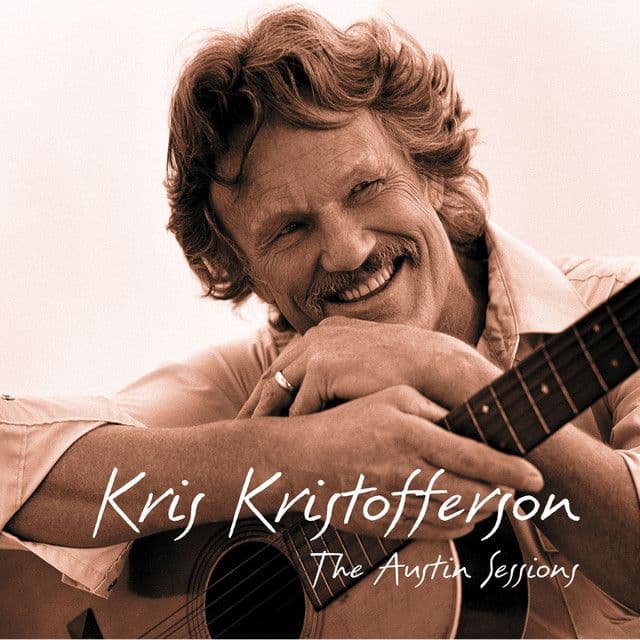
Yet before Cash made it a hit, Kris Kristofferson recorded it himself in 1970 for his debut album Kristofferson (later reissued as Me and Bobby McGee). His version was raw, almost conversational — the voice of a man who had lived every word. But it was Johnny Cash, with that granite baritone and national platform on television, who gave the song its mythic stature.
The story behind the song is as compelling as its lyrics. Kristofferson, a Rhodes Scholar and former U.S. Army helicopter pilot, had left a promising military career to pursue songwriting in Nashville. He worked odd jobs — including as a janitor at Columbia Records — while trying to get his songs recorded. Legend has it that he once famously landed a helicopter in Cash’s yard to get his attention. Whether embellished or not, the tale captures the desperation and daring of a man who believed fiercely in his words.
“Sunday Morning Coming Down” is not simply about a hangover. It is about loneliness, regret, and the hollow echo that follows fleeting pleasure. The opening lines — “Well, I woke up Sunday morning / With no way to hold my head that didn’t hurt” — immediately situate us in a physical and spiritual malaise. The church bells ringing in the distance, the smell of someone else’s fried chicken, the sound of children laughing — these are not just details. They are reminders of belonging, stability, and innocence, all just out of reach.
At a time when country music often leaned toward sentimental optimism or moral certainty, this song dared to linger in ambiguity. It did not condemn its narrator, nor did it redeem him. It simply allowed him to exist — flawed, reflective, painfully aware. That was revolutionary. In many ways, Kristofferson helped usher country music into the era of the singer-songwriter, where vulnerability mattered more than polish.
There was even quiet controversy. When Cash performed the song on network television, the line “I’m wishing, Lord, that I was stoned” raised eyebrows. Producers reportedly suggested changing it to “I’m wishing, Lord, that I was home.” Cash refused. That insistence preserved the integrity of the lyric — not as an endorsement of drug use, but as an honest confession of escape-seeking despair.
Musically, the arrangement is deceptively simple: a steady, unhurried tempo; gentle acoustic guitar; restrained rhythm section. This sparseness gives the lyrics room to breathe. Cash’s phrasing — slightly behind the beat, almost speaking rather than singing — deepens the sense of weary introspection. Every pause feels intentional, every syllable weighted with memory.
Over the decades, the song has been covered by artists as varied as Ray Stevens and Willie Nelson, yet it remains inseparable from the names Kris Kristofferson and Johnny Cash. It stands alongside works like “Me and Bobby McGee” as proof of Kristofferson’s gift for marrying plainspoken language with poetic resonance.
What makes “Sunday Morning Coming Down” endure is not nostalgia alone, but recognition. Nearly everyone has known a morning like that — when the sunlight feels accusatory, when joy seems to belong to someone else, when the quiet is louder than any noise. The song does not offer easy comfort. Instead, it offers companionship. It says: you are not alone in your loneliness.
And perhaps that is why, more than half a century later, those opening chords still carry the weight of lived experience. They remind us that great songs do not merely entertain; they bear witness. In “Sunday Morning Coming Down”, Kris Kristofferson gave voice to the fragile, reflective spaces of the human heart — and Johnny Cash carried that voice into history.
 Oldies Songs
  Oldies Songs