
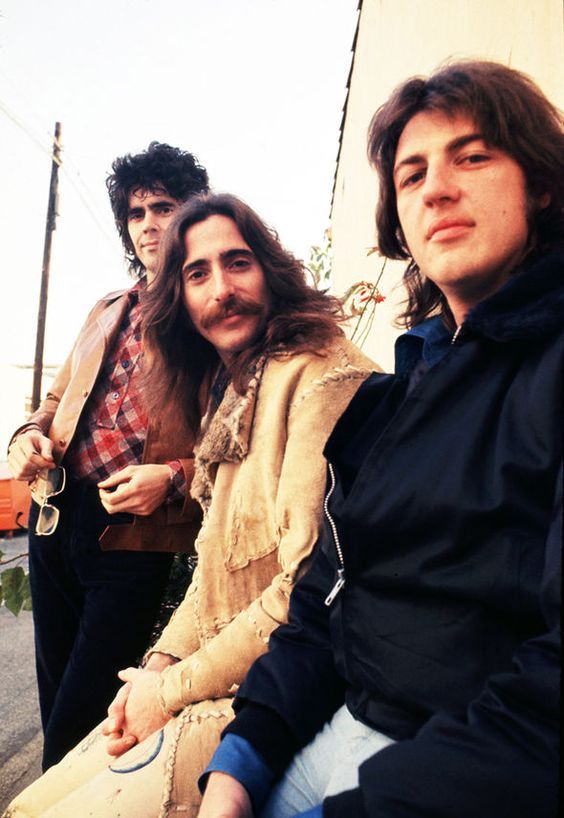
A Soulful Cry for Reunion in an Age of Emotional Distance
When “I Can Hear You Calling” was released in 1971 as part of the album Harmony, it arrived at a pivotal moment in the career of Three Dog Night—a band already synonymous with rich vocal interplay and an uncanny ability to transform outside compositions into radio gold. While the song was not issued as a major single and therefore did not chart independently on the Billboard Hot 100, the album Harmony itself reached No. 8 on the Billboard 200, affirming the group’s commercial dominance during the early 1970s. In many ways, this track stands as one of the more intimate deep cuts in their catalog—less explosive than “Joy to the World” or “Mama Told Me (Not to Come),” yet resonating with a quiet emotional gravity.
Written by Paul Williams and Roger Nichols, the songwriting duo behind classics like “An Old Fashioned Love Song” and “Out in the Country,” “I Can Hear You Calling” reflects their gift for melody shaped by introspection. Williams, in particular, had a remarkable ability to articulate vulnerability in a way that felt universal. In this song, longing is not dramatized—it is internalized. The narrator does not shout across distances; he listens. And what he hears is memory, regret, and perhaps hope.
Musically, the track is anchored by the unmistakable layered harmonies of Chuck Negron, Danny Hutton, and Cory Wells. Unlike many of the band’s high-energy hits, this arrangement leans toward a softer rock and adult contemporary sound. There is a gentle pulse in the rhythm section, subtle yet steady, as if echoing a restless heartbeat. The instrumentation never overwhelms; instead, it frames the vocals with restraint. That was one of Three Dog Night’s great strengths—they knew when to let the harmony breathe.
The early 1970s were a period of emotional complexity in American music. The optimism of the 1960s had dimmed, replaced by introspection and social uncertainty. In that climate, songs about personal reconnection carried particular weight. “I Can Hear You Calling” speaks less about dramatic reunion and more about the invisible thread that binds people even after distance has taken its toll. It is a song about unfinished conversations, about words never fully spoken.
One cannot discuss this track without acknowledging the broader success of Harmony. The album also featured “An Old Fashioned Love Song,” which climbed to No. 4 on the Billboard Hot 100, becoming one of the band’s signature hits. Yet while that song celebrated the enduring power of classic romance, “I Can Hear You Calling” felt more private—almost like a diary entry set to melody. It is perhaps for that reason that it has endured as a cherished album cut among devoted listeners.
There is something profoundly human in its premise. The idea that one can “hear” someone calling—not literally, but emotionally—suggests a connection that time cannot sever. It evokes late evenings when silence feels heavy, when memory grows louder than the present moment. The arrangement’s warm tonal palette—acoustic textures, layered harmonies, understated orchestration—mirrors that feeling of reflection. It does not demand attention; it invites it.
For those who lived through that era, this song recalls a time when radio felt like a companion, when albums were experienced from beginning to end, and when harmonies like those of Three Dog Night seemed to wrap around you like reassurance. Unlike today’s fleeting singles, songs from Harmony were crafted to linger.
Looking back, “I Can Hear You Calling” may not have topped charts, but it embodies the quieter side of a band often remembered for bold, anthemic hits. It reminds us that beyond the stadium choruses and platinum records, there were moments of tenderness—moments where music did not just entertain but reflected inner lives. In that soft echo of longing, Three Dog Night proved that harmony is not merely a musical term—it is an emotional state, fragile yet enduring.