
A Wry Confession Wrapped in Laughter: How One Careless Afternoon Became a Sharp Social Satire
When “I Got Stoned and I Missed It” by Dr. Hook & The Medicine Show arrived in 1975, it carried more than a mischievous grin. Beneath its breezy country-pop groove lay a sly, almost rueful commentary on distraction, indulgence, and the quiet regret of missed moments. Released as a single from the album Bankrupt, the song climbed to No. 29 on the Billboard Hot 100 in the United States in 1975, adding another memorable chapter to the band’s colorful mid-70s run.
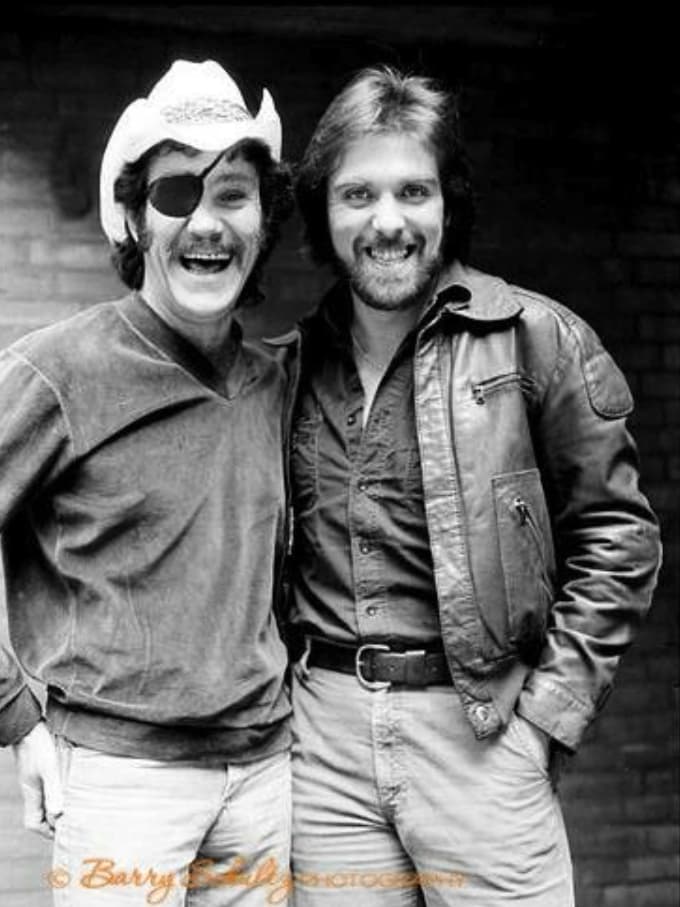
By the time this single emerged, Dr. Hook & The Medicine Show had already established themselves as master storytellers with a wink. Formed in Union City, New Jersey, and fronted by the gravel-voiced Ray Sawyer and the more understated Dennis Locorriere, the group was known for balancing humor with sincerity. Their earlier hits—such as “The Cover of the Rolling Stone” and “Sylvia’s Mother”—had revealed a band unafraid to laugh at fame, heartbreak, and themselves. But “I Got Stoned and I Missed It” took a different route: it was less theatrical, more observational, and strangely reflective despite its light tone.
Written by Shel Silverstein, the beloved American poet and songwriter who penned many of the band’s early successes, the song feels like one of his illustrated verses set to music. Silverstein had a rare gift for combining childlike simplicity with adult irony, and here he distilled an entire era’s haze into a single, unforgettable refrain. The title alone became a catchphrase of the 1970s—a decade defined by experimentation, escapism, and a certain laid-back defiance of convention.
Musically, the track leans into soft country-rock textures: a relaxed tempo, warm acoustic strumming, and understated harmonies that never overwhelm the lyric’s conversational tone. It’s catchy, yes—but not in a bombastic way. Instead, it ambles forward, as if the singer himself is still slightly dazed, recounting how he missed “all the good stuff” because he was too detached to notice. There’s humor in the confession, but also a quiet sting. That duality is what gives the song its staying power.
At first listen, the lyrics appear purely comic—a tongue-in-cheek admission of being too “stoned” to participate in life’s important events. Yet, viewed through the lens of time, the song resonates differently. It speaks to distraction in a broader sense: how easily one can drift through life’s turning points unaware. The missed chances, the celebrations unattended, the moments that never come back. In its simplicity lies an almost universal truth—how often do we look back and realize we weren’t fully present when it mattered most?
In 1975, the song fit comfortably within the cultural mood. America was emerging from the turbulence of the Vietnam War and Watergate. The counterculture had matured; what once felt rebellious now felt commonplace. In that environment, “I Got Stoned and I Missed It” was less a provocation and more a gentle nod to shared experience. It didn’t preach. It didn’t condemn. It simply shrugged and smiled—yet that smile concealed reflection.
Commercially, while it didn’t reach the towering chart heights of some contemporaries, its Top 30 placement on the Billboard Hot 100 demonstrated the band’s enduring appeal. The track also received significant radio airplay on adult contemporary and pop stations, reinforcing Dr. Hook’s crossover charm.
Over the decades, the song has aged in a curious way. What once felt topical now feels philosophical. The word “stoned” may anchor it in its era, but the deeper sentiment—missing life while caught up in something trivial—remains timeless. Listening today, one can almost feel the warmth of 1970s radio, the soft crackle of vinyl, and the familiar comfort of voices that once accompanied long drives and quiet evenings.
There is something deeply human in its refrain. Not tragic, not grand—just honest. In a catalogue filled with wit and theatricality, “I Got Stoned and I Missed It” stands as a reminder that even the most playful songs can carry a thread of wisdom. And perhaps that is why it endures—not merely as a humorous relic of the mid-70s, but as a gentle nudge to pay attention before the moment slips quietly by.