
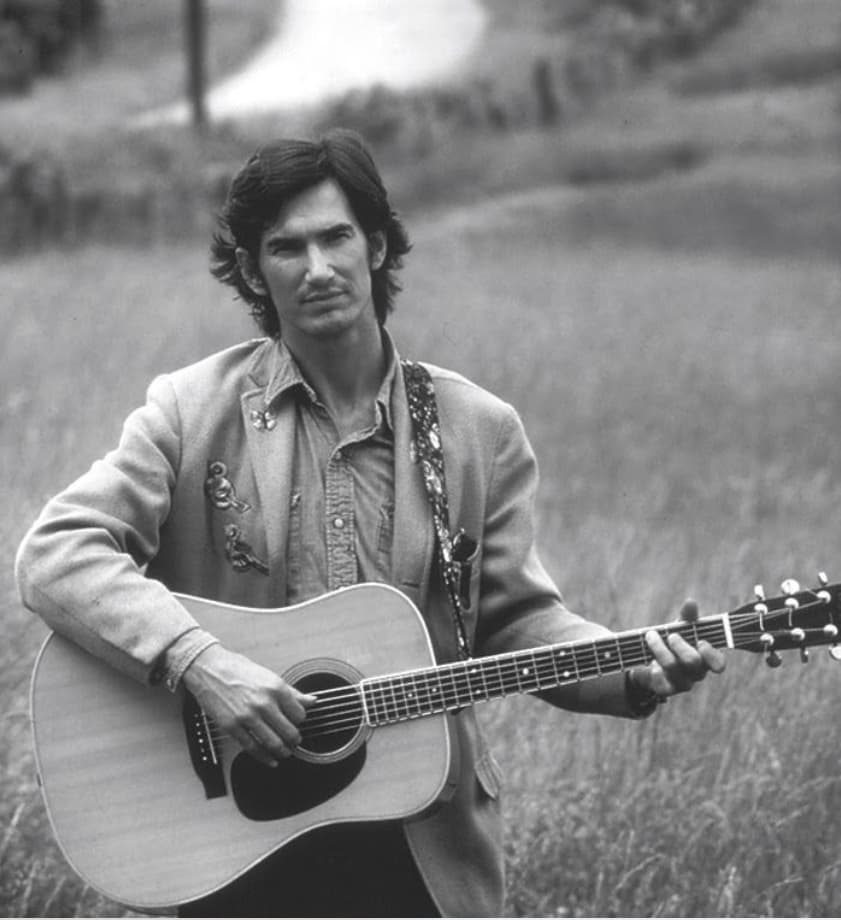
To Live Is to Fly — a tender, wandering hymn about letting go, holding on, and finding grace in the spaces between
There is a certain stillness that settles over you the moment “To Live Is to Fly” begins — the kind of stillness that only Townes Van Zandt could create. His voice, soft as worn denim and fragile as morning light, turns the song into something far more than a folk tune. It becomes a companion, a bit of wisdom, a sigh of the soul. Among all the works that shaped his legacy, “To Live Is to Fly” stands as one of the purest distillations of who he was: a drifter of the heart, a poet of the quietly broken, a man who understood life as both weight and feather.
Released in 1971 on the album High, Low and In Between, the song never appeared on the charts. But in the realm of folk music — in that world of late-night record listeners, wandering spirits, and gentle truth-seekers — it became something much more meaningful: a whispered classic. Listeners didn’t discover it through radio plays or sales; they discovered it the way you discover a fragile letter tucked into a drawer — passed from one caring hand to another.
The story of the song begins in a period of transition for Townes. He was moving through life the way he often did: with a suitcase, a guitar, and a mind full of stories he wasn’t sure belonged to this world or some other. “To Live Is to Fly” emerged from that wandering. It’s a song about leaving and returning, about the strange ache of traveling through life knowing nothing can stay — not the people you love, not the moments you treasure, not even yourself as you once were.
Yet, Townes never sings this in sadness. He sings it with a gentle acceptance, as if understanding that the beauty of life lies not in permanence, but in the soft rise and fall of its passing.
His lines — “Days up and down they come, like rain on a conga drum” — are simple, but anyone who has lived long enough can feel the truth humming behind them. Life arrives in bursts of joy and sorrow, with no promise of balance, no explanation. You don’t control the rhythm; you just move with it.
The song’s most haunting idea — that “to live is to fly” — captures the heart of Van Zandt’s philosophy. He seems to say that we are all meant to drift, to lift ourselves from the heaviness of the past, to let love carry us while knowing that love will eventually change shape. To live is to rise above what wants to anchor us… and to fly is to trust that something — memory, music, or hope — will hold us up.
For older listeners, especially those who have watched decades roll by with both gratitude and regret, the song resonates in a deeper way. It reminds us of the people we’ve said goodbye to, the roads we’ve taken, the choices that shaped us quietly over the years. It reminds us of the tenderness of moving on, even when the heart wants to stay behind just a little longer.
Townes Van Zandt never sang to impress. He sang to understand — and in doing so, he helped the rest of us understand a little more too. “To Live Is to Fly” may not have charted, may not have sold millions, but it lives in a place far more enduring than any ranking: in late-night car rides, in quiet rooms with low lamps, in the memories of those who once needed a song to remind them that letting go does not mean losing everything.
 Oldies Songs