
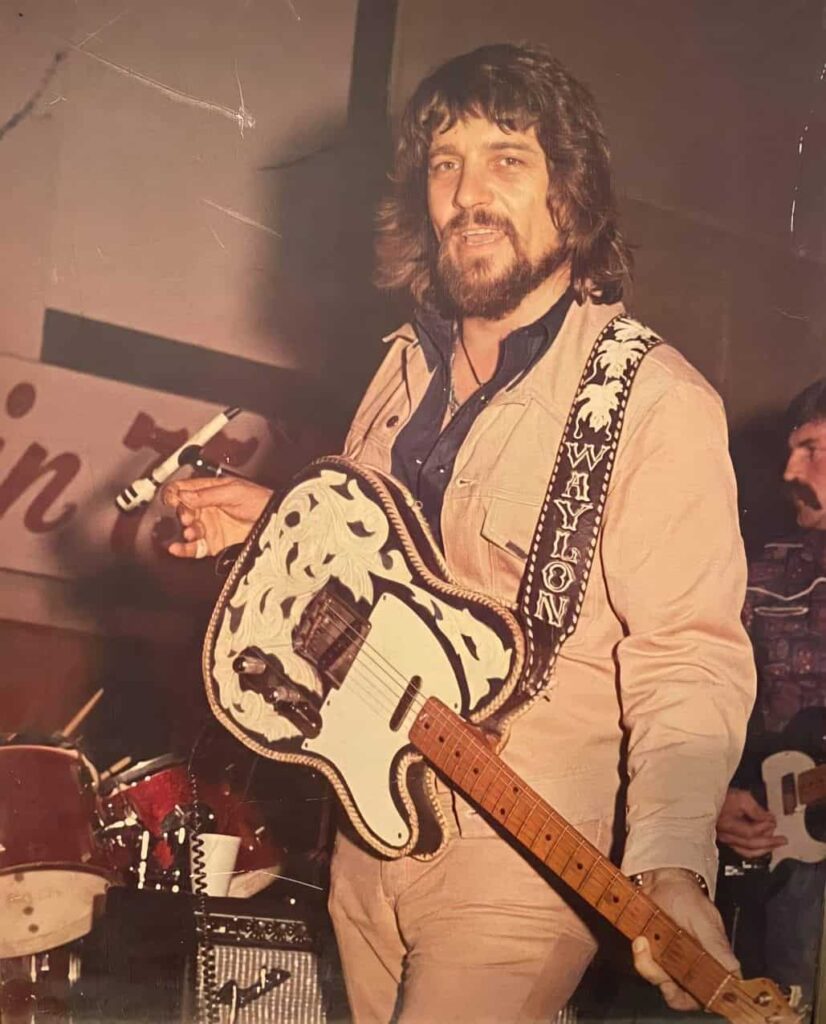
I’m a Ramblin’ Man — a proud declaration of freedom, restlessness, and the cost of living life on one’s own terms
When Waylon Jennings released “I’m a Ramblin’ Man” in 1974, it sounded less like a hit single and more like a personal manifesto. This was not a song chasing approval or polish; it was a statement of identity, sung by a man who had already lived the truth of every line he delivered. From its opening bars, the song carries the dust of highways, the loneliness of motel rooms, and the quiet pride of a man who refuses to apologize for the way he lives.
Important facts first:
- “I’m a Ramblin’ Man” was released in April 1974 as the lead single from the album Ramblin’ Man.
- It reached No. 1 on the Billboard Hot Country Singles chart, becoming Waylon Jennings’ first solo country chart-topper.
- It also crossed over to the pop audience, peaking at No. 7 on the Billboard Hot 100, a rare achievement for a country song at the time.
These numbers matter not because of bragging rights, but because they mark a moment when outlaw country stepped out of the shadows and into the mainstream — without compromising its soul.
The story behind the song is inseparable from Waylon Jennings himself. By the early 1970s, he had grown weary of the tightly controlled Nashville system, where producers dictated arrangements, musicians, and even the emotional tone of recordings. Jennings wanted freedom — creative freedom, personal freedom, and the right to sound like himself. “I’m a Ramblin’ Man” became one of the clearest expressions of that rebellion.
Written by Ray Pennington, the song fit Waylon as if it had been carved from his own life. The narrator admits he’s hard to hold, impossible to tame, always moving on. But there’s no bitterness in the confession — only honesty. He doesn’t promise forever. He doesn’t pretend stability. Instead, he offers truth, and in that truth there is dignity.
What makes the song so enduring is its emotional restraint. Waylon doesn’t dramatize his restlessness; he accepts it. His baritone voice is calm, grounded, almost conversational. He sounds like a man who understands the price of his choices and pays it willingly. That subtle confidence — neither boastful nor regretful — is what resonates so deeply with listeners who have lived long enough to understand that freedom often comes at a cost.
Musically, “I’m a Ramblin’ Man” reflects the outlaw country aesthetic at its best. The rhythm rolls forward like a long stretch of open road. The instrumentation is lean, unadorned, purposeful. Nothing is wasted. Every note serves the story. It feels closer to a campfire confession than a studio production — and that was precisely the point.
For many listeners, especially those who remember the era when country music still smelled of sweat, vinyl, and late-night radio, this song brings back a certain kind of independence that defined a generation. A time when men and women measured their lives not by comfort, but by authenticity. When being true to oneself mattered more than being understood.
Over the years, Waylon Jennings would be remembered as one of the founding fathers of outlaw country, alongside Willie Nelson and Johnny Cash. But “I’m a Ramblin’ Man” stands as one of his most human recordings. Not a legend speaking — just a man explaining who he is, without excuses.
Listening to it now, decades later, the song feels almost timeless. The roads may have changed, the world may move faster, but the feeling remains the same. The pull of freedom. The need to keep moving. The quiet understanding that some people are simply not meant to stay in one place for too long.
And when Waylon sings that final line, you don’t hear regret. You hear acceptance. A life lived honestly. A heart that chose the road — and never looked back.
 Oldies Songs